Trifolium resupinatum var. majus
Trifolium resupinatum var. majus · Accepted scientific name
Scientific literature: Very Sparse (3 studies) · ★☆☆☆☆
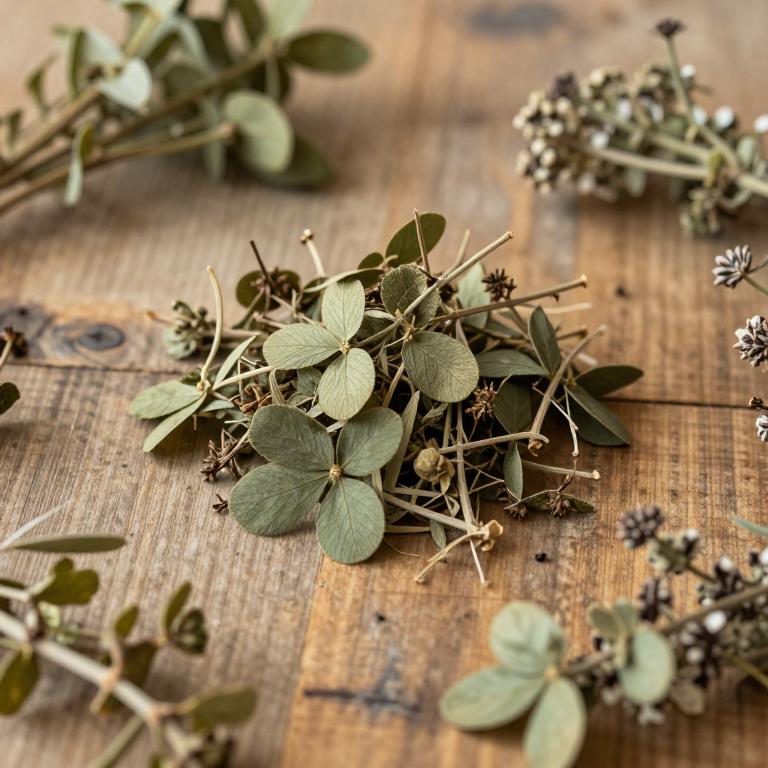
scientifically known as Trifolium resupinatum var. majus, is a versatile medicinal herb valued in traditional healing practices. Often recognized for its clover-like foliage, this botanical variety possesses unique bioactive properties. It is frequently utilized for its potential anti-inflammatory and restorative qualities, offering a natural approach to holistic wellness.
- Family
- Fabaceae
- Native range
- Europe
- Parts used
- Not available
- Common names
- Not available
- Scientific synonyms
- Trifolium Resupinatum Subsp. Suaveolens · Trifolium Resupinatum Var. Suaveolens · 3 more
Names and Synonyms
Scientific Names
Accepted name
Trifolium resupinatum var. majusSynonyms
- Trifolium resupinatum subsp. suaveolens
- Trifolium resupinatum var. suaveolens
- Trifolium resupinatum proles suaveolens
- Galearia resupinata subsp. suaveolens
- Trifolium suaveolens
Regional and Traditional Names
German:
- Wohlriechender Persischer Klee
Sources: Wikidata, Catalogue of Life
Taxonomical Classification
This plant, scientifically known as Trifolium resupinatum var. majus, belongs to the kingdom Plantae and the phylum Streptophyta. It is classified under the class Equisetopsida and the subclass Magnoliidae, falling within the order Fabales. Finally, it is a member of the family Fabaceae and the genus Trifolium.
| Rank | Classification |
|---|---|
| Kingdom | Plantae |
| Phylum | Streptophyta |
| Class | Equisetopsida |
| Subclass | Magnoliidae |
| Order | Fabales |
| Family | Fabaceae |
| Genus | Trifolium |
Sources: The World Checklist of Vascular Plants (WCVP)
Distribution
This plant exhibits a wide geographical distribution spanning several distinct regions across Europe and Asia. In Middle Europe, its presence is noted within the territories of Czechia and Slovakia. Moving toward the Mediterranean, it can be found in Southwestern Europe, specifically within France and Spain. The range extends further east into Southeastern Europe, where it inhabits the landscapes of Greece. Finally, its distribution reaches into Western Asia, specifically documented in Afghanistan.
| Region | Area |
|---|---|
| Middle Europe | Czechia-Slovakia |
| Southwestern Europe | France |
| Southwestern Europe | Spain |
| Southeastern Europe | Greece |
| Western Asia | Afghanistan |
| Western Asia | Iran |
| Indian Subcontinent | Pakistan |
| Australia | New South Wales |
| Australia | South Australia |
| Australia | Victoria |
Sources: The World Checklist of Vascular Plants (WCVP)
Chemicals
Trifolium resupinatum var. majus has 2 reported phytochemicals identified across 0 scientific publications and several other databases. The most consistently reported chemicals include Flavonoids, Isoflavones.
| Chemical | Supporting sources | Consensus |
|---|---|---|
| Flavonoids | 1 supporting sources | ★☆☆☆☆ |
| Isoflavones | 1 supporting sources | ★☆☆☆☆ |
Flavonoids
- Molecular and cellular biochemistry
Isoflavones
- Molecular and cellular biochemistry
Activities
Trifolium resupinatum var. majus has 1 reported activities identified across 0 scientific publications and several other databases. The most consistently reported activities include Antioxidant.
| Activity | Supporting sources | Consensus |
|---|---|---|
| Antioxidant | 1 supporting sources | ★☆☆☆☆ |
Antioxidant
- Molecular and cellular biochemistry