zigzag clover
Trifolium medium · Accepted scientific name
Scientific literature: Very Sparse (14 studies) · ★☆☆☆☆
Zigzag clover, scientifically known as Trifolium medium, is a resilient perennial herb native to North America. Distinguished by its unique, zigzagging stem structure, this plant thrives in diverse habitats. Traditionally valued in herbal medicine, it possesses various bioactive properties, making it a subject of interest for natural therapeutic applications.
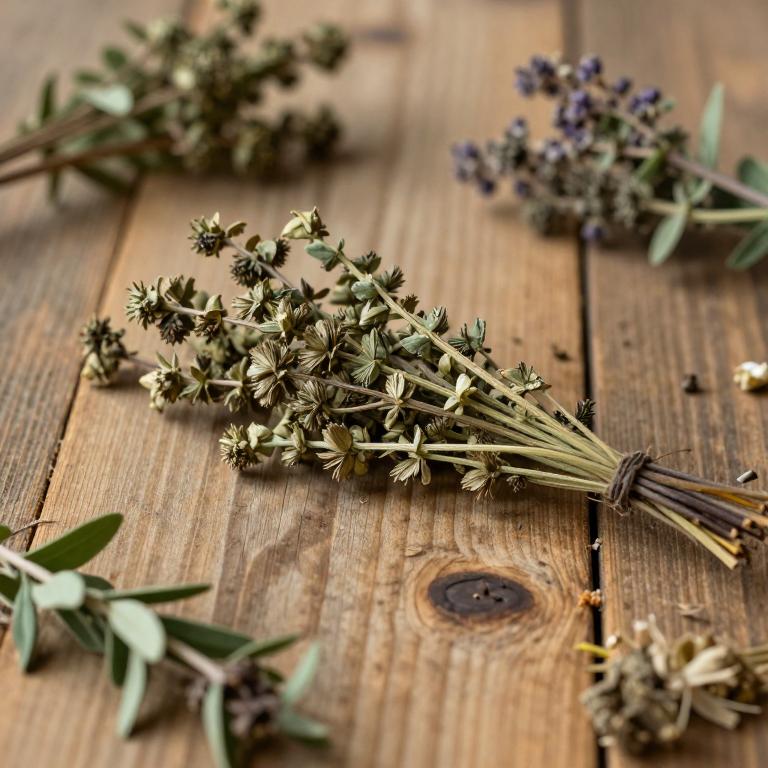
Names and Synonyms
Common Names
- zigzag clover
- Trifolium alpestre
- owl-head clover
- purple-globe clover
- mammoth clover
- zigzag clover
Scientific Names
Accepted name
Trifolium mediumSynonyms
- Trifolium medium var. flexuosum
- Trifolium medium var. microphyllum
- Trifolium flexicaule
- Trifolium flexuosum
- Lagopus flexuosus
- Trifolium medium var. subpilosum
- Trifolium medium var. angustifolium
- Trifolium medium subsp. eriocalycinum
- Trifolium medium subsp. flexuosum
- Trifolium medium var. majus
- Trifolium medium subsp. skorpilii
- Trifolium subexpansum
- Trifolium medium var. brachycalycinum
- Trifolium haynaldianum
- Trifolium haynaldii
- Trifolium medium subsp. pedunculosum
- Trifolium medium var. angustius
- Trifolium aucheri
- Trifolium medium var. strictum
- Trigonella micrantha
- Trifolium medium var. angustium
- Trifolium medium var. eriocalycinum
Regional and Traditional Names
Spanish:
- Trifolium alpestre
- trébol intermedio
German:
- Mittlerer Klee
- Zickzack-Klee
- Hügel-Klee
- Trifolium alpestre
- Hügelklee
- Hügel-Klee
- Huegel-Klee
- Mittelklee
- Zickzackklee
- Mittlerer Klee
- Zickzack-Klee
French:
- trèfle intermédiaire
- Trèfle alpestre
- Trefle alpestre
- Trifolium alpestre
- Trefle alpestre
- trèfle flexueux
- trèfle intermédiaire
- Trefle intermediaire
- Trèfle moyen
Sources: Wikidata, Catalogue of Life
Taxonomical Classification
This plant belongs to the kingdom Plantae and the phylum Streptophyta, falling under the class Equisetopsida and subclass Magnoliidae. Within the order Fabales, it is classified under the family Fabaceae and the genus Trifolium.
| Rank | Classification |
|---|---|
| Kingdom | Plantae |
| Phylum | Streptophyta |
| Class | Equisetopsida |
| Subclass | Magnoliidae |
| Order | Fabales |
| Family | Fabaceae |
| Genus | Trifolium |
Sources: The World Checklist of Vascular Plants (WCVP)
Distribution
This plant, known as Trifolium medium, exhibits a specific distribution across several regions in Northern Europe. Its presence is well-documented throughout the coastal and inland areas of Denmark. The species can also be found growing within the natural landscapes of Finland. Moving westward, it is widely distributed across the islands of Great Britain and Ireland. Finally, its geographical range extends further north to include the rugged terrains of Norway.
| Region | Area |
|---|---|
| Northern Europe | Denmark |
| Northern Europe | Finland |
| Northern Europe | Great Britain |
| Northern Europe | Ireland |
| Northern Europe | Norway |
| Northern Europe | Sweden |
| Middle Europe | Austria |
| Middle Europe | Belgium |
| Middle Europe | Czechia-Slovakia |
| Middle Europe | Germany |
Sources: The World Checklist of Vascular Plants (WCVP)
Botanical Identification
Ecology
The ecology of Trifolium medium is characterized by its presence in diverse landscapes, including forests, forest edges, hills, meadows, shrubberies, and steppes, ranging from dry environments to mountain and plain regions. This species thrives in lowland habitats and is specifically found within a defined elevational range, spanning from a minimum of 1450 m AMSL to a maximum of 1600 m AMSL.
- Elevational range max:
- 1600 m AMSL
- Elevational range min:
- 1450 m AMSL
- Habitat :
- forest, forest edges, hills, meadows: dry, mountains, plains, shrubberies, steppe
- Habitat :
- Lowland
Life history
The life history of Trifolium medium is characterized by a perennial lifecycle, allowing the plant to persist through multiple growing seasons. It adopts a hemicryptophyte life form, meaning its perennating buds are located at or just below the soil surface, which helps it survive varying environmental conditions. Additionally, the plant exhibits a deciduous nature, shedding its foliage as part of its seasonal physiological cycle.
- Deciduousness :
- deciduous
- Life form :
- hemicryptophyte
- Lifecycle :
- perennial
Morphology
The morphology of Trifolium medium is characterized by its growth as a non-woody herb and a forb, exhibiting a self-supporting structure without the need for climbing or liana-like tendencies. As a terrestrial plant, it functions as an independent organism, lacking any parasitic or epiphytic behavior. The plant's stature is relatively low, with height measurements varying across its development; it typically reaches a minimum height of 0.15 to 0.2 meters, with a maximum height of 0.5 meters, resulting in an average plant height ranging between 0.225 and 0.4 meters.
- Aquatic :
- terrestrial
- Climber :
- self-supporting
- Epiphyte :
- terrestrial
- Growth form :
- herb
- Growth form :
- forb
- Parasite :
- independent
- Plant height max:
- 0.5 m
- Plant height mean:
- 0.225 m
- Plant height mean:
- 0.4 m
- Plant height min:
- 0.15 m
- Plant height min:
- 0.2 m
- Woodiness :
- non-woody
Physiology
The physiology of Trifolium medium is characterized by a C3 photosynthetic pathway, which dictates its carbon fixation processes and metabolic efficiency. As a non-carnivorous species, it relies on standard nutrient uptake through its root system, supplemented by its ability to function as a nitrogen fixer, which allows it to convert atmospheric nitrogen into usable forms. The morphological physiological traits include varying leaf dimensions, with a recorded maximum leaf length of 10 cm and mean leaf sizes ranging between 7.05875 cm² and 14.37 cm². Furthermore, the plant exhibits significant variation in its Specific Leaf Area (SLA), with mean values documented at both 113.2 cm²/g and 206.1 cm²/g, reflecting differences in leaf thickness and resource allocation strategies.
- Carnivory :
- non-carnivorous
- Leaf length max:
- 10 cm
- Leaf size mean:
- 7.05875 cm²
- Leaf size mean:
- 14.37 cm²
- Nitrogen fixer :
- yes
- Photosynthetic pathway :
- C3
- Specific Leaf Area (SLA) mean:
- 113.2 cm²/g
- Specific Leaf Area (SLA) mean:
- 206.1 cm²/g
Reproduction
The reproduction of Trifolium medium is characterized by a biotic pollination strategy that relies on insects, specifically bees, to facilitate fertilization. The plant exhibits no self-fertilization and lacks asexual reproduction, meaning it depends entirely on cross-pollination for its reproductive cycle. The flowering period typically begins in June and concludes in August. Following successful pollination, the plant develops dry, dehiscence-type fruits categorized as capsules, which have an average length of 0.2 cm. The seeds produced are relatively small and uniform, with a consistent seed volume of 1.1 mm³ and a seed width of 2 mm. The seed mass is quite minute, ranging from a minimum of approximately 0.00125 g to a maximum of 0.00234 g, with a mean mass recorded around 0.001945 g to 0.001955 g. Once the fruit matures, the seeds are dispersed via an anemochorous syndrome, utilizing wind as the primary mechanism for movement.
- Dehiscence :
- dehiscent
- Dispersal syndrome :
- anemochorous
- Flowering time :
- Jun
- Flowering time :
- Aug
- Fruit dryness :
- dry
- Fruit length mean:
- 0.2 cm
- Fruit type :
- capsule
- Pollination syndrome :
- insect
- Pollination syndrome :
- biotic
- Pollination syndrome :
- bee
- Reproduction asexual :
- absent
- Seed mass max:
- 0.00125 g
- Seed mass max:
- 0.00234 g
- Seed mass mean:
- 0.001955 g
- Seed mass mean:
- 0.0019450625 g
- Seed mass min:
- 0.001275 g
- Seed volume max:
- 1.1 mm³
- Seed width mean:
- 2 mm
- Self fertilization :
- absent
Sources: Global Inventory of Floras and Traits (GIFT)
Chemicals
Trifolium medium has 7 reported phytochemicals identified across 0 scientific publications and several other databases. The most consistently reported chemicals include Ononin, COUMESTROL, Isoflavone, Isoflavones, Sissotrin.
| Chemical | Supporting sources | Consensus |
|---|---|---|
| Ononin | 2 supporting sources | ★☆☆☆☆ |
| COUMESTROL | 1 supporting sources | ★☆☆☆☆ |
| Isoflavone | 1 supporting sources | ★☆☆☆☆ |
| Isoflavones | 1 supporting sources | ★☆☆☆☆ |
| Sissotrin | 1 supporting sources | ★☆☆☆☆ |
| biochanin A | 1 supporting sources | ★☆☆☆☆ |
| formononetin | 1 supporting sources | ★☆☆☆☆ |
Ononin
- Journal of AOAC International
- Pharmaceuticals (Basel, Switzerland)
COUMESTROL
- Journal of food science and technology
Isoflavone
- Journal of food science and technology
Isoflavones
- Pharmaceuticals (Basel, Switzerland)
Sissotrin
- Journal of AOAC International
biochanin A
- Pharmaceuticals (Basel, Switzerland)
formononetin
- Pharmaceuticals (Basel, Switzerland)
Activities
Trifolium medium has 4 reported activities identified across 0 scientific publications and several other databases. The most consistently reported activities include Antioxidant, Chemopreventive, Cytostatic, Phytoestrogenic.
| Activity | Supporting sources | Consensus |
|---|---|---|
| Antioxidant | 1 supporting sources | ★☆☆☆☆ |
| Chemopreventive | 1 supporting sources | ★☆☆☆☆ |
| Cytostatic | 1 supporting sources | ★☆☆☆☆ |
| Phytoestrogenic | 1 supporting sources | ★☆☆☆☆ |
Antioxidant
- Pharmaceuticals (Basel, Switzerland)
Chemopreventive
- Pharmaceuticals (Basel, Switzerland)
Cytostatic
- Pharmaceuticals (Basel, Switzerland)
Phytoestrogenic
- Journal of AOAC International
Conditions
Trifolium medium has 1 reported investigations on conditions identified across 0 scientific publications and several other databases. The most consistently reported conditions include breast cancer.
| Condition | Supporting sources | Consensus |
|---|---|---|
| Breast cancer | 1 supporting sources | ★☆☆☆☆ |
Breast cancer
- Pharmaceuticals (Basel, Switzerland)