wooly bluecurls
Trichostema lanatum · Accepted scientific name
Scientific literature: Very Sparse (5 studies) · ★☆☆☆☆
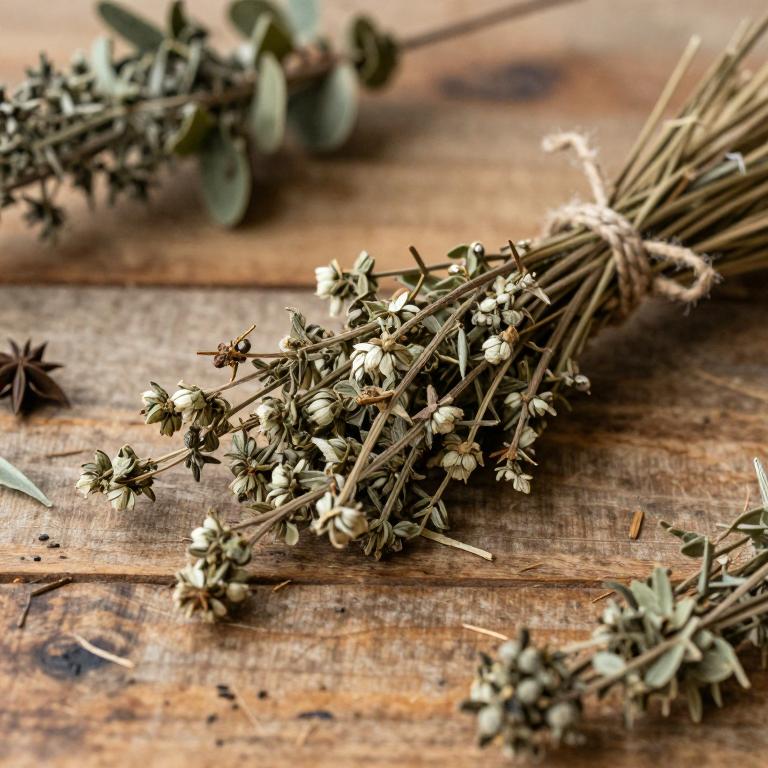
Wooly bluecurls, scientifically known as Trichostema lanatum, is a remarkable medicinal herb cherished in traditional healing practices. Renowned for its unique therapeutic properties, this plant offers diverse applications in treating skin ailments and inflammatory conditions. Exploring its botanical characteristics reveals the profound natural wisdom held within its soft, textured leaves.
- Family
- Lamiaceae
- Native range
- Northern America
- Parts used
- Leaf · Stem
- Common names
- Wooly Bluecurls
- Scientific synonyms
- Trichostema Lanatum Var. Denudatum
Names and Synonyms
Common Names
- wooly bluecurls
Scientific Names
Accepted name
Trichostema lanatumSynonyms
- Trichostema lanatum var. denudatum
Regional and Traditional Names
Spanish:
- Romero
Sources: Wikidata, Catalogue of Life
Taxonomical Classification
This plant belongs to the kingdom Plantae and is classified under the phylum Streptophyta and the class Equisetopsida. Within the subclass Magnoliidae, it is further organized into the order Lamiales and the family Lamiaceae. Ultimately, its taxonomic identity is defined by the genus Trichostema.
| Rank | Classification |
|---|---|
| Kingdom | Plantae |
| Phylum | Streptophyta |
| Class | Equisetopsida |
| Subclass | Magnoliidae |
| Order | Lamiales |
| Family | Lamiaceae |
| Genus | Trichostema |
Sources: The World Checklist of Vascular Plants (WCVP)
Distribution
This plant exhibits a specific range within the North American continent. Its presence is noted in the Southwestern United States, specifically within the state of California. Moving southward, the species can also be found across the border in Mexico. Within that country, its distribution is concentrated in the Northwest region. Together, these areas define the primary geographical footprint of Trichostema lanatum.
| Region | Area |
|---|---|
| Southwestern U.S.A. | California |
| Mexico | Mexico Northwest |
Sources: The World Checklist of Vascular Plants (WCVP)
Botanical Identification
Life history
The life history of Trichostema lanatum is characterized by its classification as a perennial plant, allowing it to persist through multiple growing seasons. In terms of its structural growth habit and ecological positioning, it functions as a chamaephyte, meaning its perennating buds are located close to or just above the soil surface, which helps the plant navigate its specific environmental niches. This combination of a perennial lifecycle and a chamaephyte life form enables the species to establish long-term presence within its habitat while maintaining a compact, resilient growth structure.
- Life form :
- chamaephyte
- Lifecycle :
- perennial
Morphology
The morphology of Trichostema lanatum is characterized by a growth form primarily classified as a shrub or subshrub, exhibiting a woody structure throughout its development. As a terrestrial species, it does not exhibit aquatic or semiaquatic tendencies, nor does it function as an epiphyte, instead maintaining a self-supporting habit. The plant is non-parasitic and functions as an independent organism, lacking the climbing mechanisms of lianas or vines, as it is strictly self-supporting in its structural arrangement.
- Aquatic :
- terrestrial
- Climber :
- self-supporting
- Epiphyte :
- terrestrial
- Growth form :
- shrub
- Parasite :
- independent
- Woodiness :
- woody
Reproduction
The reproduction of Trichostema lanatum is characterized by a versatile dispersal strategy and specific seed morphology. The plant exhibits an unspecialized dispersal syndrome, utilizing multiple mechanisms including anemochory (wind dispersal), zoochory (animal dispersal), autochory (self-dispersal), and hydrochory (water dispersal) to distribute its offspring across various environments. The seeds produced are quite small, with a recorded minimum mass of 0.002244 g and a maximum mass of 0.0052 g. On average, the seed mass is approximately 0.003296 g, a factor that contributes to the plant's ability to employ various methods of movement and colonization.
- Dispersal syndrome :
- unspecialized
- Seed mass max:
- 0.0052 g
- Seed mass mean:
- 0.003296 g
- Seed mass min:
- 0.002244 g
Sources: Global Inventory of Floras and Traits (GIFT)
Plant Parts
Trichostema lanatum has 2 reported plant parts identified across 2 scientific publications and several other databases that are studied for medicinal purposes. The most consistently reported plant part include leaf, stem.
| Plant part | Supporting sources | Consensus |
|---|---|---|
| Leaf | 1 supporting sources | ★☆☆☆☆ |
| Stem | 1 supporting sources | ★☆☆☆☆ |
Leaf
- Medicines (Basel, Switzerland)
Stem
- Medicines (Basel, Switzerland)
Activities
Trichostema lanatum has 2 reported activities identified across 2 scientific publications and several other databases. The most consistently reported activities include Antibacterial, Disinfectant.
| Activity | Supporting sources | Consensus |
|---|---|---|
| Antibacterial | 1 supporting sources | ★☆☆☆☆ |
| Disinfectant | 1 supporting sources | ★☆☆☆☆ |
Antibacterial
- Medicines (Basel, Switzerland)
Disinfectant
- Medicines (Basel, Switzerland)
Conditions
Trichostema lanatum has 1 reported investigations on conditions identified across 2 scientific publications and several other databases. The most consistently reported conditions include rheumatism.
| Condition | Supporting sources | Consensus |
|---|---|---|
| Rheumatism | 1 supporting sources | ★☆☆☆☆ |
Rheumatism
- Medicines (Basel, Switzerland)
Preparations
Trichostema lanatum has 2 reported preparations identified across 2 scientific publications and several other databases. The most consistently reported preparations include dichloromethane-soluble fractions, methanolic extract of the leaves and stems.
| Preparation | Supporting sources | Consensus |
|---|---|---|
| Dichloromethane-soluble fractions | 1 supporting sources | ★☆☆☆☆ |
| Methanolic extract of the leaves and stems | 1 supporting sources | ★☆☆☆☆ |
Dichloromethane-soluble fractions
- Natural product research
Methanolic extract of the leaves and stems
- Medicines (Basel, Switzerland)