Trichostema dichotomum
Trichostema dichotomum · Accepted scientific name
Scientific literature: Extensive (158 studies) · ★★★★☆
Trichostema dichotomum, scientifically known as Trichostema dichotomum, is a medicinal plant valued in traditional healing practices. Often utilized for its diverse therapeutic properties, this species is recognized for its bioactive compounds. It plays a significant role in folk medicine, offering potential applications in treating various ailments and promoting wellness.
- Family
- Not available
- Native range
- Northern America
- Parts used
- Not available
- Common names
- Not available
- Scientific synonyms
- Not available
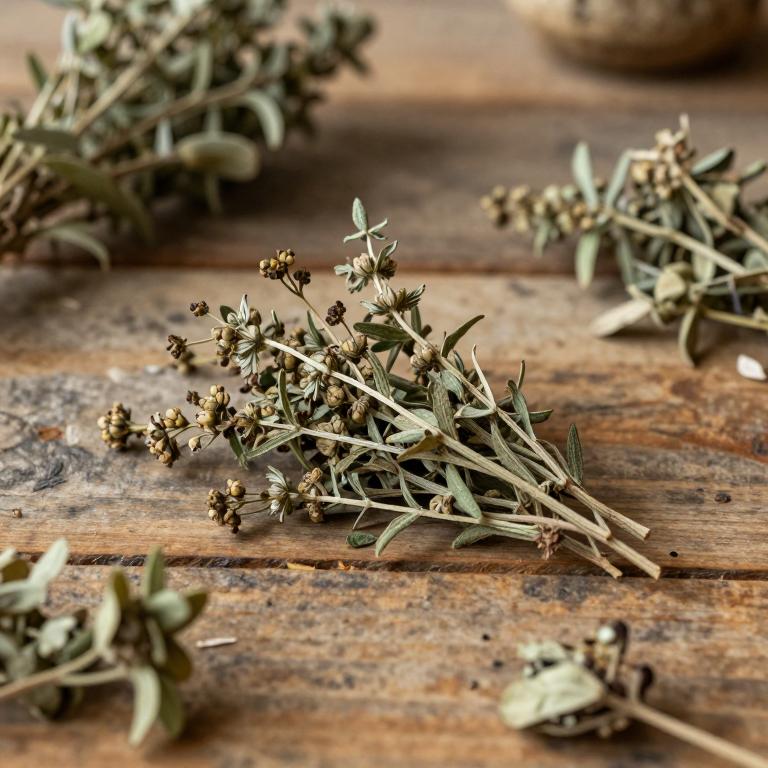
Names and Synonyms
Scientific Names
Accepted name
Trichostema dichotomumDistribution
This plant exhibits a wide distribution across several regions of North America. In Eastern Canada, its presence is noted within the province of Ontario. Moving into the North-Central United States, it can be found in Illinois. Its range also extends through the Northeastern United States, specifically documented in Connecticut and Indiana. Additionally, the species is recorded as growing in Maine.
| Region | Area |
|---|---|
| Eastern Canada | Ontario |
| North-Central U.S.A. | Illinois |
| Northeastern U.S.A. | Connecticut |
| Northeastern U.S.A. | Indiana |
| Northeastern U.S.A. | Maine |
| Northeastern U.S.A. | Massachusetts |
| Northeastern U.S.A. | Michigan |
| Northeastern U.S.A. | New Hampshire |
| Northeastern U.S.A. | New Jersey |
| Northeastern U.S.A. | New York |
Sources: The World Checklist of Vascular Plants (WCVP)
Botanical Identification
Life history
The life history of Trichostema dichotomum is characterized by an annual lifecycle, meaning the plant completes its entire developmental process from germination to seed production within a single growing season. Functioning as a therophyte, it avoids unfavorable environmental conditions by surviving primarily as a seed, which remains dormant until conditions are optimal for rapid growth and reproduction. This life form strategy allows the plant to efficiently exploit ephemeral resources and quickly colonize available habitats before completing its seasonal cycle.
- Life form :
- therophyte
- Lifecycle :
- annual
Morphology
The morphology of Trichostema dichotomum is characterized by its growth form as a non-woody herb and forb. It functions as an independent organism rather than a parasite or epiphyte, maintaining a terrestrial existence. In terms of its structural habit, the plant is self-supporting, behaving neither as an obligatory nor facultative climber, such as a liana or vine, but rather as a self-contained vegetative entity.
- Aquatic :
- terrestrial
- Climber :
- self-supporting
- Epiphyte :
- terrestrial
- Growth form :
- herb
- Growth form :
- forb
- Parasite :
- independent
- Woodiness :
- non-woody
Reproduction
The reproduction of Trichostema dichotomum is characterized by a specific seasonal flowering cycle that dictates its reproductive window. The flowering period typically commences in August, marking the onset of its reproductive activity. This process continues through the late summer and early autumn months, eventually reaching its conclusion in October. Therefore, the plant's primary flowering duration is concentrated within this late-year interval, transitioning from its start in August to its end in October.
- Flowering time :
- Aug
- Flowering time :
- Oct
Sources: Global Inventory of Floras and Traits (GIFT)
Chemicals
Trichostema dichotomum has 15 reported phytochemicals identified across 0 scientific publications and several other databases. The most consistently reported chemicals include 1,8-Cineole, 1-OCTEN-3-OL, ALPHA-PINENE, ALPHA-TERPINYL ACETATE, BETA-PINENE.
| Chemical | Supporting sources | Consensus |
|---|---|---|
| 1,8-Cineole | 1 supporting sources | ★☆☆☆☆ |
| 1-OCTEN-3-OL | 1 supporting sources | ★☆☆☆☆ |
| ALPHA-PINENE | 1 supporting sources | ★☆☆☆☆ |
| ALPHA-TERPINYL ACETATE | 1 supporting sources | ★☆☆☆☆ |
| BETA-PINENE | 1 supporting sources | ★☆☆☆☆ |
| Caryophyllene | 1 supporting sources | ★☆☆☆☆ |
| Caryophyllene oxide | 1 supporting sources | ★☆☆☆☆ |
| EO | 1 supporting sources | ★☆☆☆☆ |
| Germacrene D | 1 supporting sources | ★☆☆☆☆ |
| LIMONENE | 1 supporting sources | ★☆☆☆☆ |
1,8-Cineole
- Dr. Duke
1-OCTEN-3-OL
- Dr. Duke
ALPHA-PINENE
- Dr. Duke
ALPHA-TERPINYL ACETATE
- Dr. Duke
BETA-PINENE
- Dr. Duke
Caryophyllene
- Dr. Duke
Caryophyllene oxide
- Dr. Duke
EO
- Dr. Duke
Germacrene D
- Dr. Duke
LIMONENE
- Dr. Duke
Activities
Trichostema dichotomum has 143 reported activities identified across 0 scientific publications and several other databases. The most consistently reported activities include (-)-Chronotropic, (-)-Inotropic, ACE-Inhibitor, AChE-Inhibitor, Acaricide.
| Activity | Supporting sources | Consensus |
|---|---|---|
| (-)-Chronotropic | 1 supporting sources | ★☆☆☆☆ |
| (-)-Inotropic | 1 supporting sources | ★☆☆☆☆ |
| ACE-Inhibitor | 1 supporting sources | ★☆☆☆☆ |
| AChE-Inhibitor | 1 supporting sources | ★☆☆☆☆ |
| Acaricide | 1 supporting sources | ★☆☆☆☆ |
| Aldose-Reductase-Inhibitor | 1 supporting sources | ★☆☆☆☆ |
| Allelochemic | 1 supporting sources | ★☆☆☆☆ |
| Allelopathic | 1 supporting sources | ★☆☆☆☆ |
| Allergenic | 1 supporting sources | ★☆☆☆☆ |
| Analgesic | 1 supporting sources | ★☆☆☆☆ |
(-)-Chronotropic
- Dr. Duke
(-)-Inotropic
- Dr. Duke
ACE-Inhibitor
- Dr. Duke
AChE-Inhibitor
- Dr. Duke
Acaricide
- Dr. Duke
Aldose-Reductase-Inhibitor
- Dr. Duke
Allelochemic
- Dr. Duke
Allelopathic
- Dr. Duke
Allergenic
- Dr. Duke
Analgesic
- Dr. Duke