Trichosanthes scabra var. scabra
Trichosanthes scabra var. scabra · Accepted scientific name
Scientific literature: Very Sparse (6 studies) · ★☆☆☆☆
Scientifically known as Trichosanthes scabra var. scabra, is a versatile medicinal climber widely recognized in traditional Ayurvedic medicine. Renowned for its therapeutic properties, this plant is frequently utilized to treat digestive ailments, skin disorders, and inflammatory conditions, offering a natural approach to promoting holistic wellness and systemic healing.
- Family
- Cucurbitaceae
- Native range
- Asia-Temperate
- Parts used
- Fruit
- Common names
- Not available
- Scientific synonyms
- Gymnopetalum Weberi · Gymnopetalum Monoicum Var. Incisum · 8 more
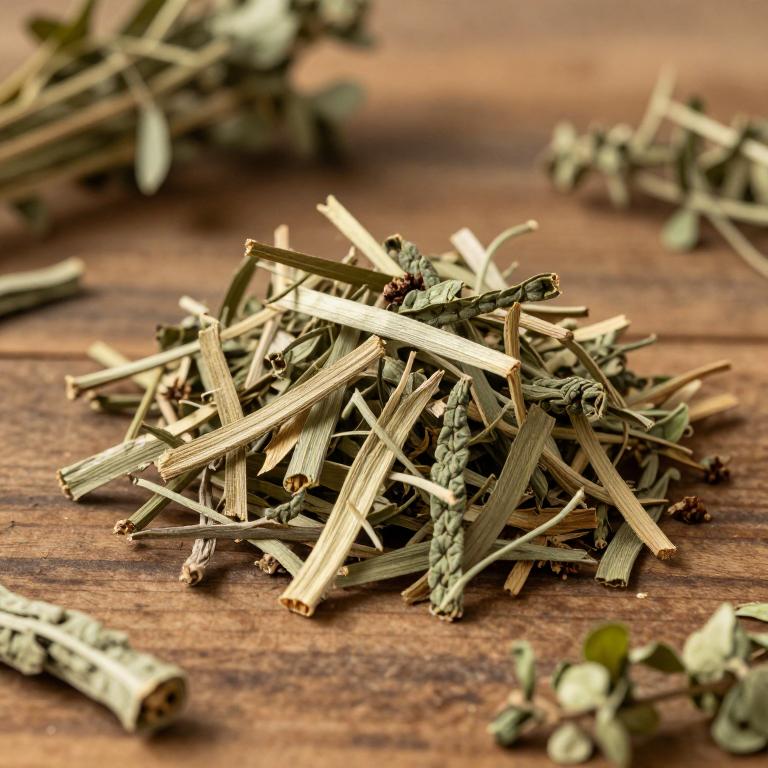
Names and Synonyms
Scientific Names
Accepted name
Trichosanthes scabra var. scabraSynonyms
- Gymnopetalum weberi
- Gymnopetalum monoicum var. incisum
- Cucumis integrifolius
- Gymnopetalum leucostictum
- Gymnopetalum monoicum
- Gymnopetalum integrifolium
- Anguina integrifolia
- Gymnopetalum leucostictum var. grandiflorum
- Trichosanthes lucioniana
- Scotanthus weberi
Taxonomical Classification
This plant belongs to the kingdom Plantae within the phylum Streptophyta and the class Equisetopsida. It is further classified under the subclass Magnoliidae and the order Cucurbitales, falling into the family Cucurbitaceae. Finally, it is identified by the genus Trichosanthes.
| Rank | Classification |
|---|---|
| Kingdom | Plantae |
| Phylum | Streptophyta |
| Class | Equisetopsida |
| Subclass | Magnoliidae |
| Order | Cucurbitales |
| Family | Cucurbitaceae |
| Genus | Trichosanthes |
Sources: The World Checklist of Vascular Plants (WCVP)
Distribution
This plant exhibits a wide geographical range across several key regions in Asia. In China, its distribution spans from the South-Central provinces to the Southeast coastal areas. It is also found specifically on the tropical island of Hainan. Moving toward the Indian Subcontinent, the species thrives in the region of Assam. Additionally, its habitat extends into the mountainous terrain of the East Himalaya.
| Region | Area |
|---|---|
| China | China South-Central |
| China | Hainan |
| China | China Southeast |
| Indian Subcontinent | Assam |
| Indian Subcontinent | East Himalaya |
| Indian Subcontinent | India |
| Indian Subcontinent | Sri Lanka |
| Indo-China | Cambodia |
| Indo-China | Laos |
| Indo-China | Myanmar |
Sources: The World Checklist of Vascular Plants (WCVP)
Plant Parts
Trichosanthes scabra var. scabra has 1 reported plant parts identified across 1 scientific publications and several other databases that are studied for medicinal purposes. The most consistently reported plant part include fruit.
| Plant part | Supporting sources | Consensus |
|---|---|---|
| Fruit | 1 supporting sources | ★☆☆☆☆ |
Fruit
- Chemical & pharmaceutical bulletin
Chemicals
Trichosanthes scabra var. scabra has 5 reported phytochemicals identified across 1 scientific publications and several other databases. The most consistently reported chemicals include 25-O-Acetylbryoamaride, Aoibaclyin, Bryoamaride, beta-sitosterol 3-O-beta-D-glucopyranoside, triterpene.
| Chemical | Supporting sources | Consensus |
|---|---|---|
| 25-O-Acetylbryoamaride | 1 supporting sources | ★☆☆☆☆ |
| Aoibaclyin | 1 supporting sources | ★☆☆☆☆ |
| Bryoamaride | 1 supporting sources | ★☆☆☆☆ |
| beta-sitosterol 3-O-beta-D-glucopyranoside | 1 supporting sources | ★☆☆☆☆ |
| triterpene | 1 supporting sources | ★☆☆☆☆ |
25-O-Acetylbryoamaride
- Chemical & pharmaceutical bulletin
Aoibaclyin
- Chemical & pharmaceutical bulletin
Bryoamaride
- Chemical & pharmaceutical bulletin
beta-sitosterol 3-O-beta-D-glucopyranoside
- Chemical & pharmaceutical bulletin
triterpene
- Chemical & pharmaceutical bulletin
Preparations
Trichosanthes scabra var. scabra has 1 reported preparations identified across 1 scientific publications and several other databases. The most consistently reported preparations include EtOH extract.
| Preparation | Supporting sources | Consensus |
|---|---|---|
| Etoh extract | 1 supporting sources | ★☆☆☆☆ |
Etoh extract
- Chemical & pharmaceutical bulletin