pointed gourd
Trichosanthes dioica · Accepted scientific name
Scientific literature: Very Sparse (10 studies) · ★☆☆☆☆
Pointed gourd, scientifically known as Trichosanthes dioica, is a versatile medicinal vegetable widely used in Ayurveda. Renowned for its cooling properties, it aids digestion, manages diabetes, and boosts immunity. Rich in essential vitamins and antioxidants, this nutrient-dense plant plays a vital role in holistic wellness and traditional healing.
- Family
- Cucurbitaceae
- Native range
- Asia-Tropical
- Parts used
- Fruit · Root
- Common names
- Pointed Gourd
- Scientific synonyms
- Trichosanthes Dioica Var. Sagittifolia · Trichosanthes Officinalis · 1 more
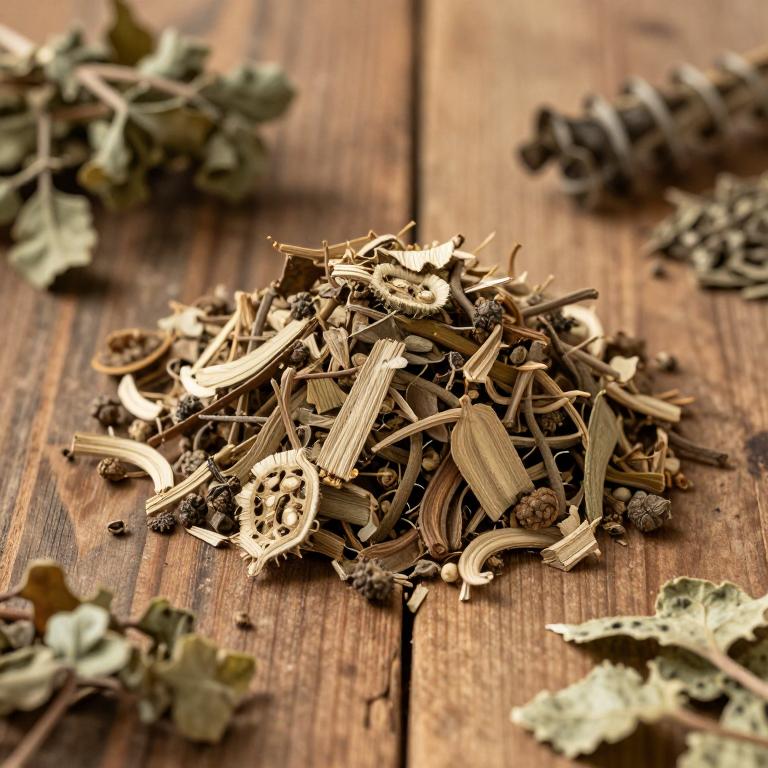
Names and Synonyms
Common Names
- pointed gourd
Scientific Names
Accepted name
Trichosanthes dioicaSynonyms
- Trichosanthes dioica var. sagittifolia
- Trichosanthes officinalis
- Anguina dioica
Sources: Wikidata, Catalogue of Life
Taxonomical Classification
This plant belongs to the kingdom Plantae and is classified under the phylum Streptophyta within the class Equisetopsida. It is further organized under the subclass Magnoliidae and the order Cucurbitales. Finally, it is a member of the family Cucurbitaceae and falls under the genus Trichosanthes.
| Rank | Classification |
|---|---|
| Kingdom | Plantae |
| Phylum | Streptophyta |
| Class | Equisetopsida |
| Subclass | Magnoliidae |
| Order | Cucurbitales |
| Family | Cucurbitaceae |
| Genus | Trichosanthes |
Sources: The World Checklist of Vascular Plants (WCVP)
Distribution
This plant is widely distributed across various regions of the Indian Subcontinent. It can be found growing throughout the diverse landscapes of India and its neighboring nation, Bangladesh. Within the subcontinent, its presence extends to the lush greenery of Assam. The species also inhabits the rugged terrains of the East Himalaya. Furthermore, its geographical range includes the mountainous areas of Nepal.
| Region | Area |
|---|---|
| Indian Subcontinent | Assam |
| Indian Subcontinent | Bangladesh |
| Indian Subcontinent | East Himalaya |
| Indian Subcontinent | India |
| Indian Subcontinent | Nepal |
| Indian Subcontinent | Pakistan |
| Indian Subcontinent | Sri Lanka |
| Indian Subcontinent | West Himalaya |
| Indo-China | Andaman Is. |
| Indo-China | Myanmar |
Sources: The World Checklist of Vascular Plants (WCVP)
Botanical Identification
Life history
The life history of Trichosanthes dioica is characterized by a perennial lifecycle, though its growth patterns can exhibit variability depending on environmental conditions. As a dioecious climbing herb, the plant maintains separate male and female individuals, a reproductive strategy that ensures cross-pollination through specific insect vectors. The plant begins its development by sending out long, slender tendrils that allow it to scale surrounding vegetation to reach sunlight. Over its lifespan, it undergoes seasonal cycles of vegetative growth, flowering, and fruiting. During the flowering stage, the distinct male and female flowers emerge to facilitate sexual reproduction, which eventually leads to the development of fleshy, often bright-colored fruits containing seeds. These seeds serve as the primary mechanism for dispersal and the initiation of new plant generations, allowing the perennial system to persist and colonize new territories over multiple seasons.
- Lifecycle :
- perennial
Morphology
The morphology of Trichosanthes dioica is characterized by its growth form as a non-woody herb that functions as an obligatory climber, utilizing tendrils to ascend its supports. As an independent organism, it does not exhibit parasitic behavior, relying on its own root system for nutrient uptake. While it is often associated with moist environments, its habitat profile is categorized as terrestrial, ranging from semiaquatic to fully terrestrial settings depending on local moisture availability.
- Aquatic :
- terrestrial
- Climber :
- obligatory
- Growth form :
- herb
- Parasite :
- independent
- Woodiness :
- non-woody
Physiology
The physiology of Trichosanthes dioica is characterized by a complex metabolic framework optimized for its growth as a climbing perennial herb. As a dioecious species, its reproductive physiology is governed by the separation of male and female functions on different individual plants, a strategy that promotes cross-pollination and genetic diversity. The plant's vegetative processes involve efficient photosynthetic pathways to support its rapid climbing habit, utilizing specialized tendrils for mechanical support. In terms of nutrient acquisition, the plant does not possess the specialized symbiotic relationships required for atmospheric nitrogen conversion; specifically, it is not a nitrogen fixer (trait_1: no). Instead, it relies on the uptake of nitrates and ammonium from the soil through its root system to satisfy its nitrogen requirements for protein synthesis and enzymatic functions. Its metabolic profile is also notable for the synthesis of diverse secondary metabolites, including cucurbitacins and various alkaloids, which serve physiological roles in defense against herbivory and environmental stressors.
- Nitrogen fixer :
- no
Reproduction
The reproduction of Trichosanthes dioica is driven by a biotic pollination syndrome, characterized by the movement of living organisms to facilitate fertilization. As a dioecious species, individual plants are either male or female, necessitating the transfer of pollen from male flowers to female flowers. This process is primarily mediated by an insect pollination syndrome, where various insect vectors play a critical role in the reproductive cycle. Specifically, the plant relies on insect interactions—encompassing a diverse range of pollinators such as bees, beetles, ants, butterflies, moths, and flies—to ensure effective cross-pollination and successful seed production.
- Pollination syndrome :
- insect
- Pollination syndrome :
- biotic
Sources: Global Inventory of Floras and Traits (GIFT)
Plant Parts
Trichosanthes dioica has 2 reported plant parts identified across 2 scientific publications and several other databases that are studied for medicinal purposes. The most consistently reported plant part include fruit, root.
| Plant part | Supporting sources | Consensus |
|---|---|---|
| Fruit | 1 supporting sources | ★☆☆☆☆ |
| Root | 1 supporting sources | ★☆☆☆☆ |
Fruit
- Cellular and molecular biology (Noisy-le-Grand, France)
Root
- Pharmaceutical biology
Chemicals
Trichosanthes dioica has 1 reported phytochemicals identified across 2 scientific publications and several other databases. The most consistently reported chemicals include Triterpenoid.
| Chemical | Supporting sources | Consensus |
|---|---|---|
| Triterpenoid | 1 supporting sources | ★☆☆☆☆ |
Triterpenoid
- Pharmaceutical biology
Activities
Trichosanthes dioica has 3 reported activities identified across 2 scientific publications and several other databases. The most consistently reported activities include Antihyperglycemic, Antihyperlipidemic, Depressant.
| Activity | Supporting sources | Consensus |
|---|---|---|
| Antihyperglycemic | 1 supporting sources | ★☆☆☆☆ |
| Antihyperlipidemic | 1 supporting sources | ★☆☆☆☆ |
| Depressant | 1 supporting sources | ★☆☆☆☆ |
Antihyperglycemic
- ISRN pharmacology
Antihyperlipidemic
- ISRN pharmacology
Depressant
- Chinese journal of natural medicines
Conditions
Trichosanthes dioica has 3 reported investigations on conditions identified across 2 scientific publications and several other databases. The most consistently reported conditions include blood sugar, diabetes mellitus, oxidative stress.
| Condition | Supporting sources | Consensus |
|---|---|---|
| Blood sugar | 1 supporting sources | ★☆☆☆☆ |
| Diabetes mellitus | 1 supporting sources | ★☆☆☆☆ |
| Oxidative stress | 1 supporting sources | ★☆☆☆☆ |
Blood sugar
- The Indian journal of medical research
Diabetes mellitus
- ISRN pharmacology
Oxidative stress
- Pharmaceutical biology