Trichilia rubescens
Trichilia rubescens · Accepted scientific name
Scientific literature: Very Sparse (16 studies) · ★☆☆☆☆
Trichilia rubescens, scientifically known as Trichilia rubescens, is a significant medicinal plant native to tropical regions. Renowned for its diverse therapeutic properties, various parts of this species are traditionally used to treat ailments ranging from skin infections to digestive issues, offering valuable insights into ethnobotanical pharmacology and natural healing.
- Family
- Meliaceae
- Native range
- Africa
- Parts used
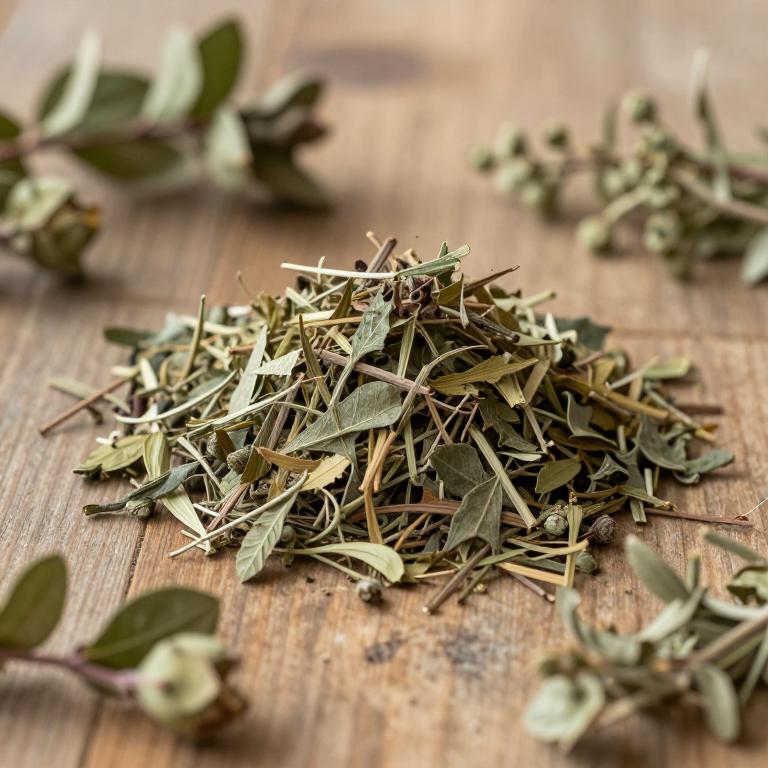
- Leaf
- Common names
- Not available
- Scientific synonyms
- Trichilia Papillosa · Trichilia Laurentii · 2 more
Names and Synonyms
Scientific Names
Accepted name
Trichilia rubescensSynonyms
- Trichilia papillosa
- Trichilia laurentii
- Trichilia derumieri
- Trichilia batesii
Sources: Wikidata
Taxonomical Classification
This plant belongs to the kingdom Plantae and is classified within the phylum Streptophyta and the class Equisetopsida. Following the subclass Magnoliidae, it is organized under the order Sapindales and the family Meliaceae. Ultimately, its specific taxonomic identity is defined by its membership in the genus Trichilia.
| Rank | Classification |
|---|---|
| Kingdom | Plantae |
| Phylum | Streptophyta |
| Class | Equisetopsida |
| Subclass | Magnoliidae |
| Order | Sapindales |
| Family | Meliaceae |
| Genus | Trichilia |
Sources: The World Checklist of Vascular Plants (WCVP)
Distribution
This plant exhibits a specific distribution pattern primarily centered within the tropical regions of Africa. In West Tropical Africa, its presence is documented in Nigeria. The species also extends into West-Central Tropical Africa, where it can be found in Cabinda. Furthermore, it inhabits the Central African Republic and Cameroon within the same West-Central zone. Finally, its geographical range includes the Congo, marking its presence across these diverse tropical territories.
| Region | Area |
|---|---|
| West Tropical Africa | Nigeria |
| West-Central Tropical Africa | Cabinda |
| West-Central Tropical Africa | Central African Republic |
| West-Central Tropical Africa | Cameroon |
| West-Central Tropical Africa | Congo |
| West-Central Tropical Africa | Equatorial Guinea |
| West-Central Tropical Africa | Gabon |
| West-Central Tropical Africa | Gulf of Guinea Is. |
| West-Central Tropical Africa | DR Congo |
| East Tropical Africa | Tanzania |
Sources: The World Checklist of Vascular Plants (WCVP)
Botanical Identification
Life history
The life history of Trichilia rubescens is characterized by its status as a perennial organism, allowing it to persist in its environment through multiple growing seasons. As an evergreen species, it maintains its foliage throughout the year, providing continuous photosynthetic activity and structural stability without the seasonal shedding typical of deciduous plants. This combination of a long-lived lifecycle and constant leaf retention enables the plant to establish a stable presence within its ecological niche.
- Deciduousness :
- evergreen
- Lifecycle :
- perennial
Morphology
The morphology of Trichilia rubescens is characterized by a woody growth form, specifically classified as a tree. As a self-supporting plant, it does not function as a climber (such as a vine or liana) or an epiphyte, but rather exists as an independent organism in a terrestrial habitat. The plant's stature varies significantly depending on environmental conditions, with recorded heights ranging from a minimum of approximately 3.66 meters to a maximum of 8 meters, though it reaches a mean height of approximately 15 meters.
- Aquatic :
- terrestrial
- Climber :
- self-supporting
- Epiphyte :
- terrestrial
- Growth form :
- tree
- Parasite :
- independent
- Plant height max:
- 8 m
- Plant height mean:
- 15 m
- Plant height min:
- 3.657644477 m
- Woodiness :
- woody
Physiology
The physiology of Trichilia rubescens is characterized by its metabolic processes and nutrient acquisition strategies, which are typical of many woody species within the Meliaceae family. Its physiological framework involves complex carbon fixation through photosynthesis to support its growth and secondary metabolite production, which are essential for its medicinal properties. In terms of nutrient cycling and soil interaction, the plant does not exhibit the capacity for biological nitrogen fixation; it is not a nitrogen fixer and lacks the symbiotic relationship with diazotrophic bacteria required to convert atmospheric nitrogen into usable forms. Instead, it relies on the uptake of available nitrates and ammonium from the soil through its root system to support its protein synthesis and overall physiological development.
- Nitrogen fixer :
- no
Reproduction
The reproduction of Trichilia rubescens follows a distinct seasonal cycle characterized by specific phenological phases for flowering and fruiting. The flowering period typically commences in February and continues through April, though the exact timing can remain variable depending on environmental conditions. Following the successful pollination of its flowers, the plant transitions into its fruiting stage, which begins in May. The development of the fruit concludes by June, marking the end of its primary reproductive cycle for the season.
- Flowering time :
- Feb
- Flowering time :
- Apr
- Fruiting time :
- May
- Fruiting time :
- Jun
Sources: Global Inventory of Floras and Traits (GIFT)
Plant Parts
Trichilia rubescens has 1 reported plant parts identified across 2 scientific publications and several other databases that are studied for medicinal purposes. The most consistently reported plant part include leaf.
| Plant part | Supporting sources | Consensus |
|---|---|---|
| Leaf | 2 supporting sources | ★☆☆☆☆ |
Leaf
- Antimicrobial agents and chemotherapy
- Zeitschrift fur Naturforschung. C, Journal of biosciences
Chemicals
Trichilia rubescens has 8 reported phytochemicals identified across 2 scientific publications and several other databases. The most consistently reported chemicals include TRICHIRUBINE A, TS1, Limonin, TR3, TR4.
| Chemical | Supporting sources | Consensus |
|---|---|---|
| TRICHIRUBINE A | 2 supporting sources | ★☆☆☆☆ |
| TS1 | 2 supporting sources | ★☆☆☆☆ |
| Limonin | 1 supporting sources | ★☆☆☆☆ |
| TR3 | 1 supporting sources | ★☆☆☆☆ |
| TR4 | 1 supporting sources | ★☆☆☆☆ |
| TR9 | 1 supporting sources | ★☆☆☆☆ |
| TRICHIRUBINE B | 1 supporting sources | ★☆☆☆☆ |
| TS3 | 1 supporting sources | ★☆☆☆☆ |
TRICHIRUBINE A
- Antimicrobial agents and chemotherapy
- Zeitschrift fur Naturforschung. C, Journal of biosciences
TS1
- Journal of basic and clinical physiology and pharmacology
- Zeitschrift fur Naturforschung. C, Journal of biosciences
Limonin
- Journal of basic and clinical physiology and pharmacology
TR3
- PloS one
TR4
- PloS one
TR9
- PloS one
TRICHIRUBINE B
- Antimicrobial agents and chemotherapy
TS3
- Journal of basic and clinical physiology and pharmacology
Activities
Trichilia rubescens has 3 reported activities identified across 2 scientific publications and several other databases. The most consistently reported activities include Anticancer, Antiviral, Hepatoprotective.
| Activity | Supporting sources | Consensus |
|---|---|---|
| Anticancer | 1 supporting sources | ★☆☆☆☆ |
| Antiviral | 1 supporting sources | ★☆☆☆☆ |
| Hepatoprotective | 1 supporting sources | ★☆☆☆☆ |
Anticancer
- Journal of basic and clinical physiology and pharmacology
Antiviral
- Journal of basic and clinical physiology and pharmacology
Hepatoprotective
- Journal of basic and clinical physiology and pharmacology
Conditions
Trichilia rubescens has 1 reported investigations on conditions identified across 2 scientific publications and several other databases. The most consistently reported conditions include hepatoma.
| Condition | Supporting sources | Consensus |
|---|---|---|
| Hepatoma | 1 supporting sources | ★☆☆☆☆ |
Hepatoma
- PloS one
Preparations
Trichilia rubescens has 2 reported preparations identified across 2 scientific publications and several other databases. The most consistently reported preparations include methanolic crude extract of T. rubescens leaves, methylene chloride/methanol extracts of Trichilia rubescens leaves.
| Preparation | Supporting sources | Consensus |
|---|---|---|
| Methanolic crude extract of t. rubescens leaves | 1 supporting sources | ★☆☆☆☆ |
| Methylene chloride/methanol extracts of trichilia rubescens leaves | 1 supporting sources | ★☆☆☆☆ |
Methanolic crude extract of t. rubescens leaves
- Antimicrobial agents and chemotherapy
Methylene chloride/methanol extracts of trichilia rubescens leaves
- Zeitschrift fur Naturforschung. C, Journal of biosciences