Trichilia gilgiana
Trichilia gilgiana · Accepted scientific name
Scientific literature: Very Sparse (9 studies) · ★☆☆☆☆
, scientifically known as Trichilia gilgiana, is a remarkable medicinal plant native to tropical regions. Renowned for its diverse therapeutic properties, this species is frequently utilized in traditional medicine to treat various ailments. Its unique phytochemical profile offers significant potential for pharmacological research and the development of natural remedies.
- Family
- Meliaceae
- Native range
- Africa
- Parts used
- Leaf · Stem
- Common names
- Not available
- Scientific synonyms
- Trichilia Kisoko · Trichilia Bipindeana · 1 more
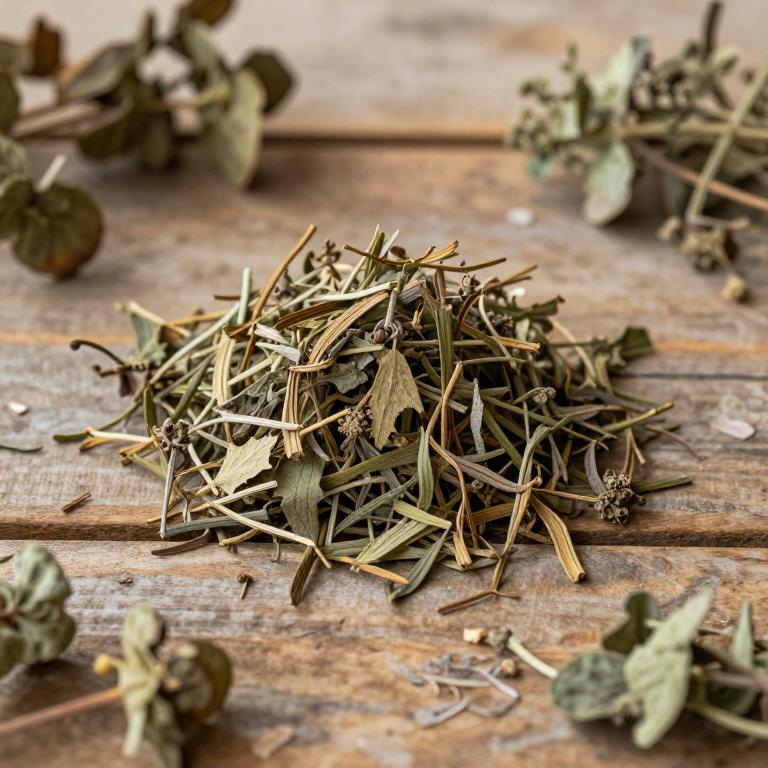
Names and Synonyms
Scientific Names
Accepted name
Trichilia gilgianaSynonyms
- Trichilia kisoko
- Trichilia bipindeana
- Trichilia hylobia
Sources: Wikidata
Taxonomical Classification
This plant belongs to the kingdom Plantae and is classified within the phylum Streptophyta and class Equisetopsida. As a member of the subclass Magnoliidae and order Sapindaales, it is further categorized under the family Meliaceae. Finally, its specific taxonomic identity is defined by the genus Trichilia.
| Rank | Classification |
|---|---|
| Kingdom | Plantae |
| Phylum | Streptophyta |
| Class | Equisetopsida |
| Subclass | Magnoliidae |
| Order | Sapindales |
| Family | Meliaceae |
| Genus | Trichilia |
Sources: The World Checklist of Vascular Plants (WCVP)
Distribution
This plant exhibits a specific distribution pattern across several regions of the African continent. In West Tropical Africa, its presence has been documented within Nigeria. Moving into West-Central Tropical Africa, the species can be found in the territory of Cabinda. It also inhabits the Central African Republic and the nation of Cameroon within this same central belt. Finally, its range extends further into the West-Central Tropical Africa region to include Congo.
| Region | Area |
|---|---|
| West Tropical Africa | Nigeria |
| West-Central Tropical Africa | Cabinda |
| West-Central Tropical Africa | Central African Republic |
| West-Central Tropical Africa | Cameroon |
| West-Central Tropical Africa | Congo |
| West-Central Tropical Africa | Equatorial Guinea |
| West-Central Tropical Africa | Gabon |
| West-Central Tropical Africa | DR Congo |
Sources: The World Checklist of Vascular Plants (WCVP)
Botanical Identification
Life history
The life history of Trichilia gilgiana is characterized by its status as a perennial organism, allowing it to persist in its environment over many years through continuous growth cycles. Throughout its lifespan, the plant maintains an evergreen habit, ensuring that its foliage remains functional and present across different seasons rather than undergoing a period of dormancy through leaf shedding.
- Deciduousness :
- evergreen
- Lifecycle :
- perennial
Morphology
The morphology of Trichilia gilgiana is characterized by its robust growth form, as it is classified as a woody tree. This species exhibits a self-supporting structure, distinguishing it from climbing lianas or vines. In terms of its physical stature, the plant reaches an average height of approximately 20 meters, with recorded maximum heights extending up to 21.33625945 meters.
- Climber :
- self-supporting
- Growth form :
- tree
- Plant height max:
- 21.33625945 m
- Plant height mean:
- 20 m
- Woodiness :
- woody
Physiology
The physiology of Trichilia gilgiana is characterized by complex metabolic processes geared toward survival in tropical forest ecosystems, though it does not exhibit the capacity to function as a nitrogen fixer. Unlike many leguminous species that form symbiotic relationships with rhizobia to convert atmospheric nitrogen into bioavailable forms, this species lacks the specialized root nodules required for such biological nitrogen fixation; therefore, its nitrogen acquisition is dependent on the uptake of nitrates and ammonium from the soil through its root system. Its physiological processes include robust photosynthetic activity to support biomass production and a specialized secondary metabolism that facilitates the synthesis of bioactive compounds. These phytochemical pathways are essential for the plant's chemical defense mechanisms and its medicinal properties, involving intricate enzymatic reactions that regulate growth, nutrient assimilation, and environmental adaptation.
- Nitrogen fixer :
- no
Reproduction
The reproduction of Trichilia gilgiana is characterized by a biotic pollination syndrome, relying on living organisms to facilitate the transfer of pollen. Specifically, the plant exhibits pollination syndromes involving insects, with bees serving as a primary pollinator group. Following successful fertilization, the plant produces a fruit classified as a drupe. The subsequent dispersal of seeds is achieved through a zoochorous syndrome, where animals play a critical role in spreading the progeny to new locations.
- Dispersal syndrome :
- zoochorous
- Fruit type :
- other
- Pollination syndrome :
- insect
- Pollination syndrome :
- bee
- Pollination syndrome :
- biotic
Sources: Global Inventory of Floras and Traits (GIFT)
Plant Parts
Trichilia gilgiana has 2 reported plant parts identified across 2 scientific publications and several other databases that are studied for medicinal purposes. The most consistently reported plant part include leaf, stem.
| Plant part | Supporting sources | Consensus |
|---|---|---|
| Leaf | 1 supporting sources | ★☆☆☆☆ |
| Stem | 1 supporting sources | ★☆☆☆☆ |
Leaf
- Natural product research
Stem
- Natural product research
Chemicals
Trichilia gilgiana has 4 reported phytochemicals identified across 2 scientific publications and several other databases. The most consistently reported chemicals include Octadecane-2-one, TRICHIRUBINE A, TS3, scopoletin.
| Chemical | Supporting sources | Consensus |
|---|---|---|
| Octadecane-2-one | 1 supporting sources | ★☆☆☆☆ |
| TRICHIRUBINE A | 1 supporting sources | ★☆☆☆☆ |
| TS3 | 1 supporting sources | ★☆☆☆☆ |
| scopoletin | 1 supporting sources | ★☆☆☆☆ |
Octadecane-2-one
- Natural product research
TRICHIRUBINE A
- Natural product research
TS3
- Natural product research
scopoletin
- Natural product research
Activities
Trichilia gilgiana has 1 reported activities identified across 2 scientific publications and several other databases. The most consistently reported activities include Cytotoxic.
| Activity | Supporting sources | Consensus |
|---|---|---|
| Cytotoxic | 1 supporting sources | ★☆☆☆☆ |
Cytotoxic
- Natural product research
Conditions
Trichilia gilgiana has 1 reported investigations on conditions identified across 2 scientific publications and several other databases. The most consistently reported conditions include visceral leishmaniasis.
| Condition | Supporting sources | Consensus |
|---|---|---|
| Visceral leishmaniasis | 1 supporting sources | ★☆☆☆☆ |
Visceral leishmaniasis
- Natural product research
Preparations
Trichilia gilgiana has 2 reported preparations identified across 2 scientific publications and several other databases. The most consistently reported preparations include CH2Cl2-MeOH (1:1) leaves extract, stem bark.
| Preparation | Supporting sources | Consensus |
|---|---|---|
| Ch2cl2-meoh (1:1) leaves extract | 1 supporting sources | ★☆☆☆☆ |
| Stem bark | 1 supporting sources | ★☆☆☆☆ |
Ch2cl2-meoh (1:1) leaves extract
- Natural product research
Stem bark
- Natural product research