Cape-mahogany
Trichilia dregeana · Accepted scientific name
Scientific literature: Very Sparse (5 studies) · ★☆☆☆☆
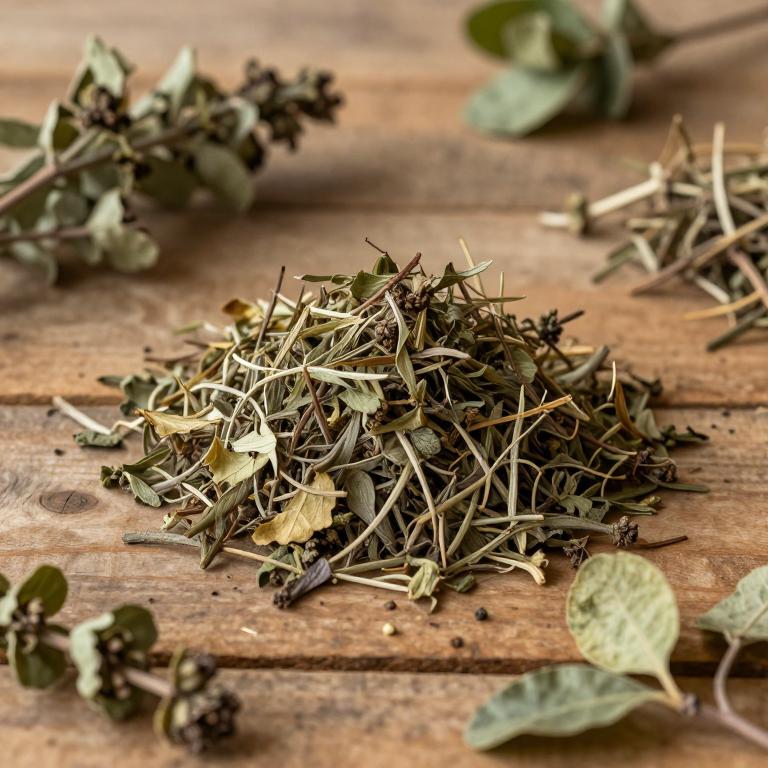
Cape-mahogany, scientifically known as Trichilia dregeana, is a remarkable medicinal tree native to Southern Africa. Renowned for its diverse therapeutic properties, various parts of this plant are traditionally used to treat ailments ranging from skin infections to digestive issues, offering a rich source of bioactive compounds for natural healing.
Names and Synonyms
Common Names
- Cape-mahogany
- Christmas-bells
- forest Natal-mahogany
- forest-mahogany
- red-ash
- thundertree
- Forest Natal Mahogany
- Forest Natal Mohogany
- Natal Forest Mahogany
- white mahogany
Scientific Names
Accepted name
Trichilia dregeanaSynonyms
- Trichilia dregeana var. oblonga
- Trichilia grandiflora
- Trichilia ledermannii
- Trichilia chirindensis
- Trichilia stuhlmannii
- Trichilia strigulosa
- Trichilia splendida
- Trichilia schliebenii
- Trichilia vestita
- Trichilia umbrosa
- Trichilia redacta
Regional and Traditional Names
Spanish:
- Trichilia welwitschii var. grandiflora
- Trichilia chirindensis
- Trichilia stuhlmannii
- Trichilia strigulosa
- Trichilia ledermannii
- Trichilia redacta
- Trichilia vestita
- Trichilia schliebenii
- Trichilia tomentosa
- Trichilia dregei
- Trichilia umbrosa
- Trichilia splendida
German:
- Wald-Mahagoni
French:
- aribanda des montagnes
Sources: Wikidata, Catalogue of Life
Taxonomical Classification
This plant belongs to the kingdom Plantae within the phylum Streptophyta and the class Equisetopsida. It is further classified under the subclass Magnoliidae and the order Sapindales. Ultimately, Trichilia dregeana is a member of the Meliaceae family within the genus Trichilia.
| Rank | Classification |
|---|---|
| Kingdom | Plantae |
| Phylum | Streptophyta |
| Class | Equisetopsida |
| Subclass | Magnoliidae |
| Order | Sapindales |
| Family | Meliaceae |
| Genus | Trichilia |
Sources: The World Checklist of Vascular Plants (WCVP)
Distribution
This plant exhibits a specific distribution pattern across the tropical regions of Africa. In West Tropical Africa, it can be found inhabiting the territories of Guinea, Liberia, and Ivory Coast. Its presence extends into the West-Central Tropical Africa region as well. Specifically, it is documented growing within the Central African Republic. Additionally, the species is known to occur within the borders of Cameroon.
| Region | Area |
|---|---|
| West Tropical Africa | Guinea |
| West Tropical Africa | Ivory Coast |
| West Tropical Africa | Liberia |
| West-Central Tropical Africa | Central African Republic |
| West-Central Tropical Africa | Cameroon |
| West-Central Tropical Africa | Rwanda |
| West-Central Tropical Africa | DR Congo |
| Northeast Tropical Africa | Ethiopia |
| Northeast Tropical Africa | Sudan-South Sudan |
| East Tropical Africa | Kenya |
Sources: The World Checklist of Vascular Plants (WCVP)
Botanical Identification
Ecology
The ecology of Trichilia dregeana is characterized by its adaptability to diverse topographical gradients, thriving within a broad altitudinal spectrum. This species is typically distributed across various landscape formations, occupying habitats that range from low-lying coastal or lowland areas at an elevation of 15 m AMSL up to montane or sub-montane regions reaching a maximum elevation of 1220 m AMSL. This significant elevational range suggests that the plant can tolerate varying thermal regimes and moisture availability, allowing it to persist in multiple ecological niches within its geographic territory.
- Elevational range max:
- 1220 m AMSL
- Elevational range min:
- 15 m AMSL
Life history
The life history of Trichilia dregeana is characterized by its status as a perennial organism, allowing it to persist in its environment over many years. Throughout its development, the plant maintains an evergreen habit, retaining its foliage consistently rather than shedding it seasonally.
- Deciduousness :
- evergreen
- Lifecycle :
- perennial
Morphology
The morphology of Trichilia dregeana is characterized by its stature as a woody tree that functions as a self-supporting, independent organism. This terrestrial species exhibits significant variation in size, with plant heights ranging from a minimum of 2 m to a maximum of approximately 24.38 m, maintaining an average height of about 22.5 m. As a non-parasitic and non-epiphytic plant, it establishes itself firmly in terrestrial habitats, utilizing a robust, woody growth form rather than behaving as a climber, liana, or vine.
- Aquatic :
- terrestrial
- Climber :
- self-supporting
- Epiphyte :
- terrestrial
- Growth form :
- tree
- Parasite :
- independent
- Plant height max:
- 24.38429651 m
- Plant height mean:
- 22.5 m
- Plant height min:
- 2 m
- Woodiness :
- woody
Physiology
The physiology of Trichilia dregeana is characterized by a C3 photosynthetic pathway, which governs its carbon fixation processes and energy production. The morphological adaptations of its foliage include a mean leaf length of 7.3 cm and a mean leaf width of 3.9 cm, supporting its metabolic requirements. Additionally, the plant exhibits a mean leaf thickness of 0.024 mm, reflecting its structural leaf anatomy. Regarding its nutrient acquisition, Trichilia dregeana does not function as a nitrogen fixer, relying instead on soil nitrogen availability for its growth and development.
- Leaf length mean:
- 7.3 cm
- Leaf thickness mean:
- 0.024 mm
- Leaf width mean:
- 3.9 cm
- Nitrogen fixer :
- no
- Photosynthetic pathway :
- C3
Reproduction
The reproduction of Trichilia dregeana is characterized by the development of a specific fruit type classified as "other" (typically a fleshy drupaceous structure within the Meliaceae family), which reaches an average length of 2.4 cm and an average width of 1.13 cm. The dispersal of its offspring follows a zoochorous syndrome, meaning the fruit is dispersed by animals. Within these fruits, the seeds exhibit specific morphological dimensions, including a mean seed length of 12.4 mm, a maximum seed height of 6.7 mm, and a maximum seed width of 8 mm.
- Dispersal syndrome :
- zoochorous
- Fruit length mean:
- 2.4 cm
- Fruit type :
- other
- Fruit width mean:
- 1.13 cm
- Seed height max:
- 6.7 mm
- Seed length mean:
- 12.4 mm
- Seed width max:
- 8 mm
Sources: Global Inventory of Floras and Traits (GIFT)
Plant Parts
Trichilia dregeana has 2 reported plant parts identified across 2 scientific publications and several other databases that are studied for medicinal purposes. The most consistently reported plant part include leaf, root.
| Plant part | Supporting sources | Consensus |
|---|---|---|
| Leaf | 1 supporting sources | ★☆☆☆☆ |
| Root | 1 supporting sources | ★☆☆☆☆ |
Leaf
- Journal of ethnopharmacology
Root
- Frontiers in microbiology
Chemicals
Trichilia dregeana has 1 reported phytochemicals identified across 2 scientific publications and several other databases. The most consistently reported chemicals include ETHYL ACETATE.
| Chemical | Supporting sources | Consensus |
|---|---|---|
| ETHYL ACETATE | 1 supporting sources | ★☆☆☆☆ |
ETHYL ACETATE
- Journal of ethnopharmacology
Conditions
Trichilia dregeana has 2 reported investigations on conditions identified across 2 scientific publications and several other databases. The most consistently reported conditions include bacterial infections, headache.
| Condition | Supporting sources | Consensus |
|---|---|---|
| Bacterial infections | 1 supporting sources | ★☆☆☆☆ |
| Headache | 1 supporting sources | ★☆☆☆☆ |
Bacterial infections
- Veterinary medicine and science
Headache
- Journal of ethnopharmacology
Preparations
Trichilia dregeana has 3 reported preparations identified across 2 scientific publications and several other databases. The most consistently reported preparations include ethanolic extracts, ethyl acetate leaf extract, methanol extracts from roots.
| Preparation | Supporting sources | Consensus |
|---|---|---|
| Ethanolic extracts | 1 supporting sources | ★☆☆☆☆ |
| Ethyl acetate leaf extract | 1 supporting sources | ★☆☆☆☆ |
| Methanol extracts from roots | 1 supporting sources | ★☆☆☆☆ |
Ethanolic extracts
- Journal of ethnopharmacology
Ethyl acetate leaf extract
- Journal of ethnopharmacology
Methanol extracts from roots
- Frontiers in microbiology