desert horse purslane
Trianthema portulacastrum · Accepted scientific name
Scientific literature: Very Sparse (34 studies) · ★☆☆☆☆
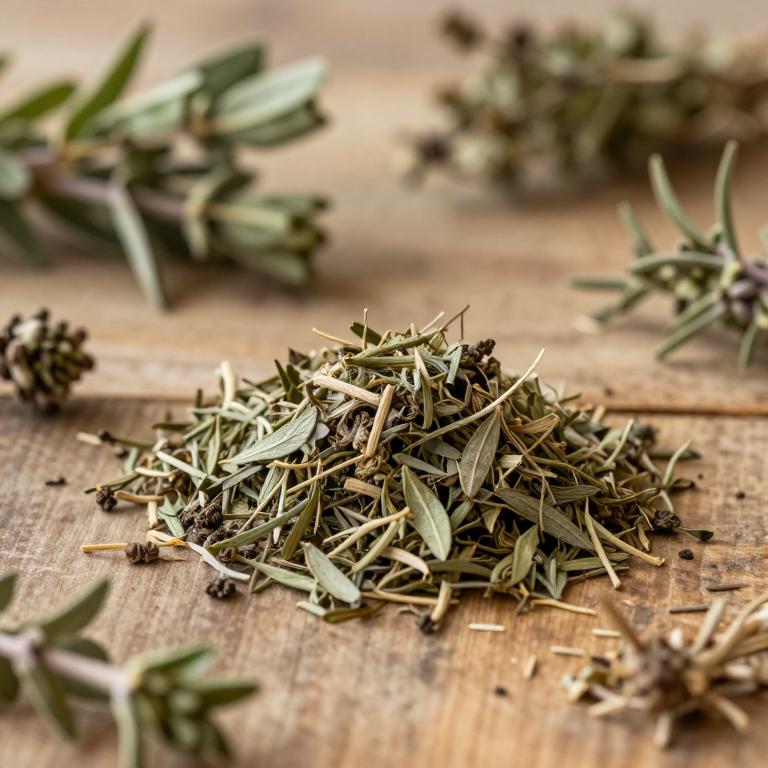
Desert horse purslane, scientifically known as Trianthema portulacastrum, is a resilient, succulent herb found in various tropical and subtropical regions. Valued in traditional medicine, this plant possesses significant antioxidant and anti-inflammatory properties. It is frequently utilized to support digestive health and treat skin ailments, offering diverse therapeutic benefits.
Names and Synonyms
Common Names
- desert-horsepurslane
- Desert horsepurslane
- black-pigweed
- giant-pigweed
- horse-purslane
- horse purslane
Scientific Names
Accepted name
Trianthema portulacastrumSynonyms
- Portulaca toston
- Portulacastrum monogynum
- Trianthema procumbens
- Trianthema flexuosum
- Trianthema littorale
- Trianthema obcordatum
- Tetragonia chisimajensis
Regional and Traditional Names
Spanish:
- verdolaga de cochi
- verdolago de cochi
- verdolaga blanca (bronca)
- verdolaga
- Monte salado
- verdolaga blanca
- verdolaga bronca
- verdolaga de caballo
Sources: Wikidata, Catalogue of Life
Taxonomical Classification
This plant belongs to the kingdom Plantae and the phylum Streptophyta within the class Equisetopsida. It is further classified under the subclass Magnoliidae and the order Caryophyllales. Finally, it falls into the family Aizoaceae and is categorized under the genus Trianthema.
| Rank | Classification |
|---|---|
| Kingdom | Plantae |
| Phylum | Streptophyta |
| Class | Equisetopsida |
| Subclass | Magnoliidae |
| Order | Caryophyllales |
| Family | Aizoaceae |
| Genus | Trianthema |
Sources: The World Checklist of Vascular Plants (WCVP)
Distribution
This plant exhibits a specific geographical distribution across several nations within the West Tropical Africa region. Its presence is documented in the country of Benin, where it grows within local ecosystems. Additionally, it can be found spanning through Burkina and the Gambia. The species also extends its range into Ghana, contributing to the regional biodiversity. Finally, its distribution reaches as far as Guinea-Bissau, completing its presence in this part of Africa.
| Region | Area |
|---|---|
| West Tropical Africa | Benin |
| West Tropical Africa | Burkina |
| West Tropical Africa | Gambia |
| West Tropical Africa | Ghana |
| West Tropical Africa | Guinea-Bissau |
| West Tropical Africa | Guinea |
| West Tropical Africa | Ivory Coast |
| West Tropical Africa | Mali |
| West Tropical Africa | Mauritania |
| West Tropical Africa | Nigeria |
Sources: The World Checklist of Vascular Plants (WCVP)
Botanical Identification
Ecology
The ecology of Trianthema portulacastrum is characterized by its ability to thrive across diverse environmental gradients, specifically occupying habitats such as the Caatinga (stricto sensu) and Restinga. It demonstrates a broad altitudinal tolerance, ranging from sea level up to a maximum elevation of 1000 m AMSL. This distribution allows the species to adapt to both the semi-arid conditions of scrublands and the coastal sandy environments of restinga ecosystems.
- Elevational range max:
- 1000 m AMSL
- Elevational range min:
- 0 m AMSL
- Habitat :
- Caatinga (stricto sensu), Restinga
Genetics
The genetics of Trianthema portulacastrum are characterized by a notable degree of chromosomal variation within its populations. Specifically, the species exhibits different somatic chromosome numbers, with documented values of 26 and 28. This variation in chromosome number suggests a complex cytogenetic profile that may contribute to the plant's adaptability and evolutionary plasticity across diverse ecological niches. Such numerical differences in the karyotype are indicative of potential polyploidy or aneuploidy events that shape the genetic architecture and reproductive biology of this medicinal species.
- Chromosome number :
- 26, 28
Life history
The life history of Trianthema portulacastrum is characterized by its status as an annual plant, completing its entire developmental cycle from germination to seed production within a single growing season. In terms of its ecological strategy and growth habit, the species functions as a therophyte, relying on seeds to survive unfavorable environmental conditions and bypass periods of dormancy. This life form is further categorized under the broader classification of a cryptophyte, as its survival mechanism is centered around these dormant seeds rather than persistent above-ground or below-ground vegetative structures.
- Life form :
- therophyte
- Life form :
- cryptophyte
- Lifecycle :
- annual
Morphology
The morphology of Trianthema portulacastrum is characterized by its growth form as a non-woody herb, specifically classified as a forb. This plant is a terrestrial species, functioning as an independent organism rather than a parasite or an epiphyte. In terms of its structural habit, it is a self-supporting plant, lacking any climbing or vining tendencies. The plant's stature is relatively low, with a height that ranges from 0 m to a maximum of 0.5 m, maintaining an average plant height of approximately 0.5 m.
- Aquatic :
- terrestrial
- Climber :
- self-supporting
- Epiphyte :
- terrestrial
- Growth form :
- herb
- Growth form :
- forb
- Parasite :
- independent
- Plant height mean:
- 0.5 m
- Plant height min:
- 0 m
- Woodiness :
- non-woody
Physiology
The physiology of Trianthema portulacastrum is characterized by a C3 photosynthetic pathway, which dictates its metabolic processes and carbon fixation strategies. Its vegetative morphology, particularly regarding leaf development, exhibits significant variability; the leaf length typically maintains a mean of 2.75 cm, though it can range from a minimum of 1 cm to a maximum of 5 cm. Similarly, the leaf width displays a broad spectrum, ranging from a minimum of 0.4 cm to a maximum of 4 cm. Furthermore, this species does not function as a nitrogen fixer, meaning it relies on the uptake of available nitrogen from the soil rather than symbiotic nitrogen fixation.
- Leaf length max:
- 5 cm
- Leaf length mean:
- 2.75 cm
- Leaf length min:
- 1 cm
- Leaf width max:
- 4 cm
- Leaf width min:
- 0.4 cm
- Nitrogen fixer :
- no
- Photosynthetic pathway :
- C3
Reproduction
The reproduction of Trianthema portulacastrum is characterized by the development of fruits that exhibit a dry texture rather than a fleshy one. These fruits are relatively small in size, with lengths ranging from a minimum of 0.2 cm to a maximum of 0.3 cm. Within these fruits, the seeds possess specific morphological dimensions and mass characteristics; the seed width varies between a minimum of 1.5 mm and a maximum of 2 mm, while the seed volume remains highly consistent with a minimum, maximum, and mean value of 1.3 mm³. Furthermore, the seed mass shows slight fluctuations, ranging from a minimum of 0.00118 g to a maximum of 0.00158 g, with an overall mean mass of 0.00138 g.
- Fruit dryness :
- dry
- Fruit length max:
- 0.3 cm
- Fruit length min:
- 0.2 cm
- Seed mass max:
- 0.00158 g
- Seed mass mean:
- 0.00138 g
- Seed mass min:
- 0.00118 g
- Seed volume max:
- 1.3 mm³
- Seed width max:
- 2 mm
- Seed width min:
- 1.5 mm
Sources: Global Inventory of Floras and Traits (GIFT)
Plant Parts
Trianthema portulacastrum has 1 reported plant parts identified across 2 scientific publications and several other databases that are studied for medicinal purposes. The most consistently reported plant part include leaf.
| Plant part | Supporting sources | Consensus |
|---|---|---|
| Leaf | 2 supporting sources | ★☆☆☆☆ |
Leaf
- Preparative biochemistry & biotechnology
- Neurochemical research
Chemicals
Trianthema portulacastrum has 4 reported phytochemicals identified across 2 scientific publications and several other databases. The most consistently reported chemicals include CHLOROGENIC ACID, Flavonoids, Saponins, Terpenoids.
| Chemical | Supporting sources | Consensus |
|---|---|---|
| CHLOROGENIC ACID | 1 supporting sources | ★☆☆☆☆ |
| Flavonoids | 1 supporting sources | ★☆☆☆☆ |
| Saponins | 1 supporting sources | ★☆☆☆☆ |
| Terpenoids | 1 supporting sources | ★☆☆☆☆ |
CHLOROGENIC ACID
- Neurochemical research
Flavonoids
- Journal of integrative medicine
Saponins
- Journal of integrative medicine
Terpenoids
- Journal of integrative medicine
Activities
Trianthema portulacastrum has 13 reported activities identified across 2 scientific publications and several other databases. The most consistently reported activities include Antioxidant, Anticarcinogenic, Antihepatotoxic, Analgesic, Antiamnesic.
| Activity | Supporting sources | Consensus |
|---|---|---|
| Antioxidant | 4 supporting sources | ★★☆☆☆ |
| Anticarcinogenic | 2 supporting sources | ★☆☆☆☆ |
| Antihepatotoxic | 2 supporting sources | ★☆☆☆☆ |
| Analgesic | 1 supporting sources | ★☆☆☆☆ |
| Antiamnesic | 1 supporting sources | ★☆☆☆☆ |
| Antibacterial | 1 supporting sources | ★☆☆☆☆ |
| Antifungal | 1 supporting sources | ★☆☆☆☆ |
| Antihepatocarcinogenic | 1 supporting sources | ★☆☆☆☆ |
| Antimicrobial | 1 supporting sources | ★☆☆☆☆ |
| Antiproliferative | 1 supporting sources | ★☆☆☆☆ |
Antioxidant
- Preparative biochemistry & biotechnology
- Journal of integrative medicine
- Biomedicine & pharmacotherapy = Biomedecine & pharmacotherapie
- Neurochemical research
Anticarcinogenic
- Cancer letters
- International journal of molecular sciences
Antihepatotoxic
- Mutation research
- Archives of pharmacal research
Analgesic
- Journal of integrative medicine
Antiamnesic
- Neurochemical research
Antibacterial
- Biomedicine & pharmacotherapy = Biomedecine & pharmacotherapie
Antifungal
- Biomedicine & pharmacotherapy = Biomedecine & pharmacotherapie
Antihepatocarcinogenic
- Mutation research
Antimicrobial
- Preparative biochemistry & biotechnology
Antiproliferative
- Mutation research
Conditions
Trianthema portulacastrum has 10 reported investigations on conditions identified across 2 scientific publications and several other databases. The most consistently reported conditions include Alzheimer's disease, bacterial infections, breast cancer, cancer, cognitive impairment.
| Condition | Supporting sources | Consensus |
|---|---|---|
| Alzheimer's disease | 1 supporting sources | ★☆☆☆☆ |
| Bacterial infections | 1 supporting sources | ★☆☆☆☆ |
| Breast cancer | 1 supporting sources | ★☆☆☆☆ |
| Cancer | 1 supporting sources | ★☆☆☆☆ |
| Cognitive impairment | 1 supporting sources | ★☆☆☆☆ |
| Fungal infections | 1 supporting sources | ★☆☆☆☆ |
| Hyperglycemia | 1 supporting sources | ★☆☆☆☆ |
| Hyperlipidemia | 1 supporting sources | ★☆☆☆☆ |
| Infectious diseases | 1 supporting sources | ★☆☆☆☆ |
| Neurological disorders | 1 supporting sources | ★☆☆☆☆ |
Alzheimer's disease
- Neurochemical research
Bacterial infections
- Preparative biochemistry & biotechnology
Breast cancer
- Mutation research
Cancer
- Journal of integrative medicine
Cognitive impairment
- Neurochemical research
Fungal infections
- Preparative biochemistry & biotechnology
Hyperglycemia
- Journal of integrative medicine
Hyperlipidemia
- Journal of integrative medicine
Infectious diseases
- Journal of integrative medicine
Neurological disorders
- Neurochemical research
Preparations
Trianthema portulacastrum has 5 reported preparations identified across 2 scientific publications and several other databases. The most consistently reported preparations include T. portulacastrum extract (TPE), butanol fraction of TP hydroethanolic extract, hydroethanolic extract, methanolic extract, methanolic leaf extract.
| Preparation | Supporting sources | Consensus |
|---|---|---|
| T. portulacastrum extract (tpe) | 1 supporting sources | ★☆☆☆☆ |
| Butanol fraction of tp hydroethanolic extract | 1 supporting sources | ★☆☆☆☆ |
| Hydroethanolic extract | 1 supporting sources | ★☆☆☆☆ |
| Methanolic extract | 1 supporting sources | ★☆☆☆☆ |
| Methanolic leaf extract | 1 supporting sources | ★☆☆☆☆ |
T. portulacastrum extract (tpe)
- International journal of molecular sciences
Butanol fraction of tp hydroethanolic extract
- Neurochemical research
Hydroethanolic extract
- Neurochemical research
Methanolic extract
- Pakistan journal of pharmaceutical sciences
Methanolic leaf extract
- Preparative biochemistry & biotechnology