Trema micrantha
Trema micranthum · Accepted scientific name
Scientific literature: Very Sparse (17 studies) · ★☆☆☆☆
Trema micrantha, scientifically known as Trema micranthum, is a versatile medicinal plant valued in traditional healing practices. Found primarily in tropical regions, it is celebrated for its potent bioactive compounds. This plant is frequently utilized to treat various ailments, offering significant pharmacological potential for modern therapeutic research and development.
- Family
- Cannabaceae
- Native range
- Asia-Tropical
- Parts used
- Fruit · Leaf
- Common names
- Capulin · Nettletree
- Scientific synonyms
- Trema Rugosum · Sponia Micrantha · 50 more
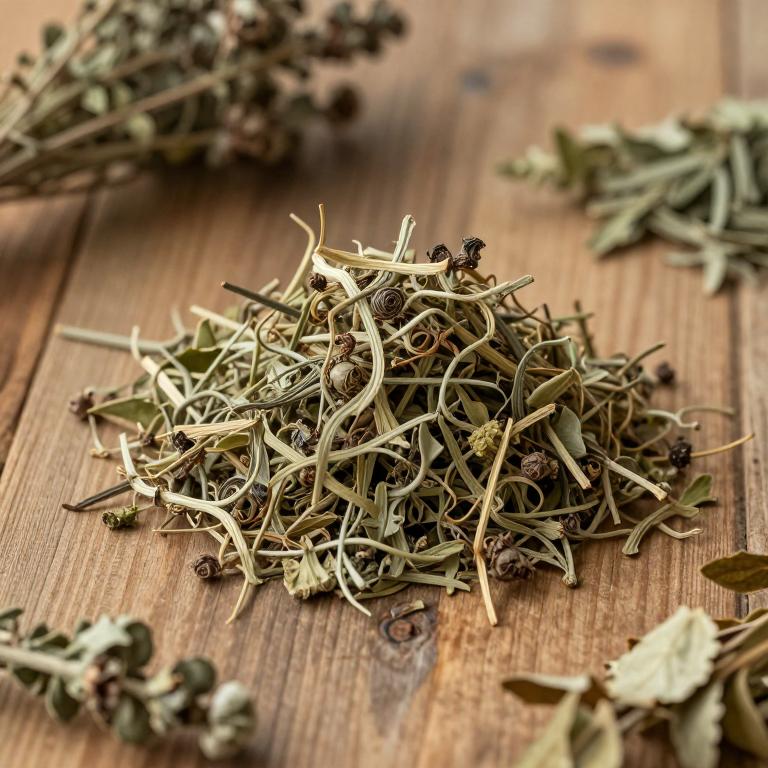
Names and Synonyms
Common Names
- capulin
- Nettletree
Scientific Names
Accepted name
Trema micranthumSynonyms
- Trema rugosum
- Sponia micrantha
- Celtis microcarpa
- Trema molle
- Celtis mollis
- Sponia mollis
- Celtis riparia
- Celtis rufescens
- Celtis rugosa
- Trema strigillosum
- Celtis schiedeana
- Celtis macrophylla
- Sponia rugosa
- Celtis lima
- Trema rufescens
- Celtis lima
- Sponia stipellata
- Celtis curiandiuba
- Celtis chichilea
- Sponia schiedeana
- Celtis albicans
- Trema melinonianum
- Sponia rufescens
- Trema macrophyllum
- Trema lima
- Trema canescens
- Trema chichileum
- Trema floridanum
- Trema micranthum var. strigillosum
- Trema orientale var. molle
- Sponia chichilea
- Gerascanthus albus
- Lithocardium album
- Trema schiedeanum
- Trema micranthum var. floridanum
- Trema orientale f. micranthum
- Sponia macrophylla
- Celtis micrantha
- Calyptracordia alba
- Cordia alba
- Sponia canescens
- Trema riparium
- Sponia riparia
- Celtis canescens
- Rhamnus micrantha
- Sponia grisea
- Trema micranthum var. obtusatum
- Trema orientale var. rugosum
- Varronia alba
- Urtica alnifolia
- Sponia lima
- Lithocardium album
Regional and Traditional Names
Spanish:
- yana caspi
- Capulín cimarrón
- Ixpepe
- Jucó
- Palo pólvora
- Uvita
French:
- petit orme
Sources: Wikidata, Catalogue of Life
Taxonomical Classification
This plant belongs to the kingdom Plantae and is classified under the phylum Streptophyta and the class Equisetopsida. Within the subclass Magnoliidae, it falls under the order Rosales and is a member of the family Cannabaeaceae. Specifically, it is identified by the genus Trema and the species name micranthum.
| Rank | Classification |
|---|---|
| Kingdom | Plantae |
| Phylum | Streptophyta |
| Class | Equisetopsida |
| Subclass | Magnoliidae |
| Order | Rosales |
| Family | Cannabaceae |
| Genus | Trema |
Sources: The World Checklist of Vascular Plants (WCVP)
Distribution
This plant exhibits a broad geographical range that spans across several distinct regions. In the Indo-China territory, it can be found specifically within Myanmar. Its distribution also extends to the Southeastern United States, where it is located in Florida. Within Mexico, the species is spread across the Central, Northeast, and Gulf regions. This wide-reaching presence highlights the diverse habitats the plant is capable of occupying.
| Region | Area |
|---|---|
| Indo-China | Myanmar |
| Southeastern U.S.A. | Florida |
| Mexico | Mexico Central |
| Mexico | Mexico Northeast |
| Mexico | Mexico Gulf |
| Mexico | Mexico Northwest |
| Mexico | Mexico Southwest |
| Mexico | Mexico Southeast |
| Central America | Belize |
| Central America | Costa Rica |
Sources: The World Checklist of Vascular Plants (WCVP)
Botanical Identification
Ecology
The ecology of Trema micrantum is defined by its broad adaptability to varying altitudes and specific soil conditions. This species exhibits a significant elevational range, occurring from sea level (0 m AMSL) up to a maximum altitude of 3000 m AMSL, with a mean elevation of approximately 250 m AMSL. Its primary habitats include high-altitude forests (bosque alto) and pastures situated on saturated soil, indicating a preference for environments with high moisture availability or high water tables.
- Elevational range max:
- 3000 m AMSL
- Elevational range mean:
- 250 m AMSL
- Elevational range min:
- 0 m AMSL
- Habitat :
- Bosque alto, pastures on saturated soil
Life history
The life history of Trema micranthum is characterized by its status as a perennial species, allowing it to persist in its environment over multiple growing seasons. Throughout its developmental stages, the plant maintains an evergreen habit, ensuring that it retains its foliage consistently rather than undergoing a seasonal shedding of leaves.
- Deciduousness :
- evergreen
- Lifecycle :
- perennial
Morphology
The morphology of Trema micranthum is characterized by its woody structure and diverse growth forms, manifesting as both a tree and a shrub. As a terrestrial species, it grows independently without parasitic or epiphytic tendencies. The plant exhibits a self-supporting habit rather than acting as a climber, vine, or liana. In terms of vertical dimension, its height is variable, ranging from a minimum of 5 m to a maximum of 25 m, with an average plant height of approximately 12.5225 m.
- Aquatic :
- terrestrial
- Climber :
- self-supporting
- Epiphyte :
- terrestrial
- Growth form :
- tree
- Growth form :
- shrub
- Parasite :
- independent
- Plant height max:
- 25 m
- Plant height mean:
- 12.5225 m
- Plant height min:
- 5 m
- Woodiness :
- woody
Physiology
The physiology of Trema micranthum is characterized by a C3 photosynthetic pathway, which dictates its carbon fixation processes and metabolic efficiency. Its leaf structural properties are defined by a Leaf Dry Matter Content (LDMC) with a mean value of 292.35 mg/g, exhibiting a range between a minimum of 285.1 mg/g and a maximum of 299.6 mg/g, reflecting the density of organic matter within its leaf tissues. Additionally, this species does not function as a nitrogen fixer, relying instead on external soil nitrogen sources for its nutritional requirements.
- Leaf dry matter content (LDMC) max:
- 299.6 mg/g
- Leaf dry matter content (LDMC) mean:
- 292.35 mg/g
- Leaf dry matter content (LDMC) min:
- 285.1 mg/g
- Nitrogen fixer :
- no
- Photosynthetic pathway :
- C3
Reproduction
The reproduction of Trema micrantum is characterized by a biotic pollination syndrome, primarily driven by insects such as bees. The plant produces fleshy fruits, which facilitates a zoochorous dispersal syndrome, allowing animals to aid in the spreading of its offspring. The seeds themselves exhibit significant morphological variability; they range in length from a minimum of 1 mm to a maximum of 6 mm, with an average length of 1.7 mm. In terms of mass, the seeds are quite light, ranging from a minimum of 0.002 g to a maximum of 0.05 g, with a mean seed mass of approximately 0.0198 g. Additionally, the seed volume is recorded at a consistent 610 mm³, representing both the minimum and maximum observed values as well as the mean for this species.
- Dispersal syndrome :
- zoochorous
- Fruit dryness :
- fleshy
- Pollination syndrome :
- insect
- Pollination syndrome :
- bee
- Pollination syndrome :
- biotic
- Seed length max:
- 6 mm
- Seed length mean:
- 1.7 mm
- Seed length min:
- 1 mm
- Seed mass max:
- 0.05 g
- Seed mass mean:
- 0.0198244443333333 g
- Seed mass min:
- 0.002 g
- Seed volume max:
- 610 mm³
Sources: Global Inventory of Floras and Traits (GIFT)
Plant Parts
Trema micranthum has 3 reported plant parts identified across 3 scientific publications and several other databases that are studied for medicinal purposes. The most consistently reported plant part include fruit, leaf, stem.
| Plant part | Supporting sources | Consensus |
|---|---|---|
| Fruit | 1 supporting sources | ★☆☆☆☆ |
| Leaf | 1 supporting sources | ★☆☆☆☆ |
| Stem | 1 supporting sources | ★☆☆☆☆ |
Fruit
- Scientific reports
Leaf
- Scientific reports
Stem
- Scientific reports
Chemicals
Trema micranthum has 6 reported phytochemicals identified across 3 scientific publications and several other databases. The most consistently reported chemicals include CBD, CBDA, Cannabidiolic acid (CBDA), Cannabinoids, THC.
| Chemical | Supporting sources | Consensus |
|---|---|---|
| CBD | 1 supporting sources | ★☆☆☆☆ |
| CBDA | 1 supporting sources | ★☆☆☆☆ |
| Cannabidiolic acid (CBDA) | 1 supporting sources | ★☆☆☆☆ |
| Cannabinoids | 1 supporting sources | ★☆☆☆☆ |
| THC | 1 supporting sources | ★☆☆☆☆ |
| THCA-A | 1 supporting sources | ★☆☆☆☆ |
CBD
- Scientific reports
CBDA
- Scientific reports
Cannabidiolic acid (CBDA)
- Scientific reports
Cannabinoids
- Scientific reports
THC
- Scientific reports
THCA-A
- Scientific reports
Preparations
Trema micranthum has 4 reported preparations identified across 3 scientific publications and several other databases. The most consistently reported preparations include Extracts from fruits, Extracts from inflorescences, Extracts from leaves, Extracts from stems.
| Preparation | Supporting sources | Consensus |
|---|---|---|
| Extracts from fruits | 1 supporting sources | ★☆☆☆☆ |
| Extracts from inflorescences | 1 supporting sources | ★☆☆☆☆ |
| Extracts from leaves | 1 supporting sources | ★☆☆☆☆ |
| Extracts from stems | 1 supporting sources | ★☆☆☆☆ |
Extracts from fruits
- Scientific reports
Extracts from inflorescences
- Scientific reports
Extracts from leaves
- Scientific reports
Extracts from stems
- Scientific reports