Actaea racemosa
Trautvetteria palmata var. palmata · Accepted scientific name
Scientific literature: Very Extensive (509 studies) · ★★★★★
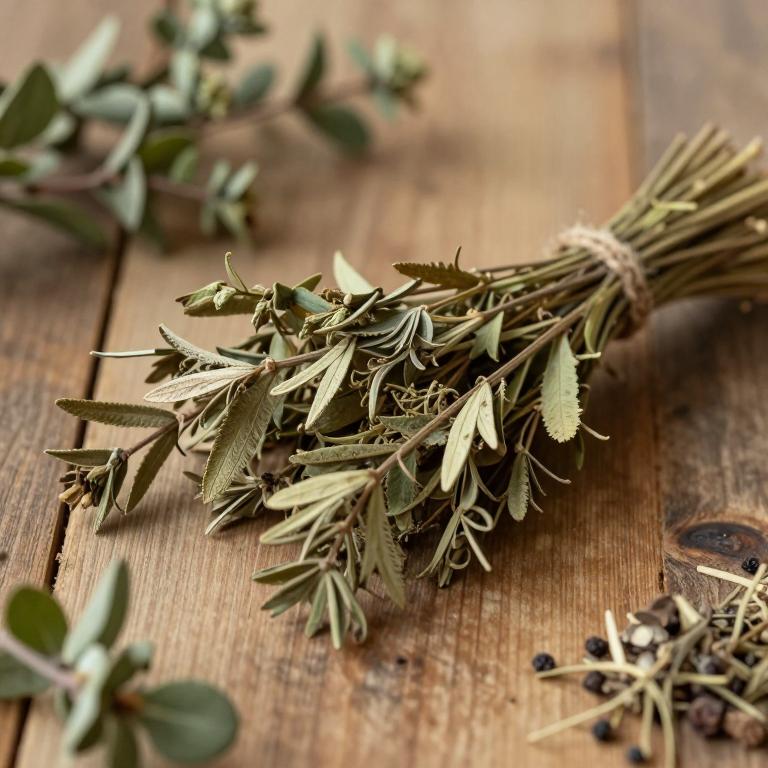
Actaea racemosa, scientifically known as Trautvetteria palmata var. palmata, is a unique botanical specimen valued in traditional herbalism. This specific variety is recognized for its distinctive leaf structure and therapeutic potential. Often utilized in specialized medicinal preparations, it serves as a fascinating subject for those studying ethnobotany and natural remedies.
Names and Synonyms
Common Names
- Actaea racemosa
- black baneberry
- black cohosh
- black snakeroot
Scientific Names
Accepted name
Trautvetteria palmata var. palmataSynonyms
- Trautvetteria caroliniensis f. breviloba
- Trautvetteria caroliniensis f. japonica
- Trautvetteria palmata var. japonica
- Trautvetteria palmata var. minor
- Trautvetteria caroliniensis var. japonica
- Actaea pentagyna
- Ranunculus pleurocarpus
- Trautvetteria japonica f. breviloba
- Thalictrum ranunculinum
- Trautvetteria japonica
Regional and Traditional Names
Spanish:
- Actaea racemosa
German:
- Traubensilberkerze
- Actaea racemosa
French:
- Actaea racemosa
- cimicaire à grappes
Sources: Wikidata, Catalogue of Life
Taxonomical Classification
This plant belongs to the kingdom Plantae and the phylum Streptophyta, falling under the class Equisetopsida and subclass Magnoliidae. Within the order Ranunculales and the family Ranunculaceae, it is classified under the genus Trautvetteria. Specifically, this medicinal variety is identified as Trautvetteria palmata var. palmata.
| Rank | Classification |
|---|---|
| Kingdom | Plantae |
| Phylum | Streptophyta |
| Class | Equisetopsida |
| Subclass | Magnoliidae |
| Order | Ranunculales |
| Family | Ranunculaceae |
| Genus | Trautvetteria |
Sources: The World Checklist of Vascular Plants (WCVP)
Distribution
This plant is native to several distinct regions within the Russian Far East. Its presence is well-documented across the Primorye territory and the Magadan region. Additionally, it can be found growing in the Khabarovsk area. The species also extends its range to the island territories of Sakhalin and the Kuril Islands. Together, these locations define the specific geographical distribution of this variety.
| Region | Area |
|---|---|
| Russian Far East | Khabarovsk |
| Russian Far East | Kuril Is. |
| Russian Far East | Magadan |
| Russian Far East | Primorye |
| Russian Far East | Sakhalin |
| Eastern Asia | Japan |
Sources: The World Checklist of Vascular Plants (WCVP)
Botanical Identification
Life history
The life history of Trautvetteria palmata var. palmata is characterized by a perennial lifecycle, allowing the plant to persist in its habitat over multiple growing seasons. As a perennial species, it avoids the complete die-back associated with annuals, instead establishing a stable presence that can endure seasonal fluctuations. Throughout its life, the plant undergoes cyclic developmental stages, focusing energy on vegetative growth and structural establishment during favorable periods before transitioning into reproductive phases. This long-term survival strategy enables the plant to maintain a consistent presence within its ecological niche, contributing to its sustained availability in medicinal contexts.
- Lifecycle :
- perennial
Morphology
Morphologically, Tautvetteia palmata var. palmata is characterized as a non-woody herb with a forb-like growth form. This plant is primarily terrestrial in its ecological niche, rather than being aquatic or epiphytic, and it functions as an independent organism without parasitic tendencies. It is a self-supporting species, lacking the climbing or vining habits of lianas. In terms of stature, it is a relatively small plant, maintaining a height that typically ranges from a minimum of 0.25 meters to a maximum of 0.6 meters.
- Aquatic :
- terrestrial
- Climber :
- self-supporting
- Epiphyte :
- terrestrial
- Growth form :
- herb
- Growth form :
- forb
- Parasite :
- independent
- Plant height max:
- 0.6 m
- Plant height min:
- 0.25 m
- Woodiness :
- non-woody
Physiology
The physiology of Trautvetteria palmata var. palmata is characterized by its reliance on the C3 photosynthetic pathway, a metabolic process where carbon dioxide is fixed directly into a three-carbon compound during the initial stages of the Calvin cycle. This biochemical mechanism dictates the plant's carbon assimilation efficiency and its water-use strategy, as the absence of specialized CO2-concentrating mechanisms found in C4 or CAM species makes the plant more susceptible to photorespiration under high-temperature or high-light intensity conditions. Consequently, its physiological performance is closely linked to its environmental niche, where moisture availability and ambient temperature influence the rate of stomatal conductance and the overall efficiency of gas exchange required to support its metabolic demands.
- Photosynthetic pathway :
- C3
Reproduction
The reproduction of Trautvetteria palmata var. palmata is characterized by a specific seasonal flowering window and the production of minute seeds. The flowering period typically commences in April and concludes in June, though the timing can be variable throughout the year. Following successful pollination, the plant produces seeds that exhibit a highly consistent mass; the seed mass is measured at a constant 0.0028 g, with the mean, maximum, and minimum values all aligning at this specific measurement.
- Flowering time :
- Apr
- Flowering time :
- Jun
- Seed mass mean:
- 0.0028 g
Sources: Global Inventory of Floras and Traits (GIFT)
Plant Parts
Trautvetteria palmata var. palmata has 2 reported plant parts identified across 4 scientific publications and several other databases that are studied for medicinal purposes. The most consistently reported plant part include rhizome, root.
| Plant part | Supporting sources | Consensus |
|---|---|---|
| Rhizome | 2 supporting sources | ★☆☆☆☆ |
| Root | 2 supporting sources | ★☆☆☆☆ |
Rhizome
- Planta medica
- Journal of natural products
Root
- Journal of natural products
- Recent advances in phytochemistry
Chemicals
Trautvetteria palmata var. palmata has 65 reported phytochemicals identified across 4 scientific publications and several other databases. The most consistently reported chemicals include Fukinolic acid, Actein, Cimicifugoside, Isoferulic acid, caffeic acid.
| Chemical | Supporting sources | Consensus |
|---|---|---|
| Fukinolic acid | 3 supporting sources | ★★☆☆☆ |
| Actein | 2 supporting sources | ★☆☆☆☆ |
| Cimicifugoside | 2 supporting sources | ★☆☆☆☆ |
| Isoferulic acid | 2 supporting sources | ★☆☆☆☆ |
| caffeic acid | 2 supporting sources | ★☆☆☆☆ |
| polyphenols | 2 supporting sources | ★☆☆☆☆ |
| 23-EPI-26-Deoxyactein | 1 supporting sources | ★☆☆☆☆ |
| 27-Deoxyactein | 1 supporting sources | ★☆☆☆☆ |
| AFLATOXINS | 1 supporting sources | ★☆☆☆☆ |
| ALUMINUM | 1 supporting sources | ★☆☆☆☆ |
Fukinolic acid
- Journal of natural products
- Planta medica
- Chemical research in toxicology
Actein
- Dr. Duke
- Journal of ethnopharmacology
Cimicifugoside
- Dr. Duke
- Journal of ethnopharmacology
Isoferulic acid
- Dr. Duke
- Journal of natural products
caffeic acid
- Journal of natural products
- Chemical research in toxicology
polyphenols
- Planta medica
- Phytochemical analysis : PCA
23-EPI-26-Deoxyactein
- Clinical pharmacology and therapeutics
27-Deoxyactein
- Dr. Duke
AFLATOXINS
- Journal of AOAC International
ALUMINUM
- Dr. Duke
Activities
Trautvetteria palmata var. palmata has 415 reported activities identified across 4 scientific publications and several other databases. The most consistently reported activities include Analgesic, Estrogenic, Neuroprotective, 5-Alpha-Reductase-Inhibitor, ACE-Inhibitor.
| Activity | Supporting sources | Consensus |
|---|---|---|
| Analgesic | 2 supporting sources | ★☆☆☆☆ |
| Estrogenic | 2 supporting sources | ★☆☆☆☆ |
| Neuroprotective | 2 supporting sources | ★☆☆☆☆ |
| 5-Alpha-Reductase-Inhibitor | 1 supporting sources | ★☆☆☆☆ |
| ACE-Inhibitor | 1 supporting sources | ★☆☆☆☆ |
| AP-1-Inhibitor | 1 supporting sources | ★☆☆☆☆ |
| Abortifacient | 1 supporting sources | ★☆☆☆☆ |
| Absorbent | 1 supporting sources | ★☆☆☆☆ |
| Acaricide | 1 supporting sources | ★☆☆☆☆ |
| Acidulant | 1 supporting sources | ★☆☆☆☆ |
Analgesic
- Dr. Duke
- Journal of ethnopharmacology
Estrogenic
- Dr. Duke
- Frontiers in pharmacology
Neuroprotective
- Dr. Duke
- BioFactors (Oxford, England)
5-Alpha-Reductase-Inhibitor
- Dr. Duke
ACE-Inhibitor
- Dr. Duke
AP-1-Inhibitor
- Dr. Duke
Abortifacient
- Dr. Duke
Absorbent
- Dr. Duke
Acaricide
- Dr. Duke
Acidulant
- Dr. Duke
Preparations
Trautvetteria palmata var. palmata has 2 reported preparations identified across 4 scientific publications and several other databases. The most consistently reported preparations include black cohosh rhizome, rhizome extract.
| Preparation | Supporting sources | Consensus |
|---|---|---|
| Black cohosh rhizome | 1 supporting sources | ★☆☆☆☆ |
| Rhizome extract | 1 supporting sources | ★☆☆☆☆ |
Black cohosh rhizome
- Planta medica
Rhizome extract
- Journal of natural products