Carolina bugbane
Trautvetteria caroliniensis · Accepted scientific name
Scientific literature: Very Extensive (580 studies) · ★★★★★
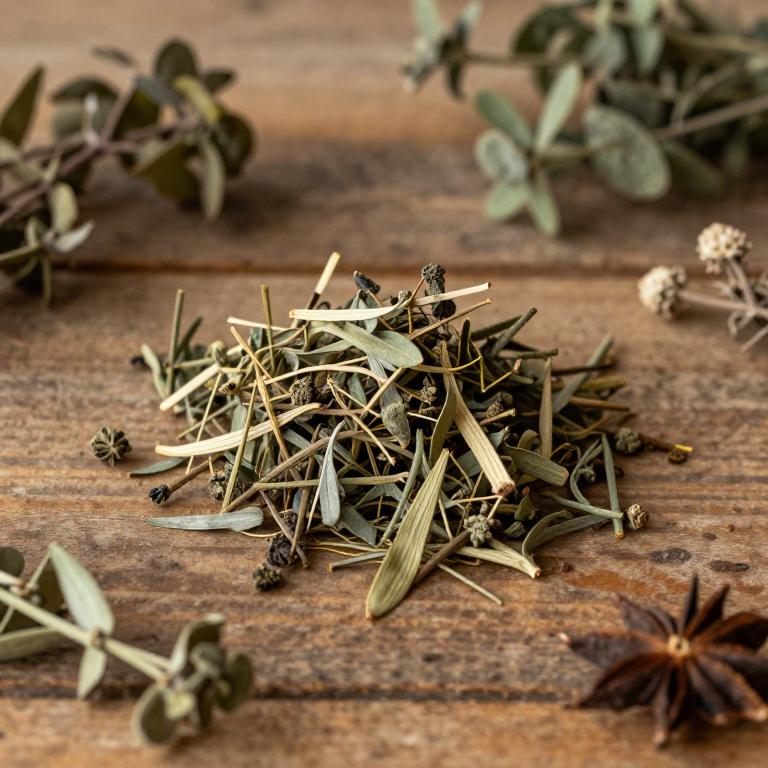
Carolina bugbane, scientifically known as Trautvetteria carolinienensis, is a perennial herb native to the southeastern United States. Often found in moist, shaded woodlands, this plant is characterized by its unique, aromatic foliage. While primarily studied for its ecological role, it holds traditional significance in various regional herbal practices.
Names and Synonyms
Common Names
- Carolina bugbane
- Carolina tassel-rue
- false bugbane
- tassel-rue
Scientific Names
Accepted name
Trautvetteria caroliniensisSynonyms
- Hydrastis canadensis
- Hydrastis carolinensis
- Trautvetteria media
- Trautvetteria palmata f. occidentalis
- Trautvetteria caroliniensis var. coriacea
- Trautvetteria caroliniensis var. occidentalis
- Actaea grandis
- Trautvetteria palmata var. coriacea
- Trautvetteria saniculifolia
- Trautvetteria rotundata
- Trautvetteria grandis
- Trautvetteria fimbriata
- Trautvetteria nervata
- Trautvetteria applanata
Regional and Traditional Names
French:
- trautvettérie
- trauvettérie de Caroline
Sources: Wikidata, Catalogue of Life
Taxonomical Classification
This plant, known scientifically as Trautvetteria caroliniensis, belongs to the kingdom Plantae and the phylum Streptophyta. Within the class Equisetopsida and subclass Magnoliidae, it is classified under the order Ranunculales. It is further categorized into the family Ranunculaceae and the genus Trautvetteria.
| Rank | Classification |
|---|---|
| Kingdom | Plantae |
| Phylum | Streptophyta |
| Class | Equisetopsida |
| Subclass | Magnoliidae |
| Order | Ranunculales |
| Family | Ranunculaceae |
| Genus | Trautvetteria |
Sources: The World Checklist of Vascular Plants (WCVP)
Distribution
This plant, Trautvetteria caroliniensis, exhibits a specific geographical distribution across western North America. In Western Canada, its presence is noted within the province of British Columbia. Moving into the Northwestern United States, the species can be found in the state of Idaho. It also inhabits the mountainous regions of Montana and Oregon. Finally, its range extends into the state of Colorado within the Northwestern United States.
| Region | Area |
|---|---|
| Western Canada | British Columbia |
| Northwestern U.S.A. | Colorado |
| Northwestern U.S.A. | Idaho |
| Northwestern U.S.A. | Montana |
| Northwestern U.S.A. | Oregon |
| Northwestern U.S.A. | Washington |
| Northwestern U.S.A. | Wyoming |
| North-Central U.S.A. | Illinois |
| Northeastern U.S.A. | Pennsylvania |
| Northeastern U.S.A. | West Virginia |
Sources: The World Checklist of Vascular Plants (WCVP)
Botanical Identification
Life history
The life history of Trautvetteria caroliniensis is characterized by a perennial lifecycle, allowing the plant to persist in its habitat over multiple growing seasons. As a perennial species, it establishes a robust presence within its ecological niche, often utilizing underground structures to survive unfavorable conditions before emerging again during favorable periods. This longevity enables the plant to participate in repeated reproductive cycles, contributing to the stability of its population within its typical range. Through its perennial nature, Trautvetteria caroliniensis maintains a continuous presence in its environment, balancing vegetative persistence with seasonal reproductive efforts.
- Lifecycle :
- perennial
Morphology
The morphology of Trautvetteria caroliniensis is characterized by a growth form classified as a non-woody herb, specifically functioning as a forb. It is a self-supporting plant that does not exhibit climbing behavior, such as being a liana or vine, and maintains a structural independence as an independent organism rather than acting as a parasite. Regarding its ecological positioning and habitat, the plant is primarily terrestrial, though it can inhabit environments ranging from aquatic to semiaquatic conditions. It is a terrestrial species rather than an epiphyte, maintaining its structure through its own non-woody tissues.
- Aquatic :
- terrestrial
- Climber :
- self-supporting
- Epiphyte :
- terrestrial
- Growth form :
- herb
- Growth form :
- forb
- Parasite :
- independent
- Woodiness :
- non-woody
Sources: Global Inventory of Floras and Traits (GIFT)
Plant Parts
Trautvetteria caroliniensis has 2 reported plant parts identified across 2 scientific publications and several other databases that are studied for medicinal purposes. The most consistently reported plant part include rhizome, root.
| Plant part | Supporting sources | Consensus |
|---|---|---|
| Rhizome | 1 supporting sources | ★☆☆☆☆ |
| Root | 1 supporting sources | ★☆☆☆☆ |
Rhizome
- Journal of natural products
Root
- Journal of natural products
Chemicals
Trautvetteria caroliniensis has 60 reported phytochemicals identified across 2 scientific publications and several other databases. The most consistently reported chemicals include berberine, Canadine, HYDRASTINE, beta-Hydrastine, CANADALINE.
| Chemical | Supporting sources | Consensus |
|---|---|---|
| berberine | 15 supporting sources | ★★★★★ |
| Canadine | 8 supporting sources | ★★★★☆ |
| HYDRASTINE | 8 supporting sources | ★★★★☆ |
| beta-Hydrastine | 3 supporting sources | ★★☆☆☆ |
| CANADALINE | 2 supporting sources | ★☆☆☆☆ |
| CHLOROGENIC ACID | 2 supporting sources | ★☆☆☆☆ |
| hydrastinine | 2 supporting sources | ★☆☆☆☆ |
| (+)-Canadine | 1 supporting sources | ★☆☆☆☆ |
| (-)-Canadine | 1 supporting sources | ★☆☆☆☆ |
| (-)-alpha-Hydrastine | 1 supporting sources | ★☆☆☆☆ |
berberine
- Dr. Duke
- Journal of natural products
- Sexually transmitted diseases
- Oncology reports
- Journal of pharmaceutical sciences
View 10 additional sources
- Evidence-based complementary and alternative medicine : eCAM
- World journal of microbiology & biotechnology
- Chemico-biological interactions
- Alternative medicine review : a journal of clinical therapeutic
- ACS chemical biology
- Biomolecules
- Journal of chemical ecology
- Food and chemical toxicology : an international journal published for the British Industrial Biological Research Association
- Anti-cancer agents in medicinal chemistry
- Fitoterapia
Canadine
- Dr. Duke
- Journal of natural products
- Journal of pharmaceutical sciences
- Journal of lipid research
- Pharmacology & toxicology
View 3 additional sources
- Journal of chemical ecology
- Food and chemical toxicology : an international journal published for the British Industrial Biological Research Association
- Planta medica
HYDRASTINE
- Dr. Duke
- Journal of pharmaceutical sciences
- Planta medica
- Journal of natural products
- Biomolecules
View 3 additional sources
- Journal of chemical ecology
- Food and chemical toxicology : an international journal published for the British Industrial Biological Research Association
- Fitoterapia
beta-Hydrastine
- Dr. Duke
- Journal of natural products
- Pharmacology & toxicology
CANADALINE
- Dr. Duke
- Pharmacology & toxicology
CHLOROGENIC ACID
- Dr. Duke
- Journal of natural products
hydrastinine
- Dr. Duke
- Drug metabolism and disposition: the biological fate of chemicals
(+)-Canadine
- Dr. Duke
(-)-Canadine
- Dr. Duke
(-)-alpha-Hydrastine
- Dr. Duke
Activities
Trautvetteria caroliniensis has 455 reported activities identified across 2 scientific publications and several other databases. The most consistently reported activities include Antimicrobial, Abortifacient, Antibacterial, Antioxidant, (+)-Inotropic.
| Activity | Supporting sources | Consensus |
|---|---|---|
| Antimicrobial | 3 supporting sources | ★★☆☆☆ |
| Abortifacient | 2 supporting sources | ★☆☆☆☆ |
| Antibacterial | 2 supporting sources | ★☆☆☆☆ |
| Antioxidant | 2 supporting sources | ★☆☆☆☆ |
| (+)-Inotropic | 1 supporting sources | ★☆☆☆☆ |
| ACE-Inhibitor | 1 supporting sources | ★☆☆☆☆ |
| AP-1-Inhibitor | 1 supporting sources | ★☆☆☆☆ |
| Absorbent | 1 supporting sources | ★☆☆☆☆ |
| Acidulant | 1 supporting sources | ★☆☆☆☆ |
| Adrenolytic | 1 supporting sources | ★☆☆☆☆ |
Antimicrobial
- Cardiovascular drug reviews
- ACS chemical biology
- Phytochemistry letters
Abortifacient
- Dr. Duke
- Phytotherapy research : PTR
Antibacterial
- Dr. Duke
- Sexually transmitted diseases
Antioxidant
- Dr. Duke
- Evidence-based complementary and alternative medicine : eCAM
(+)-Inotropic
- Dr. Duke
ACE-Inhibitor
- Dr. Duke
AP-1-Inhibitor
- Dr. Duke
Absorbent
- Dr. Duke
Acidulant
- Dr. Duke
Adrenolytic
- Dr. Duke
Preparations
Trautvetteria caroliniensis has 9 reported preparations identified across 2 scientific publications and several other databases. The most consistently reported preparations include extracts, Ethanolic extracts, crude ethanolic extracts, dietary supplements, ethanolic extracts.
| Preparation | Supporting sources | Consensus |
|---|---|---|
| Extracts | 2 supporting sources | ★☆☆☆☆ |
| Ethanolic extracts | 1 supporting sources | ★☆☆☆☆ |
| Crude ethanolic extracts | 1 supporting sources | ★☆☆☆☆ |
| Dietary supplements | 1 supporting sources | ★☆☆☆☆ |
| Ethanolic extracts | 1 supporting sources | ★☆☆☆☆ |
| Extract of a commercial root sample | 1 supporting sources | ★☆☆☆☆ |
| Homeopathic mother tinctures | 1 supporting sources | ★☆☆☆☆ |
| Powder | 1 supporting sources | ★☆☆☆☆ |
| Yellow dye | 1 supporting sources | ★☆☆☆☆ |
Extracts
- Phytochemistry letters
- Phytotherapy research : PTR
Ethanolic extracts
- Food and chemical toxicology : an international journal published for the British Industrial Biological Research Association
Crude ethanolic extracts
- Colloids and surfaces. B, Biointerfaces
Dietary supplements
- Oncology reports
Ethanolic extracts
- Colloids and surfaces. B, Biointerfaces
Extract of a commercial root sample
- Journal of natural products
Homeopathic mother tinctures
- Colloids and surfaces. B, Biointerfaces
Powder
- Journal of natural products
Yellow dye
- Journal of ethnobiology and ethnomedicine