goatsbeard
Tragopogon · Accepted scientific name
Scientific literature: Very Sparse (8 studies) · ★☆☆☆☆
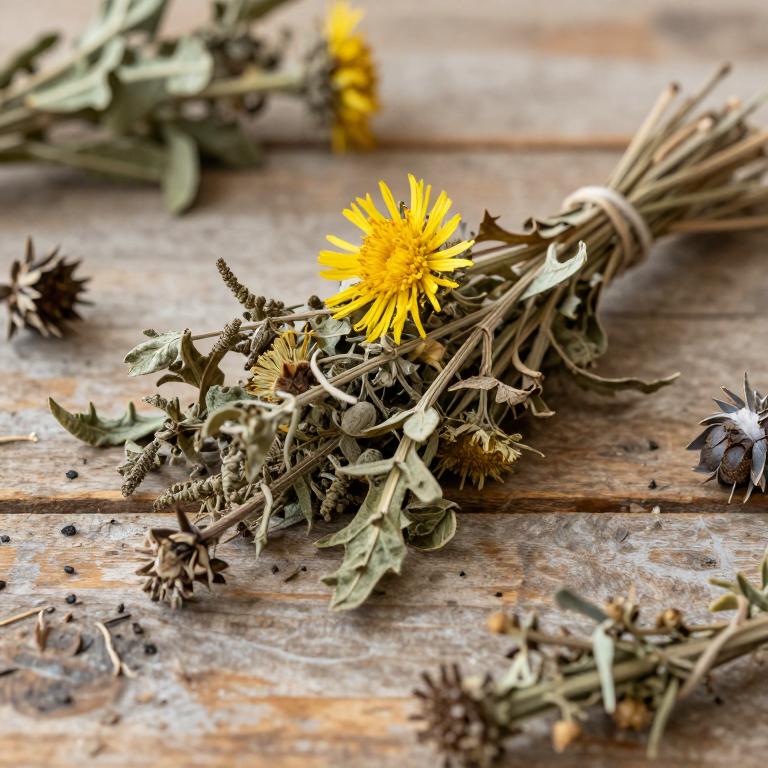
Goatsbeard, scientifically known as Tragopogon, is a versatile perennial herb celebrated for its striking, dandelion-like blooms. Beyond its aesthetic charm, this plant holds significant medicinal value in traditional practices. Renowned for its potential digestive and diuretic properties, it offers a fascinating intersection of botanical beauty and natural healing.
- Family
- Asteraceae
- Native range
- Europe
- Parts used
- Not available
- Common names
- Goatsbeard · Salsify · 2 more
- Scientific synonyms
- Chromatopogon
Names and Synonyms
Common Names
- goatsbeard
- salsify
- Goat's-Beard
- Salsifies
Scientific Names
Accepted name
TragopogonSynonyms
- Chromatopogon
Regional and Traditional Names
Spanish:
- Salsifíes
German:
- Bocksbärte
- Bocksbart
- Bocksbart
- Bocksbärte
French:
- Salsifis
- Salsifi
- salsifi noir
- scorsonère
- Salsifis
Sources: Wikidata, Catalogue of Life
Taxonomical Classification
This plant belongs to the kingdom Plantae and is classified under the phylum Streptophyta within the class Equisetopsida. It is further categorized under the subclass Magnoliidae and the order Asterales, placing it in the family Asteraceae. Finally, the medicinal species is identified by the genus Tragopogon.
| Rank | Classification |
|---|---|
| Kingdom | Plantae |
| Phylum | Streptophyta |
| Class | Equisetopsida |
| Subclass | Magnoliidae |
| Order | Asterales |
| Family | Asteraceae |
| Genus | Tragopogon |
Sources: The World Checklist of Vascular Plants (WCVP)
Distribution
This plant, known as Tragopogon, exhibits a specific distribution pattern across several Northern European territories. It can be found growing naturally within the borders of Denmark and Finland. Additionally, its presence extends to the islands of Great Britain and Ireland. The range of this medicinal species also includes the coastal and inland areas of Norway. Consequently, these five nations represent the primary geographical locations for this plant in the northern region.
| Region | Area |
|---|---|
| Northern Europe | Denmark |
| Northern Europe | Finland |
| Northern Europe | Great Britain |
| Northern Europe | Ireland |
| Northern Europe | Norway |
| Northern Europe | Sweden |
| Middle Europe | Austria |
| Middle Europe | Belgium |
| Middle Europe | Czechia-Slovakia |
| Middle Europe | Germany |
Sources: The World Checklist of Vascular Plants (WCVP)
Activities
Tragopogon has 3 reported activities identified across 0 scientific publications and several other databases. The most consistently reported activities include Antimicrobial, Antitumor, Hepatoprotective.
| Activity | Supporting sources | Consensus |
|---|---|---|
| Antimicrobial | 1 supporting sources | ★☆☆☆☆ |
| Antitumor | 1 supporting sources | ★☆☆☆☆ |
| Hepatoprotective | 1 supporting sources | ★☆☆☆☆ |
Antimicrobial
- Journal of ethnopharmacology
Antitumor
- Journal of ethnopharmacology
Hepatoprotective
- Journal of ethnopharmacology
Conditions
Tragopogon has 5 reported investigations on conditions identified across 0 scientific publications and several other databases. The most consistently reported conditions include anoxia, cancer, constipation, fatigue, wound-healing.
| Condition | Supporting sources | Consensus |
|---|---|---|
| Anoxia | 1 supporting sources | ★☆☆☆☆ |
| Cancer | 1 supporting sources | ★☆☆☆☆ |
| Constipation | 1 supporting sources | ★☆☆☆☆ |
| Fatigue | 1 supporting sources | ★☆☆☆☆ |
| Wound-healing | 1 supporting sources | ★☆☆☆☆ |
Anoxia
- Journal of ethnopharmacology
Cancer
- Journal of ethnopharmacology
Constipation
- Journal of ethnopharmacology
Fatigue
- Journal of ethnopharmacology
Wound-healing
- Journal of ethnopharmacology