Poison Ivy
Tragia volubilis · Accepted scientific name
Scientific literature: Very Sparse (9 studies) · ★☆☆☆☆
Poison Ivy, scientifically known as Tragia volubiantis, is a climbing woody vine native to tropical regions. Renowned for its potent urushiol oils, it causes severe allergic contact dermatitis upon touch. While traditionally studied for unique phytochemical properties, it remains primarily recognized as a hazardous irritant in many natural ecosystems.
- Family
- Euphorbiaceae
- Native range
- Africa
- Parts used
- Not available
- Common names
- Poison Ivy · Twining Cow-Itch
- Scientific synonyms
- Tragia Volubilis Var. Pedicellaris · Tragia Volubilis Var. Serra · 19 more
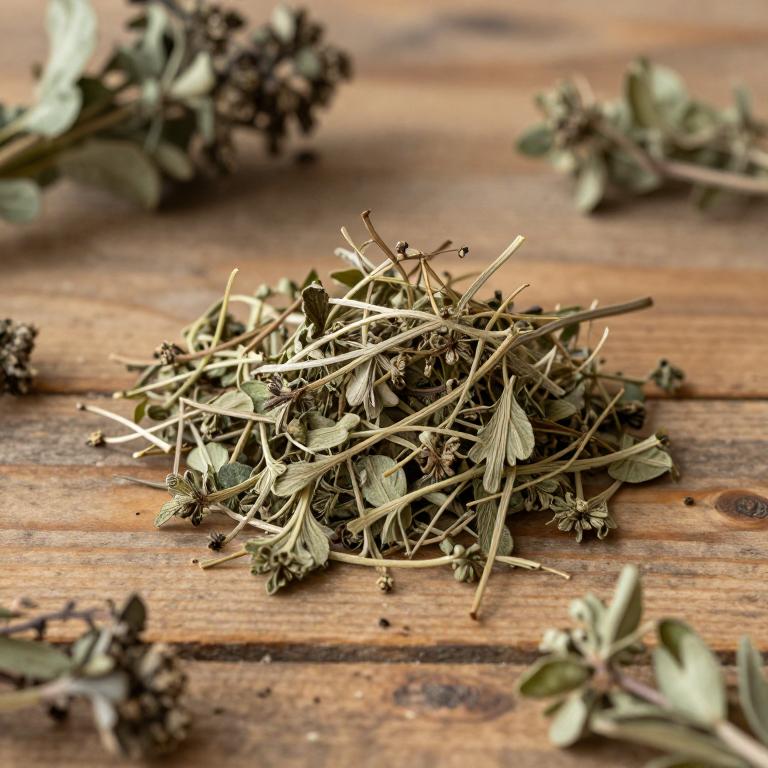
Names and Synonyms
Common Names
- Poison Ivy
- twining cow-itch
Scientific Names
Accepted name
Tragia volubilisSynonyms
- Tragia volubilis var. pedicellaris
- Tragia volubilis var. serra
- Tragia monandra
- Tragia triangularis
- Tragia amoena
- Tragia volubilis var. guaranitica
- Tragia pedunculata
- Tragia plumosa
- Tragia serra
- Tragia haguensis
- Tragia gayana
- Tragia diffusa
- Tragia infesta
- Tragia volubilis var. grandifolia
- Tragia volubilis var. lanceolata
- Tragia volubilis var. longifolia
- Tragia volubilis var. tenuifolia
- Tragia volubilis var. triangularis
- Tragia virgata
- Tragia ovata
- Tragia pedicillaris
Regional and Traditional Names
Spanish:
- Centella
French:
- Liane z'ortie
Sources: Wikidata, Catalogue of Life
Taxonomical Classification
This plant, Tragia volubilis, belongs to the kingdom Plantae and the phylum Streptophyta. It is classified under the class Equisetopsida and the subclass Magnoliidae within the order Malpighiales. Finally, it is a member of the family Euphorbiaceae and falls under the genus Tragia.
| Rank | Classification |
|---|---|
| Kingdom | Plantae |
| Phylum | Streptophyta |
| Class | Equisetopsida |
| Subclass | Magnoliidae |
| Order | Malpighiales |
| Family | Euphorbiaceae |
| Genus | Tragia |
Sources: The World Checklist of Vascular Plants (WCVP)
Distribution
This plant, known as Tragia volubilis, exhibits a specific geographical range within the West Tropical Africa region. Its presence is documented across several key nations, including Burkina Faso and Ghana. Furthermore, the species can be found extending through the territories of Ivory Coast and Liberia. The distribution also encompasses the expansive landscape of Nigeria. Collectively, these locations highlight the plant's localized habitat within these West African countries.
| Region | Area |
|---|---|
| West Tropical Africa | Burkina |
| West Tropical Africa | Ghana |
| West Tropical Africa | Ivory Coast |
| West Tropical Africa | Liberia |
| West Tropical Africa | Nigeria |
| West Tropical Africa | Sierra Leone |
| West Tropical Africa | Togo |
| West-Central Tropical Africa | Central African Republic |
| West-Central Tropical Africa | Cameroon |
| West-Central Tropical Africa | Congo |
Sources: The World Checklist of Vascular Plants (WCVP)
Botanical Identification
Ecology
The ecology of Tragia volubilis is characterized by its presence in diverse and specialized forest ecosystems, specifically thriving within the Caatinga (strictu sensu), Floresta de Terra Firme, and Floresta Ombrófila (also known as Floresta Pluvial). This plant exhibits a broad altitudinal distribution, occupying a wide vertical gradient that begins at sea level (0 m AMSL) and extends up to a maximum elevation of 2000 m AMSL. Throughout its varied environments, it maintains a mean elevation of approximately 700 m AMSL, allowing it to adapt to both the semi-arid conditions of the Caatinga and the high-moisture environments of ombrophilous rain forests.
- Elevational range max:
- 2000 m AMSL
- Elevational range mean:
- 700 m AMSL
- Elevational range min:
- 0 m AMSL
- Habitat :
- Caatinga (stricto sensu), Floresta de Terra Firme, Floresta Ombrófila (= Floresta Pluvial)
Life history
The life history of Tragia volubilis is characterized by its perennial lifecycle, allowing the plant to persist through multiple growing seasons. In terms of its structural growth strategy, the species is classified as a chamaephyte, a life form where the permanent buds are located close to or just above the soil surface. This physiological arrangement supports its survival and ability to regenerate within its specific ecological niche over time.
- Life form :
- chamaephyte
- Lifecycle :
- perennial
Morphology
The morphology of Tragia volubilis is characterized by its growth form as a non-woody herb and specifically a climbing forb. It functions as an obligatory climber, utilizing a vine-like habit to ascend its environment rather than being self-supporting. This plant is strictly terrestrial in its ecological positioning, operating as an independent organism rather than a parasite or an epiphyte. Its structure is defined by this herbaceous, non-woody constitution, which allows it to navigate its terrestrial habitat through its specialized climbing mechanism.
- Aquatic :
- terrestrial
- Climber :
- vine
- Climber :
- obligatory
- Epiphyte :
- terrestrial
- Growth form :
- herb
- Growth form :
- forb
- Parasite :
- independent
- Woodiness :
- non-woody
Sources: Global Inventory of Floras and Traits (GIFT)
Chemicals
Tragia volubilis has 6 reported phytochemicals identified across 0 scientific publications and several other databases. The most consistently reported chemicals include Afzelin, Amentoflavone, Avicularin, Flavonoids, Tannins.
| Chemical | Supporting sources | Consensus |
|---|---|---|
| Afzelin | 1 supporting sources | ★☆☆☆☆ |
| Amentoflavone | 1 supporting sources | ★☆☆☆☆ |
| Avicularin | 1 supporting sources | ★☆☆☆☆ |
| Flavonoids | 1 supporting sources | ★☆☆☆☆ |
| Tannins | 1 supporting sources | ★☆☆☆☆ |
| quercitrin | 1 supporting sources | ★☆☆☆☆ |
Afzelin
- Plants (Basel, Switzerland)
Amentoflavone
- Plants (Basel, Switzerland)
Avicularin
- Plants (Basel, Switzerland)
Flavonoids
- Plants (Basel, Switzerland)
Tannins
- Plants (Basel, Switzerland)
quercitrin
- Plants (Basel, Switzerland)
Conditions
Tragia volubilis has 3 reported investigations on conditions identified across 0 scientific publications and several other databases. The most consistently reported conditions include DNA damage, cell death, wound healing.
| Condition | Supporting sources | Consensus |
|---|---|---|
| Dna damage | 1 supporting sources | ★☆☆☆☆ |
| Cell death | 1 supporting sources | ★☆☆☆☆ |
| Wound healing | 1 supporting sources | ★☆☆☆☆ |
Dna damage
- Antioxidants (Basel, Switzerland)
Cell death
- Antioxidants (Basel, Switzerland)
Wound healing
- Plants (Basel, Switzerland)