poison ivy
Toxicodendron · Accepted scientific name
Scientific literature: Very Sparse (16 studies) · ★☆☆☆☆
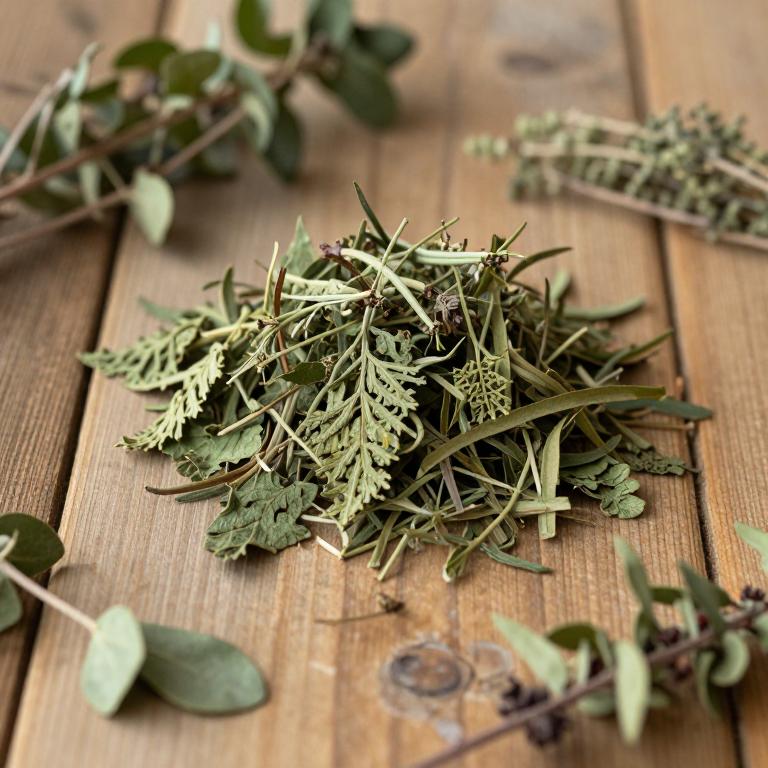
Poison ivy, scientifically known as Toxicodendron, is a notorious plant renowned for its allergenic properties. Containing the potent oil urushiol, contact with its foliage triggers severe skin irritation and rashes. While widely feared by hikers, understanding its botanical characteristics and growth patterns is essential for safe outdoor navigation.
Names and Synonyms
Common Names
- poison ivy
- poison oak
- poison ivies and oaks
Scientific Names
Accepted name
ToxicodendronSynonyms
- Vernix
- Augia
- Philostemon
Regional and Traditional Names
German:
- Giftsumach
Sources: Wikidata, Catalogue of Life
Taxonomical Classification
This plant belongs to the kingdom Plantae within the phylum Streptophyta and the class Equisetopsida. As a member of the subclass Magnoliidae and the order Sapindales, it is classified under the family Anacardiaceae. Specifically, it is identified by the genus Toxicodendron.
| Rank | Classification |
|---|---|
| Kingdom | Plantae |
| Phylum | Streptophyta |
| Class | Equisetopsida |
| Subclass | Magnoliidae |
| Order | Sapindales |
| Family | Anacardiaceae |
| Genus | Toxicodendron |
Sources: The World Checklist of Vascular Plants (WCVP)
Distribution
This plant exhibits a broad geographical distribution spanning across multiple continents and diverse climates. In Middle Europe, its presence is documented within the territories of Germany as well as the region encompassing Czechia and Slovakia. Moving toward Southeastern Europe, the species can be found growing in Italy. Its range further extends into the Russian Far East, specifically across the Kuril Islands. Finally, the plant is also established within the natural landscapes of Sakhalin.
| Region | Area |
|---|---|
| Middle Europe | Czechia-Slovakia |
| Middle Europe | Germany |
| Southeastern Europe | Italy |
| Russian Far East | Kuril Is. |
| Russian Far East | Sakhalin |
| Central Asia | Tadzhikistan |
| Central Asia | Uzbekistan |
| China | China South-Central |
| China | Hainan |
| China | Inner Mongolia |
Sources: The World Checklist of Vascular Plants (WCVP)
Activities
Toxicodendron has 2 reported activities identified across 0 scientific publications and several other databases. The most consistently reported activities include Contraceptive, Tonic.
| Activity | Supporting sources | Consensus |
|---|---|---|
| Contraceptive | 1 supporting sources | ★☆☆☆☆ |
| Tonic | 1 supporting sources | ★☆☆☆☆ |
Contraceptive
- Journal of ethnopharmacology
Tonic
- Journal of ethnopharmacology
Conditions
Toxicodendron has 14 reported investigations on conditions identified across 0 scientific publications and several other databases. The most consistently reported conditions include blood diseases, cancer, cardiovascular diseases, diabetes mellitus, diarrhea.
| Condition | Supporting sources | Consensus |
|---|---|---|
| Blood diseases | 1 supporting sources | ★☆☆☆☆ |
| Cancer | 1 supporting sources | ★☆☆☆☆ |
| Cardiovascular diseases | 1 supporting sources | ★☆☆☆☆ |
| Diabetes mellitus | 1 supporting sources | ★☆☆☆☆ |
| Diarrhea | 1 supporting sources | ★☆☆☆☆ |
| Eye diseases | 1 supporting sources | ★☆☆☆☆ |
| Gastrointestinal diseases | 1 supporting sources | ★☆☆☆☆ |
| Inflammation | 1 supporting sources | ★☆☆☆☆ |
| Liver diseases | 1 supporting sources | ★☆☆☆☆ |
| Lung diseases | 1 supporting sources | ★☆☆☆☆ |
Blood diseases
- Journal of ethnopharmacology
Cancer
- Journal of ethnopharmacology
Cardiovascular diseases
- Journal of ethnopharmacology
Diabetes mellitus
- Journal of ethnopharmacology
Diarrhea
- Journal of ethnopharmacology
Eye diseases
- Journal of ethnopharmacology
Gastrointestinal diseases
- Journal of ethnopharmacology
Inflammation
- Journal of ethnopharmacology
Liver diseases
- Journal of ethnopharmacology
Lung diseases
- Journal of ethnopharmacology