mountain lacquer tree
Toxicodendron trichocarpum · Accepted scientific name
Scientific literature: Very Sparse (6 studies) · ★☆☆☆☆
Mountain lacquer tree, scientifically known as Toxicodendron trichocarpum, is a significant medicinal plant native to East Asia. Renowned for its potent resin, it is traditionally used in various therapeutic applications. However, its high urushiol content requires careful handling due to its ability to cause severe allergic skin reactions.
- Family
- Anacardiaceae
- Native range
- Asia-Temperate
- Parts used
- Not available
- Common names
- Mountain Lacquer Tree
- Scientific synonyms
- Rhus Trichocarpa · Rhus Trichocarpa Var. Serrata · 3 more
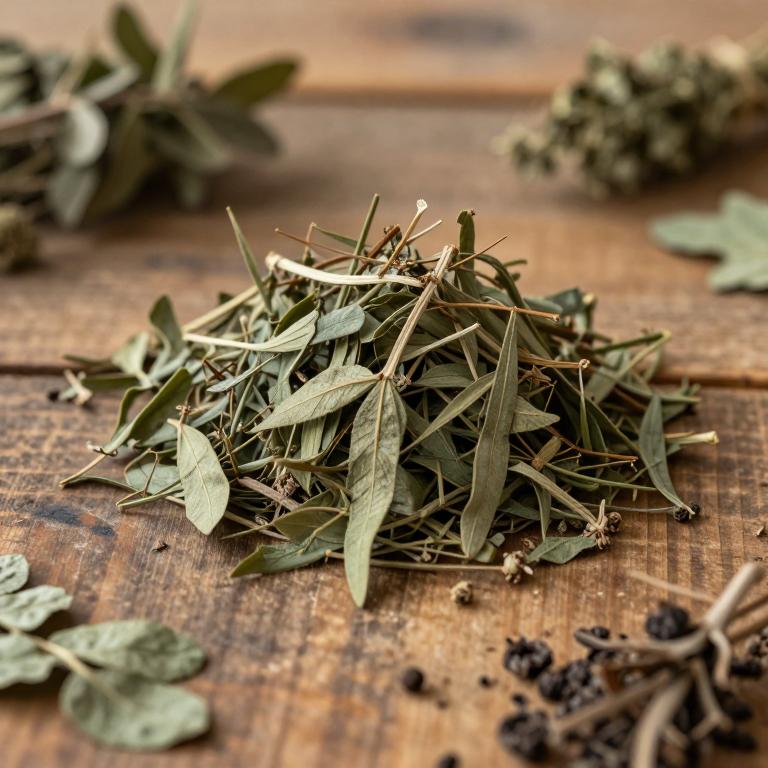
Names and Synonyms
Common Names
- mountain lacquer tree
Scientific Names
Accepted name
Toxicodendron trichocarpumSynonyms
- Rhus trichocarpa
- Rhus trichocarpa var. serrata
- Rhus trichocarpa var. humilis
- Toxicodendron trichocarpum f. viride
- Rhus trichocarpa f. viridis
Sources: Wikidata, Catalogue of Life
Taxonomical Classification
This plant, known scientifically as Toxicodendron trichocarpum, belongs to the kingdom Plantae and the phylum Streptophyta. Within the class Equisetopsida and subclass Magnoliidae, it is categorized under the order Sapindales and the family Anacardiaceae. It is further classified under the genus Toxicodendron.
| Rank | Classification |
|---|---|
| Kingdom | Plantae |
| Phylum | Streptophyta |
| Class | Equisetopsida |
| Subclass | Magnoliidae |
| Order | Sapindales |
| Family | Anacardiaceae |
| Genus | Toxicodendron |
Sources: The World Checklist of Vascular Plants (WCVP)
Distribution
This plant exhibits a wide geographical range across several key regions of Eastern Asia. It can be found growing in the Kuril Islands within the Russian Far East. Its distribution extends into China, specifically throughout the South-Central and Southeast regions. Furthermore, the species is prevalent in the neighboring territories of Japan and Korea. Together, these locations define the natural habitat of Toxicodendron trichocarpum.
| Region | Area |
|---|---|
| Russian Far East | Kuril Is. |
| China | China South-Central |
| China | China Southeast |
| Eastern Asia | Japan |
| Eastern Asia | Korea |
Sources: The World Checklist of Vascular Plants (WCVP)
Botanical Identification
Ecology
The ecology of Toxicodendron trichocarpum is primarily defined by its preference for forest habitats, where it plays a role in the structural complexity of the ecosystem. This species exhibits a significant altitudinal distribution, thriving across a broad vertical gradient within its environment. It is typically found at elevations starting from a minimum of 900 m AMSL, with a mean elevation of approximately 1700 m AMSL, and reaching its upper limit at a maximum of 2500 m AMSL.
- Elevational range max:
- 2500 m AMSL
- Elevational range mean:
- 1700 m AMSL
- Elevational range min:
- 900 m AMSL
- Habitat :
- forest
Life history
The life history of Toxicodendron trichocarpum is characterized by its status as a perennial species, allowing it to establish long-term presence within its ecological niche through multiple growing seasons. As a deciduous plant, it undergoes a seasonal cycle of leaf shedding, losing its foliage during the dormant period to conserve resources before regrowing in the subsequent spring. This rhythmic transition between active growth and seasonal senescence defines its survival strategy and structural development over time.
- Deciduousness :
- deciduous
- Lifecycle :
- perennial
Morphology
The morphology of Toxicodendron trichocarpum is characterized by its woody growth form, which manifests as both a tree and a shrub. This plant exhibits a significant stature, with a height that ranges from a minimum of 3 m to a maximum of 8 m. In terms of its structural habit, it is described as a self-supporting species, meaning it does not rely on other structures for climbing, though it maintains a robust, woody constitution throughout its development.
- Climber :
- self-supporting
- Growth form :
- tree
- Growth form :
- shrub
- Plant height max:
- 8 m
- Plant height min:
- 3 m
- Woodiness :
- woody
Physiology
The physiology of Toxicodendron trichocarpum is characterized by a metabolic framework driven by a C3 photosynthetic pathway, a common adaptation in temperate woody species that allows for efficient carbon fixation under moderate environmental conditions. Through this pathway, the plant utilizes the enzyme RuBisCO to facilitate the initial carboxylation of CO2, leading to the production of three-carbon compounds. This metabolic process supports the plant's growth and energy requirements, driving the synthesis of secondary metabolites, most notably urushiols, which are integral to its physiological defense mechanisms. The energy derived from these photosynthetic activities is partitioned toward vegetative development, structural maintenance, and the complex biochemical pathways necessary for the production of its characteristic resinous compounds.
- Photosynthetic pathway :
- C3
Reproduction
The reproduction of Toxicodendron trichocarpum is characterized by a specific flowering phenology and the development of small, specialized fruits. The flowering period is concentrated in July, though the timing can be variable across different seasonal cycles. Following pollination, the plant produces fruits that exhibit consistent morphological dimensions; these fruits typically possess a mean length of 0.55 cm and a mean width of 0.75 cm. In terms of size variation, the fruit length ranges from a minimum of 0.5 cm to a maximum of 0.6 cm, while the fruit width varies from a minimum of 0.7 cm to a maximum of 0.8 cm.
- Flowering time :
- Jul
- Fruit length max:
- 0.6 cm
- Fruit length mean:
- 0.55 cm
- Fruit length min:
- 0.5 cm
- Fruit width max:
- 0.8 cm
- Fruit width mean:
- 0.75 cm
- Fruit width min:
- 0.7 cm
Sources: Global Inventory of Floras and Traits (GIFT)
Chemicals
Toxicodendron trichocarpum has 3 reported phytochemicals identified across 0 scientific publications and several other databases. The most consistently reported chemicals include Flavonoids, Terpenoids, Urushiols.
| Chemical | Supporting sources | Consensus |
|---|---|---|
| Flavonoids | 1 supporting sources | ★☆☆☆☆ |
| Terpenoids | 1 supporting sources | ★☆☆☆☆ |
| Urushiols | 1 supporting sources | ★☆☆☆☆ |
Flavonoids
- Journal of ethnopharmacology
Terpenoids
- Journal of ethnopharmacology
Urushiols
- Journal of ethnopharmacology
Activities
Toxicodendron trichocarpum has 2 reported activities identified across 0 scientific publications and several other databases. The most consistently reported activities include Antibacterial, Antioxidant.
| Activity | Supporting sources | Consensus |
|---|---|---|
| Antibacterial | 1 supporting sources | ★☆☆☆☆ |
| Antioxidant | 1 supporting sources | ★☆☆☆☆ |
Antibacterial
- Journal of ethnopharmacology
Antioxidant
- Journal of ethnopharmacology
Conditions
Toxicodendron trichocarpum has 1 reported investigations on conditions identified across 0 scientific publications and several other databases. The most consistently reported conditions include blood diseases.
| Condition | Supporting sources | Consensus |
|---|---|---|
| Blood diseases | 1 supporting sources | ★☆☆☆☆ |
Blood diseases
- Journal of ethnopharmacology