Toxicodendron pubescens
Toxicodendron pubescens · Accepted scientific name
Scientific literature: Very Extensive (232 studies) · ★★★★★
, scientifically known as Toxicodendron pubescens, is a potent shrub native to the western United States. Commonly called poison scrub oak, it contains urushiol, a skin irritant capable of causing severe allergic reactions. Understanding its growth patterns and chemical properties is essential for safety and ecological study in wild landscapes.
- Family
- Not available
- Native range
- Europe
- Parts used
- Not available
- Common names
- Not available
- Scientific synonyms
- Not available
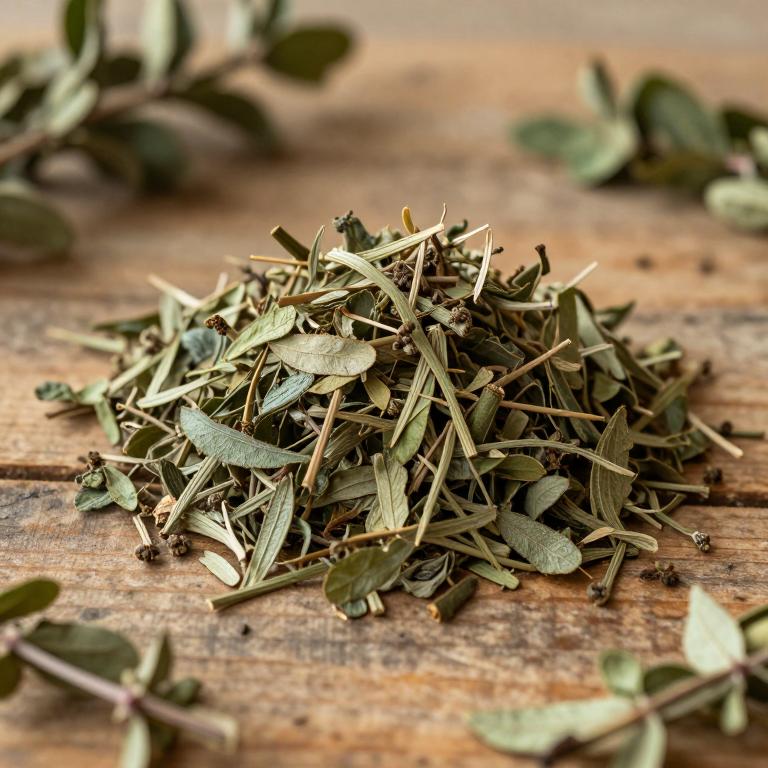
Names and Synonyms
Scientific Names
Accepted name
Toxicodendron pubescensDistribution
This plant exhibits a widespread distribution spanning across both Europe and North America. In Middle Europe, its presence is documented within the territories of Germany as well as the region encompassing Czechia and Slovakia. Moving across the Atlantic, the species can be found throughout parts of the North-Central United States. Specifically, it inhabits the landscapes of Illinois and Kansas. Additionally, its range extends into the state of Missouri within the same North-Central American region.
| Region | Area |
|---|---|
| Middle Europe | Czechia-Slovakia |
| Middle Europe | Germany |
| North-Central U.S.A. | Illinois |
| North-Central U.S.A. | Kansas |
| North-Central U.S.A. | Missouri |
| North-Central U.S.A. | Oklahoma |
| Northeastern U.S.A. | New Jersey |
| Northeastern U.S.A. | West Virginia |
| South-Central U.S.A. | Texas |
| Southeastern U.S.A. | Alabama |
Sources: The World Checklist of Vascular Plants (WCVP)
Botanical Identification
Life history
The life history of Toxicodendron pubescens is characterized by its status as a perennial species, allowing it to persist in its environment through multiple growing seasons. As a long-lived woody plant, it follows a life cycle that extends far beyond a single year, establishing a robust presence in its native habitats. Its developmental stages involve the establishment of a woody structure that enables it to withstand seasonal shifts, supporting continuous growth and the eventual production of reproductive organs. This perennial nature ensures that the plant can undergo repeated cycles of vegetative expansion and seed production, contributing to its long-term survival and ability to colonize specific ecological niches over many years.
- Lifecycle :
- perennial
Morphology
The morphology of Toxicodendron pubescens is characterized by its growth form as a woody tree, which stands as an independent organism rather than acting as a parasite or an epiphyte. As a terrestrial species, it does not exhibit aquatic or semiaquatic tendencies, maintaining its structure firmly in land-based environments. Unlike climbing vines, lianas, or obligatory climbers, this plant is self-supporting and does not require external structures for vertical growth. While it possesses a robust, woody constitution, its classification within its ecological niche distinguishes it from herbaceous forms such as forbs or graminoids, instead presenting a substantial arboreal architecture.
- Aquatic :
- terrestrial
- Climber :
- self-supporting
- Climber :
- obligatory
- Epiphyte :
- terrestrial
- Growth form :
- tree
- Growth form :
- forb
- Parasite :
- independent
- Woodiness :
- woody
Physiology
The physiology of Toxicodendron pubescens is characterized by its specialized metabolic processes, most notably its use of the C3 photosynthetic pathway. As a C3 plant, it fixes atmospheric carbon dioxide directly through the enzyme Rubisco during the Calvin cycle, a process that typically occurs in the mesophyll cells without the intermediate biochemical separation seen in other pathways. This metabolic framework dictates its resource requirements, particularly regarding water use efficiency and temperature regulation, as the plant relies on stomatal conductance to balance CO2 uptake with transpirational water loss. Beyond its primary carbon fixation mechanism, the plant's physiological activity is heavily defined by the synthesis and sequestration of urushiol, a potent organic compound found within its tissues. The production and distribution of these phenolic lipids are integrated into the plant's secondary metabolic pathways, serving as a complex physiological defense mechanism against herbivory and environmental stressors.
- Photosynthetic pathway :
- C3
Reproduction
The reproduction of Toxicodendron pubescens is characterized by a highly specific seed morphology and dispersal strategy. The plant produces seeds with a very consistent mass, showing no variation across the sampled population, with a minimum, maximum, and mean seed mass all recorded at exactly 0.02023 g. In terms of its reproductive dispersal strategy, the species exhibits a zoochorous syndrome, meaning it relies on animals to facilitate the movement of its seeds to new locations, although it may also interact with other modes such as anemochorous, autochorous, hydrochorous, or unspecialized dispersal mechanisms within its ecological niche.
- Dispersal syndrome :
- zoochorous
- Seed mass mean:
- 0.02023 g
Sources: Global Inventory of Floras and Traits (GIFT)
Chemicals
Toxicodendron pubescens has 13 reported phytochemicals identified across 0 scientific publications and several other databases. The most consistently reported chemicals include Fisetin, Gallotannic acid, MYRISTIC ACID, Tannins, Urushenol.
| Chemical | Supporting sources | Consensus |
|---|---|---|
| Fisetin | 1 supporting sources | ★☆☆☆☆ |
| Gallotannic acid | 1 supporting sources | ★☆☆☆☆ |
| MYRISTIC ACID | 1 supporting sources | ★☆☆☆☆ |
| Tannins | 1 supporting sources | ★☆☆☆☆ |
| Urushenol | 1 supporting sources | ★☆☆☆☆ |
| Urushiol | 1 supporting sources | ★☆☆☆☆ |
| kaempferol | 1 supporting sources | ★☆☆☆☆ |
| linoleic acid | 1 supporting sources | ★☆☆☆☆ |
| myricetin | 1 supporting sources | ★☆☆☆☆ |
| oleic acid | 1 supporting sources | ★☆☆☆☆ |
Fisetin
- Dr. Duke
Gallotannic acid
- Dr. Duke
MYRISTIC ACID
- Dr. Duke
Tannins
- Dr. Duke
Urushenol
- Dr. Duke
Urushiol
- Dr. Duke
kaempferol
- Dr. Duke
linoleic acid
- Dr. Duke
myricetin
- Dr. Duke
oleic acid
- Dr. Duke
Activities
Toxicodendron pubescens has 217 reported activities identified across 0 scientific publications and several other databases. The most consistently reported activities include 11B-HSD-Inhibitor, 5-Alpha-Reductase-Inhibitor, 5-Lipoxygenase-Inhibitor, ACE-Inhibitor, ATPase-Inhibitor.
| Activity | Supporting sources | Consensus |
|---|---|---|
| 11B-HSD-Inhibitor | 1 supporting sources | ★☆☆☆☆ |
| 5-Alpha-Reductase-Inhibitor | 1 supporting sources | ★☆☆☆☆ |
| 5-Lipoxygenase-Inhibitor | 1 supporting sources | ★☆☆☆☆ |
| ACE-Inhibitor | 1 supporting sources | ★☆☆☆☆ |
| ATPase-Inhibitor | 1 supporting sources | ★☆☆☆☆ |
| Aldehyde-Oxidase-Inhibitor | 1 supporting sources | ★☆☆☆☆ |
| Aldose-Reductase-Inhibitor | 1 supporting sources | ★☆☆☆☆ |
| Allelochemic | 1 supporting sources | ★☆☆☆☆ |
| Allergenic | 1 supporting sources | ★☆☆☆☆ |
| Alpha-Reductase-Inhibitor | 1 supporting sources | ★☆☆☆☆ |
11B-HSD-Inhibitor
- Dr. Duke
5-Alpha-Reductase-Inhibitor
- Dr. Duke
5-Lipoxygenase-Inhibitor
- Dr. Duke
ACE-Inhibitor
- Dr. Duke
ATPase-Inhibitor
- Dr. Duke
Aldehyde-Oxidase-Inhibitor
- Dr. Duke
Aldose-Reductase-Inhibitor
- Dr. Duke
Allelochemic
- Dr. Duke
Allergenic
- Dr. Duke
Alpha-Reductase-Inhibitor
- Dr. Duke
Preparations
Toxicodendron pubescens has 1 reported preparations identified across 0 scientific publications and several other databases. The most consistently reported preparations include homeopathic monoprepariations.
| Preparation | Supporting sources | Consensus |
|---|---|---|
| Homeopathic monoprepariations | 1 supporting sources | ★☆☆☆☆ |
Homeopathic monoprepariations
- Bulletin of experimental biology and medicine