Tovomita longifolia
Tovomita longifolia · Accepted scientific name
Scientific literature: Very Sparse (26 studies) · ★☆☆☆☆
, scientifically known as Tovomita longifolia, is a remarkable medicinal plant cherished in traditional healing practices. Renowned for its diverse therapeutic properties, it is frequently utilized to treat various ailments ranging from skin conditions to internal inflammation. This resilient species offers profound botanical insights for modern pharmacological research and wellness.
- Family
- Clusiaceae
- Native range
- Southern America
- Parts used
- Leaf
- Common names
- Not available
- Scientific synonyms
- Tovomita Clusiifolia · Clusia Longifolia · 5 more
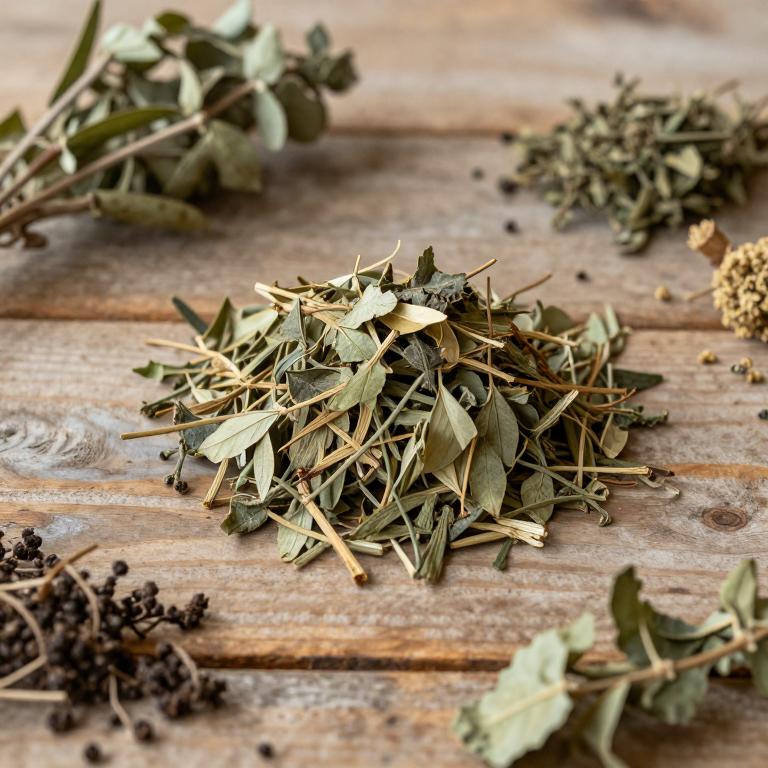
Names and Synonyms
Scientific Names
Accepted name
Tovomita longifoliaSynonyms
- Tovomita clusiifolia
- Clusia longifolia
- Tovomita melinonii
- Tovomita richardiana
- Tovomita choisyana
- Tovomita excelsa
- Tovomita bahiensis
Sources: Wikidata
Taxonomical Classification
This plant, known scientifically as Tovomita longifolia, belongs to the kingdom Plantae and the phylum Streptophyta. Within the class Equisetopsida and subclass Magnoliidae, it is classified under the order Malpighiales. Finally, it is situated within the family Clusiaceae and the genus Tovomita.
| Rank | Classification |
|---|---|
| Kingdom | Plantae |
| Phylum | Streptophyta |
| Class | Equisetopsida |
| Subclass | Magnoliidae |
| Order | Malpighiales |
| Family | Clusiaceae |
| Genus | Tovomita |
Sources: The World Checklist of Vascular Plants (WCVP)
Distribution
This plant is primarily distributed across several regions in Northern South America. It can be found growing within the territories of French Guiana, Guyana, and Suriname. In addition to these areas, its range extends significantly into the continent of Brazil. Specifically, the species is located in the Northeast region of Brazil. It is also documented to inhabit the northern parts of Brazil.
| Region | Area |
|---|---|
| Northern South America | French Guiana |
| Northern South America | Guyana |
| Northern South America | Suriname |
| Brazil | Brazil Northeast |
| Brazil | Brazil North |
Sources: The World Checklist of Vascular Plants (WCVP)
Botanical Identification
Ecology
The ecology of Tovomita longifolia is characterized by its adaptability to diverse tropical forest environments, occurring within habitats such as Campinarana, Floresta Ciliar or Galeria, Floresta de Várzea, and Floresta Ombrófila (also known as Floresta Pluvial). This species demonstrates a broad altitudinal distribution, thriving across a wide vertical gradient that begins at sea level (0 m AMSL) and extends up to an elevation of 1000 m AMSL.
- Elevational range max:
- 1000 m AMSL
- Elevational range min:
- 0 m AMSL
- Habitat :
- Campinarana, Floresta Ciliar ou Galeria, Floresta de Várzea, Floresta Ombrófila (= Floresta Pluvial)
Morphology
The morphology of Tovomita longifolia is characterized by its stature as a woody tree, reaching a maximum plant height of approximately 8 meters. As a terrestrial organism, it functions as an independent species, neither acting as a parasite nor as an epiphyte. Its growth habit is distinctly self-supporting, lacking the climbing or vine-like characteristics of lianas or obligatory climbers, and it maintains a stable terrestrial existence rather than inhabiting aquatic or semiaquatic environments.
- Aquatic :
- terrestrial
- Climber :
- self-supporting
- Epiphyte :
- terrestrial
- Growth form :
- tree
- Parasite :
- independent
- Plant height max:
- 8 m
- Woodiness :
- woody
Physiology
The physiology of Tovomita longifolia is characterized by a C3 photosynthetic pathway, indicating a reliance on the standard Calvin cycle for carbon fixation. Its leaf morphology and resource allocation strategies are defined by specific structural parameters, including a mean leaf length of 18.85 cm and a mean leaf width of 9.4 cm. The leaf architecture is notably thin, with a mean leaf thickness of 0.031 mm. In terms of biomass density and resource efficiency, the plant exhibits a consistent Leaf Dry Matter Content (LDMC) of 349.9 mg/g, representing both the minimum and maximum recorded values. Furthermore, its Specific Leaf Area (SLA) is characterized by a uniform value of 86.56391 cm²/g across its minimum, mean, and maximum measurements, reflecting a highly stable ratio between leaf area and dry mass.
- Leaf dry matter content (LDMC) mean:
- 349.9 mg/g
- Leaf length mean:
- 18.85 cm
- Leaf thickness mean:
- 0.031 mm
- Leaf width mean:
- 9.4 cm
- Photosynthetic pathway :
- C3
- Specific Leaf Area (SLA) min:
- 86.56391 cm²/g
Reproduction
The reproduction of Tovomita longifolia is characterized by the production of distinct seeds that exhibit measurable morphological variations. The seeds display a significant range in length, with a minimum measurement of 15 mm and a maximum reaching up to 30 mm, resulting in an average seed length of 23.5 mm. In terms of their physical dimensions, the seeds possess a maximum width of 11.7 mm and a maximum height of 6.8 mm, defining the structural parameters essential for their dispersal and subsequent germination processes.
- Seed height max:
- 6.8 mm
- Seed length max:
- 30 mm
- Seed length mean:
- 23.5 mm
- Seed length min:
- 15 mm
- Seed width max:
- 11.7 mm
Sources: Global Inventory of Floras and Traits (GIFT)
Plant Parts
Tovomita longifolia has 1 reported plant parts identified across 1 scientific publications and several other databases that are studied for medicinal purposes. The most consistently reported plant part include leaf.
| Plant part | Supporting sources | Consensus |
|---|---|---|
| Leaf | 1 supporting sources | ★☆☆☆☆ |
Leaf
- Journal of natural products
Chemicals
Tovomita longifolia has 1 reported phytochemicals identified across 1 scientific publications and several other databases. The most consistently reported chemicals include betulinic acid.
| Chemical | Supporting sources | Consensus |
|---|---|---|
| betulinic acid | 1 supporting sources | ★☆☆☆☆ |
betulinic acid
- Dr. Duke
Activities
Tovomita longifolia has 19 reported activities identified across 1 scientific publications and several other databases. The most consistently reported activities include Cytotoxic, Anthelmintic, AntiHIV, Antibacterial, Anticancer.
| Activity | Supporting sources | Consensus |
|---|---|---|
| Cytotoxic | 2 supporting sources | ★☆☆☆☆ |
| Anthelmintic | 1 supporting sources | ★☆☆☆☆ |
| AntiHIV | 1 supporting sources | ★☆☆☆☆ |
| Antibacterial | 1 supporting sources | ★☆☆☆☆ |
| Anticancer | 1 supporting sources | ★☆☆☆☆ |
| Anticarcinomic | 1 supporting sources | ★☆☆☆☆ |
| Antiedemic | 1 supporting sources | ★☆☆☆☆ |
| Antiinflammatory | 1 supporting sources | ★☆☆☆☆ |
| Antileukemic | 1 supporting sources | ★☆☆☆☆ |
| Antimalarial | 1 supporting sources | ★☆☆☆☆ |
Cytotoxic
- Dr. Duke
- Journal of natural products
Anthelmintic
- Dr. Duke
AntiHIV
- Dr. Duke
Antibacterial
- Dr. Duke
Anticancer
- Dr. Duke
Anticarcinomic
- Dr. Duke
Antiedemic
- Dr. Duke
Antiinflammatory
- Dr. Duke
Antileukemic
- Dr. Duke
Antimalarial
- Dr. Duke
Conditions
Tovomita longifolia has 4 reported investigations on conditions identified across 1 scientific publications and several other databases. The most consistently reported conditions include Klebsiella pneumoniae, Mycobacterium smegmatis, Pseudomonas aeruginosa, Staphylococcus aureus.
| Condition | Supporting sources | Consensus |
|---|---|---|
| Klebsiella pneumoniae | 1 supporting sources | ★☆☆☆☆ |
| Mycobacterium smegmatis | 1 supporting sources | ★☆☆☆☆ |
| Pseudomonas aeruginosa | 1 supporting sources | ★☆☆☆☆ |
| Staphylococcus aureus | 1 supporting sources | ★☆☆☆☆ |
Klebsiella pneumoniae
- Journal of natural products
Mycobacterium smegmatis
- Journal of natural products
Pseudomonas aeruginosa
- Journal of natural products
Staphylococcus aureus
- Journal of natural products
Preparations
Tovomita longifolia has 2 reported preparations identified across 1 scientific publications and several other databases. The most consistently reported preparations include chloroform extracts of Tovomita longifolia leaves, ethanol extracts of Tovomita longifolia leaves.
| Preparation | Supporting sources | Consensus |
|---|---|---|
| Chloroform extracts of tovomita longifolia leaves | 1 supporting sources | ★☆☆☆☆ |
| Ethanol extracts of tovomita longifolia leaves | 1 supporting sources | ★☆☆☆☆ |
Chloroform extracts of tovomita longifolia leaves
- Journal of natural products
Ethanol extracts of tovomita longifolia leaves
- Journal of natural products