Tournefortia mutabilis
Tournefortia mutabilis · Accepted scientific name
Scientific literature: Very Sparse (3 studies) · ★☆☆☆☆
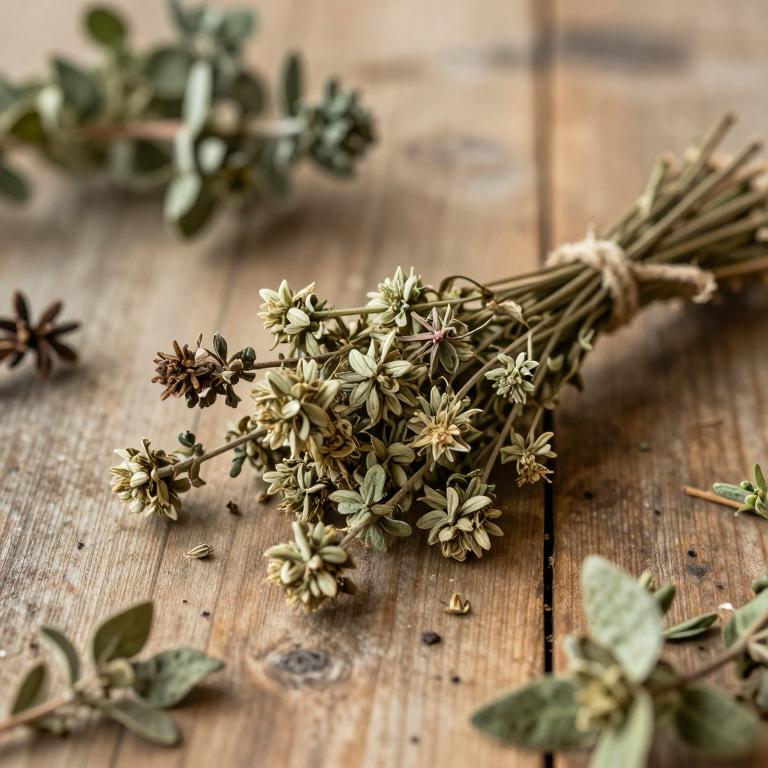
scientifically known as Tournefortia mutabilis, is a versatile medicinal shrub native to tropical regions. Often called "Sea Lettuce," this plant is valued in traditional medicine for its diverse therapeutic properties. It is frequently utilized to treat skin ailments, inflammation, and various digestive issues, offering significant pharmacological potential.
- Family
- Boraginaceae
- Native range
- Northern America
- Parts used
- Not available
- Common names
- Not available
- Scientific synonyms
- Not available
Names and Synonyms
Scientific Names
Accepted name
Tournefortia mutabilisRegional and Traditional Names
Spanish:
- tlalchichinol
Sources: Wikidata, Catalogue of Life
Taxonomical Classification
This plant belongs to the kingdom Plantae and the phylum Streptophyta. Within the class Equisetopsida and subclass Magnoliidae, it is categorized under the order Boraginales and the family Boraginaceae. Finally, it is classified under the genus Tournefortia.
| Rank | Classification |
|---|---|
| Kingdom | Plantae |
| Phylum | Streptophyta |
| Class | Equisetopsida |
| Subclass | Magnoliidae |
| Order | Boraginales |
| Family | Boraginaceae |
| Genus | Tournefortia |
Sources: The World Checklist of Vascular Plants (WCVP)
Distribution
This plant exhibits a widespread presence throughout various regions of Mexico. Its distribution spans the diverse landscapes of Mexico Central and the rugged terrain of Mexico Northeast. Additionally, the species can be found thriving along the coastal stretches of Mexico Gulf. Moving toward the western side of the country, it is also documented in Mexico Northwest. Finally, its range extends southward into the territories of Mexico Southwest.
| Region | Area |
|---|---|
| Mexico | Mexico Central |
| Mexico | Mexico Northeast |
| Mexico | Mexico Gulf |
| Mexico | Mexico Northwest |
| Mexico | Mexico Southwest |
| Mexico | Mexico Southeast |
| Central America | El Salvador |
| Central America | Guatemala |
Sources: The World Checklist of Vascular Plants (WCVP)
Botanical Identification
Reproduction
The reproduction of Tournefortia mutabilis is characterized by the production of seeds that exhibit specific morphological and weight-based consistency. Quantitative analysis of the seed characteristics reveals a relatively uniform distribution in mass, which is critical for its dispersal and establishment strategies. The seed mass within a population fluctuates within a narrow range, with a recorded minimum mass of 0.01322 g and a maximum mass of 0.01752 g. On average, the seeds possess a mean mass of 0.01537 g, providing a standardized energetic investment per propagule that influences its reproductive success in its natural habitat.
- Seed mass max:
- 0.01752 g
- Seed mass mean:
- 0.01537 g
- Seed mass min:
- 0.01322 g
Sources: Global Inventory of Floras and Traits (GIFT)
Activities
Tournefortia mutabilis has 1 reported activities identified across 0 scientific publications and several other databases. The most consistently reported activities include Antiproliferative.
| Activity | Supporting sources | Consensus |
|---|---|---|
| Antiproliferative | 1 supporting sources | ★☆☆☆☆ |
Antiproliferative
- Iranian journal of pharmaceutical research : IJPR
Conditions
Tournefortia mutabilis has 2 reported investigations on conditions identified across 0 scientific publications and several other databases. The most consistently reported conditions include Breast cancer, cancer.
| Condition | Supporting sources | Consensus |
|---|---|---|
| Breast cancer | 1 supporting sources | ★☆☆☆☆ |
| Cancer | 1 supporting sources | ★☆☆☆☆ |
Breast cancer
- Iranian journal of pharmaceutical research : IJPR
Cancer
- Iranian journal of pharmaceutical research : IJPR