Japanese nutmeg-yew
Torreya nucifera · Accepted scientific name
Scientific literature: Very Sparse (9 studies) · ★☆☆☆☆
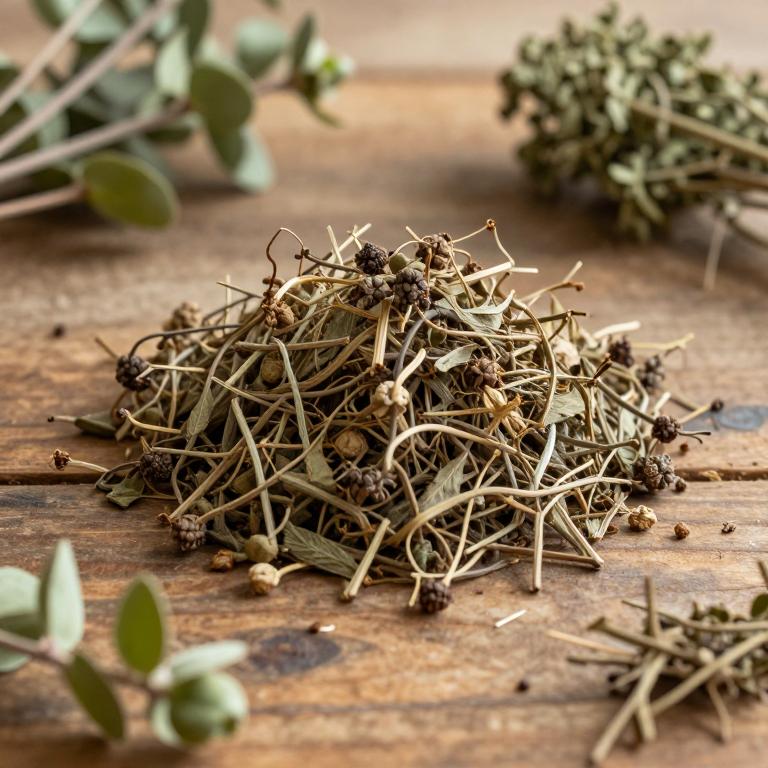
Japanese nutmeg-yew, scientifically known as Torreya nucifera, is a rare coniferous evergreen native to the subtropical forests of Japan. Highly valued for its nutritious seeds and traditional medicinal properties, this species plays a vital role in local ecosystems and offers significant potential for botanical research and sustainable cultivation.
Names and Synonyms
Common Names
- Japanese Nutmeg Tree
- Japanese torreya
- Japanese-nutmeg
- Japanese nutmeg yew
- Japanese nutmeg-yew
Scientific Names
Accepted name
Torreya nuciferaSynonyms
- Tumion nuciferum
- Torreya nucifera f. sphaerica
- Foetataxus nucifera
- Torreya fruticosa
- Torreya nucifera f. radicans
- Torreya nucifera var. prostrata
- Torreya macrosperma
- Torreya nucifera var. sphaerica
- Torreya nucifera var. articulata
- Torreya nucifera var. radicans
- Torreya unda
- Taxus nucifera
- Taxodium nuciferum
- Torreya igaensis
- Caryotaxus nucifera
- Podocarpus nucifer
Regional and Traditional Names
Spanish:
- torreya japonesa
- kaya
German:
- Japanische Nusseibe
- Japanische Stinkeibe
- Japanische Nusseibe
Sources: Wikidata, Catalogue of Life
Taxonomical Classification
This plant belongs to the kingdom Plantae and the phylum Streptophyta, placing it within the class Equisetopsida and subclass Pinidae. It is further classified under the order Pinales and the family Taxaceae. Within this hierarchy, it is specifically identified by the genus Torreya.
| Rank | Classification |
|---|---|
| Kingdom | Plantae |
| Phylum | Streptophyta |
| Class | Equisetopsida |
| Subclass | Pinidae |
| Order | Pinales |
| Family | Taxaceae |
| Genus | Torreya |
Sources: The World Checklist of Vascular Plants (WCVP)
Distribution
This plant, known as Torreya nucifera, exhibits a specific geographical distribution within the Eastern Asian region. Its natural range is primarily concentrated in the temperate forests of Japan. Additionally, it can be found growing across various parts of the Korean Peninsula. These specific locations represent the core habitats where the species thrives naturally. Consequently, its presence is limited to these two key East Asian territories.
| Region | Area |
|---|---|
| Eastern Asia | Japan |
| Eastern Asia | Korea |
Sources: The World Checklist of Vascular Plants (WCVP)
Botanical Identification
Life history
The life history of Torreya nucifera is characterized by its classification as a phanerophyte, specifically manifesting as both a phanerophyte and a nanophanerophyte depending on the developmental stage and environmental conditions. As a long-lived coniferous evergreen, its growth strategy relies on maintaining its photosynthetic organs above the ground level throughout the year, protected by woody structures. The life cycle begins with the germination of seeds, leading to a slow-growing seedling phase that eventually transitions into a perennial woody architecture. Throughout its existence, it maintains a persistent presence in its habitat, utilizing its elevated bud positions to survive seasonal changes, a hallmark of its phanerophyte life form. This stable, perennial growth pattern allows the species to occupy specific ecological niches where it can establish long-term dominance within the forest canopy or sub-canopy.
- Life form :
- phanerophyte
Morphology
The morphology of Torreya nucifera is characterized by its growth form as a large, woody tree. As a self-supporting organism, it does not exhibit climbing habits such as lianas or vines, nor does it function as an epiphyte, remaining strictly terrestrial in its ecological niche. The plant is an independent species, lacking any parasitic tendencies, and maintains a robust, woody structure typical of coniferous trees.
- Aquatic :
- terrestrial
- Climber :
- self-supporting
- Epiphyte :
- terrestrial
- Growth form :
- tree
- Parasite :
- independent
- Woodiness :
- woody
Physiology
The physiology of Torreya nucifera is characterized by a highly specialized metabolic framework adapted to temperate forest environments. Most significantly, the plant utilizes a C3 photosynthetic pathway, which involves the direct fixation of atmospheric carbon dioxide by the enzyme RuBisCO during the Calvin cycle. This metabolic strategy facilitates carbon assimilation under relatively cool and moist conditions, though it necessitates efficient stomatal regulation to manage transpiration rates and prevent photorespiration. Beyond its carbon fixation mechanism, the plant exhibits complex physiological adaptations related to nutrient cycling and long-term growth stability, typical of gymnosperms. Its physiological processes are tightly integrated with seasonal environmental cues, influencing its phenology and the secondary metabolic pathways responsible for the synthesis of bioactive compounds.
- Photosynthetic pathway :
- C3
Reproduction
The reproduction of Torreya nucifera is characterized by the development of specialized reproductive structures that produce seeds with highly consistent physical dimensions. The plant produces fleshy fruits, which serve as the primary vessel for seed protection and dispersal. Within these fleshy structures, the seeds exhibit remarkable uniformity in their morphological traits; the seed mass is strictly measured at a mean of 1.464 g, with both the minimum and maximum recorded values remaining constant at 1.464 g. Similarly, the seed volume shows no variance, maintaining a consistent volume of 660 mm³, which serves as both the minimum and maximum value, as well as the mean. This high degree of precision in seed mass and volume, combined with the fleshy nature of the fruit, defines the specific reproductive output of the species.
- Fruit dryness :
- fleshy
- Seed mass mean:
- 1.464 g
- Seed volume max:
- 660 mm³
Sources: Global Inventory of Floras and Traits (GIFT)
Plant Parts
Torreya nucifera has 1 reported plant parts identified across 1 scientific publications and several other databases that are studied for medicinal purposes. The most consistently reported plant part include leaf.
| Plant part | Supporting sources | Consensus |
|---|---|---|
| Leaf | 1 supporting sources | ★☆☆☆☆ |
Leaf
- Bioorganic & medicinal chemistry
Chemicals
Torreya nucifera has 3 reported phytochemicals identified across 1 scientific publications and several other databases. The most consistently reported chemicals include Amentoflavone, Arctigenin, quercetin.
| Chemical | Supporting sources | Consensus |
|---|---|---|
| Amentoflavone | 4 supporting sources | ★★☆☆☆ |
| Arctigenin | 1 supporting sources | ★☆☆☆☆ |
| quercetin | 1 supporting sources | ★☆☆☆☆ |
Amentoflavone
- Journal of integrative medicine
- Journal of biomolecular structure & dynamics
- Journal of ethnopharmacology
- Bioorganic & medicinal chemistry
Arctigenin
- Journal of ethnopharmacology
quercetin
- Journal of ethnopharmacology
Activities
Torreya nucifera has 1 reported activities identified across 1 scientific publications and several other databases. The most consistently reported activities include Antiviral.
| Activity | Supporting sources | Consensus |
|---|---|---|
| Antiviral | 1 supporting sources | ★☆☆☆☆ |
Antiviral
- Journal of biomolecular structure & dynamics
Conditions
Torreya nucifera has 1 reported investigations on conditions identified across 1 scientific publications and several other databases. The most consistently reported conditions include COVID-19.
| Condition | Supporting sources | Consensus |
|---|---|---|
| Covid-19 | 1 supporting sources | ★☆☆☆☆ |
Covid-19
- Journal of integrative medicine
Preparations
Torreya nucifera has 1 reported preparations identified across 1 scientific publications and several other databases. The most consistently reported preparations include ethanol extract.
| Preparation | Supporting sources | Consensus |
|---|---|---|
| Ethanol extract | 1 supporting sources | ★☆☆☆☆ |
Ethanol extract
- Bioorganic & medicinal chemistry