Tillandsia
Tillandsia · Accepted scientific name
Scientific literature: Very Sparse (1 studies) · ★☆☆☆☆
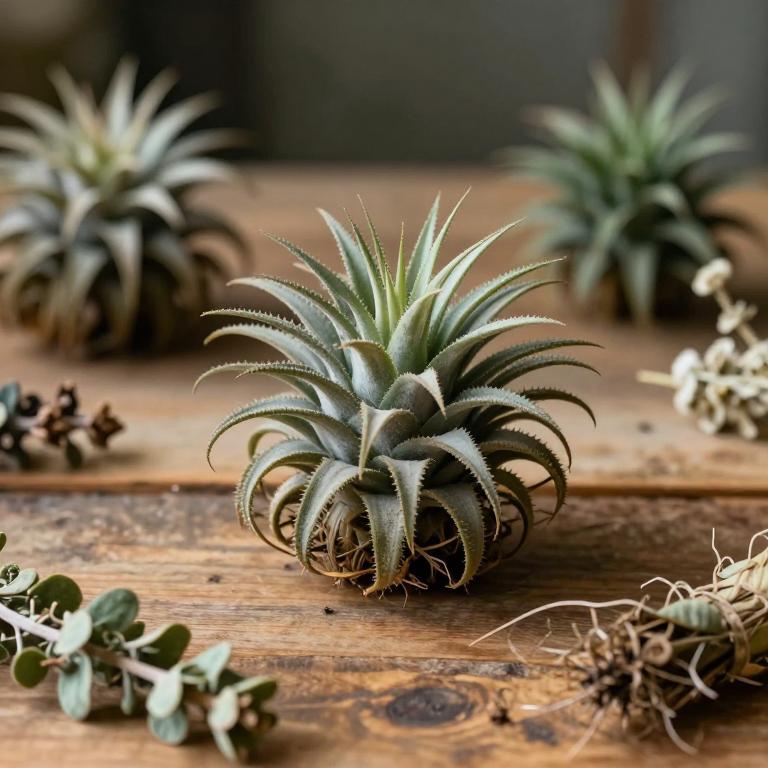
Tillandsia, commonly known as air plants, are fascinating botanical wonders that thrive without traditional soil. These unique epiphytes absorb moisture and nutrients directly from the atmosphere through specialized leaf scales. Beyond their striking aesthetic appeal, recent scientific inquiries have begun to explore the complex chemical compounds found within their tissues. Some studies suggest that these plants may possess bioactive properties with potential anticancer activities. Understanding these biological mechanisms offers a promising glimpse into the intersection of botany and medicinal research.
- Synonyms
- Anoplophytum · Bonapartea · 7 more
- Common names
- Not available
- Family
- Bromeliaceae
- Distribution
- Not available
- Plant Parts
- Not available
Classification
Common Names
Tillandsia is a fascinating genus of plants that is most widely recognized by the common name airplants. These unique organisms are closely related to the broader family of bromeliads, specifically belonging to the group known as bromelias epífitas. In many regions, they are affectionately referred to as claveles del aire due to their delicate and beautiful appearance. They are also sometimes called lugplante, highlighting their distinct growth habits. Regardless of the name used, these plants remain a captivating staple for collectors of exotic greenery.
Sources: Catalogue of Life (COL)
Synonyms
Tillandsia represents a diverse and complex genus within the Bromeliaceae family, often leading to taxonomic discussions regarding its classification. Throughout botanical history, several names have been proposed as synonyms for this widespread group, including the genus Allardtia. Other historical designations such as Amalia and Anoplophytum have also been linked to these air plants in various scientific contexts. Furthermore, the names Bonapartea and Dendropogon serve as additional synonyms that reflect the evolving understanding of their lineage. Understanding these various nomenclatural connections is essential for anyone studying the intricate evolutionary relationships within the genus.
Sources: The World Checklist of Vascular Plants (WCVP)
Taxonomy
Tillandsia belongs to the vast kingdom Plantae, representing a diverse group of living organisms. Within this kingdom, these unique plants are classified under the class Equisetopsida. They are further organized into the order Poales, which connects them to a specific lineage of flowering plants. As members of the family Bromeliaceae, they share characteristics with many other well-known tropical species. Ultimately, they are defined by their specific genus, Tillandsia, which distinguishes them within the botanical world.
| Rank | Classification |
|---|---|
| Kingdom | Plantae |
| Phylum | Streptophyta |
| Class | Equisetopsida |
| Subclass | Magnoliidae |
| Order | Poales |
| Family | Bromeliaceae |
| Genus | Tillandsia |
Sources: The World Checklist of Vascular Plants (WCVP)
Distribution
Geographic Regions
Tillandsia exhibits a remarkable geographic range that spans across several diverse continents and regions. In Africa, these plants can be found throughout Macaronesia and the Canary Islands. Their presence extends to Australasia, specifically within the lush landscapes of Queensland, Australia. Within Northern America, they are well-established in both Central and Gulf Mexico. Additionally, certain species have been documented as far north as Great Britain and other parts of Northern Europe.
Sources: The World Checklist of Vascular Plants (WCVP)
Identification
Biological Activities
Tillandsia is a genus well-known for exhibiting significant anticancer activity. This biological potential is particularly relevant when discussing its taxonomic relative, Hechtia glomerata, a Mexican medicinal plant. Recent research into H. glomerata has revealed that its extracts possess notable cytotoxic properties against various cancer cell lines, including HepG2 and MCF7. By using UPLC-QTOF-MS analysis, scientists have identified several active compounds that contribute to these medicinal effects. These findings suggest that the plant holds great promise for future therapeutic applications in treating both bacterial infections and cancer.