Tiliacora triandra
Tiliacora triandra · Accepted scientific name
Scientific literature: Very Sparse (19 studies) · ★☆☆☆☆
Tiliacora triandra, scientifically known as Tiliacora triandra, is a versatile climbing vine native to Southeast Asia. Renowned for its culinary uses, particularly in Thai cuisine, this plant also holds significant medicinal value. It is traditionally employed to treat various ailments, including inflammation, digestive issues, and fever.
- Family
- Menispermaceae
- Native range
- Asia-Tropical
- Parts used
- Root
- Common names
- Not available
- Scientific synonyms
- Menispermum Triandrum · Tiliacora Stipularis · 6 more
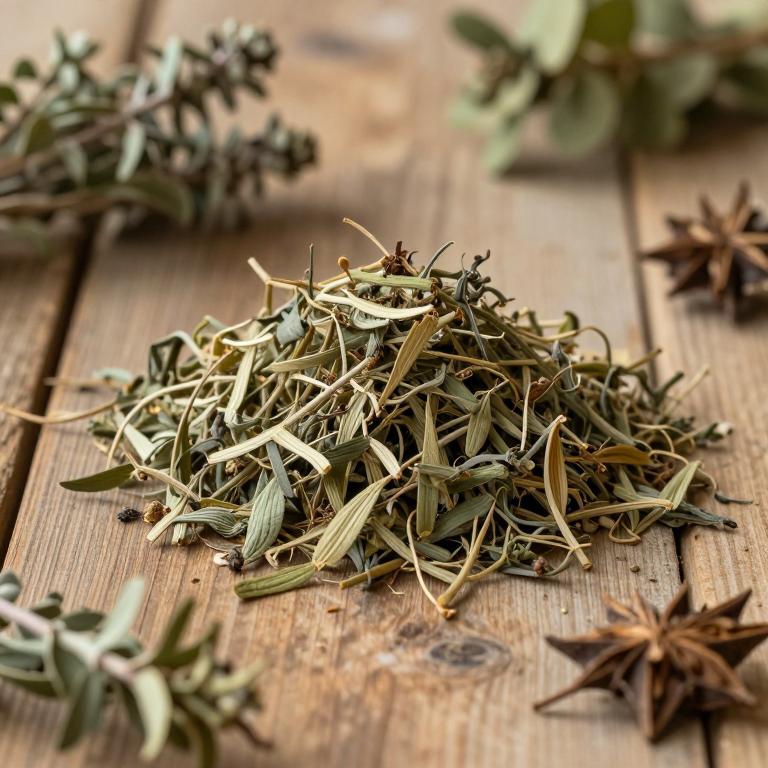
Names and Synonyms
Scientific Names
Accepted name
Tiliacora triandraSynonyms
- Menispermum triandrum
- Tiliacora stipularis
- Tiliacora laevifolia
- Limacia triandra
- Aristega laevifolia
- Cocculus triandrus
- Limacia amherstiana
- Limacia wallichiana
Sources: Wikidata, Catalogue of Life
Taxonomical Classification
This plant belongs to the kingdom Plantae and the phylum Streptophyta, falling under the class Equisetopsida and subclass Magnoliidae. Within the order Ranunculales, it is classified under the family Menispermaceae. Finally, its specific taxonomic designation is within the genus Tiliacora.
| Rank | Classification |
|---|---|
| Kingdom | Plantae |
| Phylum | Streptophyta |
| Class | Equisetopsida |
| Subclass | Magnoliidae |
| Order | Ranunculales |
| Family | Menispermaceae |
| Genus | Tiliacora |
Sources: The World Checklist of Vascular Plants (WCVP)
Distribution
This plant exhibits a diverse geographical distribution spanning several regions across South and Southeast Asia. Within the Indian Subcontinent, it can be found growing in the states of Assam and throughout Bangladesh. Its presence extends into the Indo-China region, specifically documented in the Andaman Islands. Furthermore, the species is widely distributed across the mainland territories of Cambodia and Laos. These varied locations highlight the plant's ability to thrive in different tropical environments across these neighboring nations.
| Region | Area |
|---|---|
| Indian Subcontinent | Assam |
| Indian Subcontinent | Bangladesh |
| Indo-China | Andaman Is. |
| Indo-China | Cambodia |
| Indo-China | Laos |
| Indo-China | Myanmar |
| Indo-China | Thailand |
| Indo-China | Vietnam |
| Malesia | Malaya |
Sources: The World Checklist of Vascular Plants (WCVP)
Botanical Identification
Life history
The life history of Tiliacora triandra is characterized by its growth as a perennial climbing woody vine that exhibits a variable pattern of foliage retention, ranging from deciduous to evergreen depending on environmental conditions and seasonal shifts. As a perennial climber, the plant establishes a long-term presence in its ecosystem, utilizing its climbing mechanism to reach higher light intensities within forest canopies. Its phenological cycle involves periods of active vegetative growth and seasonal changes in leaf density, reflecting its capacity for both deciduous and evergreen traits. This physiological flexibility allows the species to adapt to varying moisture levels and light availability, ensuring its survival and continued reproductive potential throughout its lifespan.
- Deciduousness :
- evergreen
Morphology
The morphology of Tiliacora triandra is characterized by its growth habit as a woody liana, functioning as a climbing vine that requires external support to ascend. This plant exhibits an obligatory climbing mechanism, meaning it relies on other structures for physical stability rather than being self-supporting. Its structural composition is distinctly woody, providing the necessary rigidity and strength to facilitate its life as a perennial climbing vine within its ecosystem.
- Climber :
- liana
- Climber :
- obligatory
- Woodiness :
- woody
Physiology
The physiology of Tiliacora triandra is characterized by its specialized metabolic processes and growth patterns typical of woody climbers. As a climbing vine, its physiological development is heavily oriented toward rapid stem elongation and the development of tendrils to optimize light interception within forest canopies. The plant exhibits complex secondary metabolism, synthesizing a diverse array of bioactive phytochemicals, such as alkaloids, flavonoids, and saponins, which serve as essential physiological defense mechanisms against herbivory and environmental stressors. Regarding its nutrient acquisition and symbiotic relationships, the plant does not function as a nitrogen fixer; it lacks the specific symbiotic associations with diazotrophic bacteria, such as Rhizobium, required to convert atmospheric nitrogen into bioavailable forms. Consequently, its nitrogen metabolism is strictly dependent on the uptake of nitrates and ammonium from the soil through its root system to support protein synthesis and cellular growth.
- Nitrogen fixer :
- no
Reproduction
The reproduction of Tiliacora triandra is primarily driven by sexual processes facilitated by its flowering structures, though specific mechanisms regarding its pollination and fertilization patterns are characteristic of many woody climbers. In terms of its reproductive strategy, the plant exhibits a distinct lack of self-fertilization, as the trait for self-fertilization is noted as being absent. This absence suggests that the species relies on cross-pollination, likely mediated by insect vectors, to ensure genetic diversity and successful seed production. The reproductive cycle involves the development of flowers that must undergo exogenous pollen transfer to achieve fertilization, rather than relying on internal self-pollination mechanisms. Consequently, the presence or absence of self-fertilization is a critical factor in its life cycle, with the current data confirming that self-fertilization is absent in this species.
- Self fertilization :
- absent
Sources: Global Inventory of Floras and Traits (GIFT)
Plant Parts
Tiliacora triandra has 1 reported plant parts identified across 2 scientific publications and several other databases that are studied for medicinal purposes. The most consistently reported plant part include root.
| Plant part | Supporting sources | Consensus |
|---|---|---|
| Root | 2 supporting sources | ★☆☆☆☆ |
Root
- Pharmaceuticals (Basel, Switzerland)
- Research in pharmaceutical sciences
Chemicals
Tiliacora triandra has 3 reported phytochemicals identified across 2 scientific publications and several other databases. The most consistently reported chemicals include Pectolinarigenin, Tiliacorinine, cholesterol.
| Chemical | Supporting sources | Consensus |
|---|---|---|
| Pectolinarigenin | 1 supporting sources | ★☆☆☆☆ |
| Tiliacorinine | 1 supporting sources | ★☆☆☆☆ |
| cholesterol | 1 supporting sources | ★☆☆☆☆ |
Pectolinarigenin
- Pharmaceuticals (Basel, Switzerland)
Tiliacorinine
- Biochimica et biophysica acta. General subjects
cholesterol
- Journal of complementary & integrative medicine
Activities
Tiliacora triandra has 4 reported activities identified across 2 scientific publications and several other databases. The most consistently reported activities include Antioxidant, Anticancer, Antiproliferative, Cytotoxic.
| Activity | Supporting sources | Consensus |
|---|---|---|
| Antioxidant | 2 supporting sources | ★☆☆☆☆ |
| Anticancer | 1 supporting sources | ★☆☆☆☆ |
| Antiproliferative | 1 supporting sources | ★☆☆☆☆ |
| Cytotoxic | 1 supporting sources | ★☆☆☆☆ |
Antioxidant
- BMC complementary medicine and therapies
- BMC veterinary research
Anticancer
- BMC complementary medicine and therapies
Antiproliferative
- BMC complementary medicine and therapies
Cytotoxic
- Journal of ethnopharmacology
Conditions
Tiliacora triandra has 8 reported investigations on conditions identified across 2 scientific publications and several other databases. The most consistently reported conditions include PRRS, atopic dermatitis, breast cancer, cholangiocarcinoma, obesity.
| Condition | Supporting sources | Consensus |
|---|---|---|
| Prrs | 1 supporting sources | ★☆☆☆☆ |
| Atopic dermatitis | 1 supporting sources | ★☆☆☆☆ |
| Breast cancer | 1 supporting sources | ★☆☆☆☆ |
| Cholangiocarcinoma | 1 supporting sources | ★☆☆☆☆ |
| Obesity | 1 supporting sources | ★☆☆☆☆ |
| Porcine reproductive and respiratory syndrome virus | 1 supporting sources | ★☆☆☆☆ |
| Skin diseases | 1 supporting sources | ★☆☆☆☆ |
| Triple-negative breast cancer | 1 supporting sources | ★☆☆☆☆ |
Prrs
- BMC veterinary research
Atopic dermatitis
- Research in pharmaceutical sciences
Breast cancer
- Pharmaceuticals (Basel, Switzerland)
Cholangiocarcinoma
- Biochimica et biophysica acta. General subjects
Obesity
- Pharmaceuticals (Basel, Switzerland)
Porcine reproductive and respiratory syndrome virus
- BMC veterinary research
Skin diseases
- Research in pharmaceutical sciences
Triple-negative breast cancer
- Pharmaceuticals (Basel, Switzerland)
Preparations
Tiliacora triandra has 6 reported preparations identified across 2 scientific publications and several other databases. The most consistently reported preparations include 80% ethanolic root extract, 95% ethanol, Clear belongs Plus extract (CBL-P), etahnolic and water extracts, ethanolic extracts.
| Preparation | Supporting sources | Consensus |
|---|---|---|
| 80% ethanolic root extract | 1 supporting sources | ★☆☆☆☆ |
| 95% ethanol | 1 supporting sources | ★☆☆☆☆ |
| Clear belongs plus extract (cbl-p) | 1 supporting sources | ★☆☆☆☆ |
| Etahnolic and water extracts | 1 supporting sources | ★☆☆☆☆ |
| Ethanolic extracts | 1 supporting sources | ★☆☆☆☆ |
| Water extracts | 1 supporting sources | ★☆☆☆☆ |
80% ethanolic root extract
- Pharmaceuticals (Basel, Switzerland)
95% ethanol
- Journal of ethnopharmacology
Clear belongs plus extract (cbl-p)
- BMC complementary medicine and therapies
Etahnolic and water extracts
- Journal of the Medical Association of Thailand = Chotmaihet thangphaet
Ethanolic extracts
- Journal of the Medical Association of Thailand = Chotmaihet thangphaet
Water extracts
- Journal of the Medical Association of Thailand = Chotmaihet thangphaet