Elbow Leaf
Tiliacora funifera · Accepted scientific name
Scientific literature: Very Sparse (6 studies) · ★☆☆☆☆
Elbow Leaf, scientifically known as Tiliacora funifera, is a climbing woody vine native to Southeast Asia. Widely utilized in traditional medicine, it is celebrated for its potent antioxidant and anti-inflammatory properties. Often used to treat various ailments, this medicinal plant holds significant promise for modern pharmacological research and development.
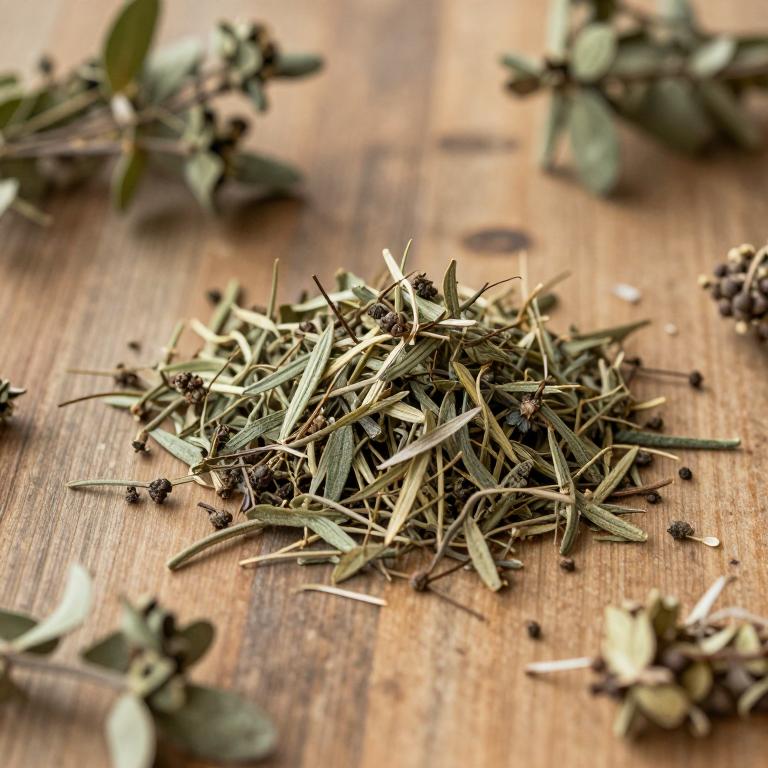
Names and Synonyms
Common Names
- Stem-Fruit Climber
- Stemfruit-Climber
- elbowleaf
Scientific Names
Accepted name
Tiliacora funiferaSynonyms
- Tiliacora warneckei
- Hypserpa funifera
- Tiliacora troupinii
- Tiliacora glycosmantha
- Tiliacora pynaertii
- Limacia funifera
- Tiliacora johannis
Sources: Wikidata, Catalogue of Life
Taxonomical Classification
This plant belongs to the kingdom Plantae within the phylum Streptophyta and is classified under the class Equisetopsida. Within the subclass Magnoliidae, it falls under the order Ranunculales and the family Menispermaceae. Ultimately, its specific taxonomic identity is established under the genus Tiliacora.
| Rank | Classification |
|---|---|
| Kingdom | Plantae |
| Phylum | Streptophyta |
| Class | Equisetopsida |
| Subclass | Magnoliidae |
| Order | Ranunculales |
| Family | Menispermaceae |
| Genus | Tiliacora |
Sources: The World Checklist of Vascular Plants (WCVP)
Distribution
This plant is primarily distributed across several regions within West Tropical Africa. It can be found growing natively in the country of Benin. Additionally, its presence extends to the territories of Ghana and Guinea. The species also inhabits parts of the Ivory Coast. Finally, its geographical range includes the nation of Nigeria.
| Region | Area |
|---|---|
| West Tropical Africa | Benin |
| West Tropical Africa | Ghana |
| West Tropical Africa | Guinea |
| West Tropical Africa | Ivory Coast |
| West Tropical Africa | Nigeria |
| West Tropical Africa | Togo |
| West-Central Tropical Africa | Burundi |
| West-Central Tropical Africa | Cabinda |
| West-Central Tropical Africa | Cameroon |
| West-Central Tropical Africa | Congo |
Sources: The World Checklist of Vascular Plants (WCVP)
Botanical Identification
Ecology
The ecology of Tiliacora funifera is characterized by its adaptation to tropical forest environments, where it typically thrives within a specific altitudinal gradient. This species is found distributed across a broad vertical range, starting from sea level at 0 m AMSL and extending up to a maximum elevation of 750 m AMSL. Within this range, it functions as a climbing woody vine, often integrating into the structural complexity of forest canopies to access sunlight and moisture. Its presence is closely tied to the humid, warm conditions typical of these low-to-mid elevation tropical zones, which provide the necessary ecological niches for its growth and survival.
- Elevational range max:
- 750 m AMSL
- Elevational range min:
- 0 m AMSL
Life history
The life history of Tiliacora funifera is characterized by its status as a perennial plant, meaning it maintains its vegetative structures and biological functions over many years rather than completing a single reproductive cycle in one season. As a climbing woody vine, it follows a long-term developmental trajectory that involves establishing a robust root system to support its climbing habit through forest canopies. Its lifecycle is marked by continuous growth patterns that allow it to persist in its natural habitat for extended periods, undergoing seasonal shifts in metabolic activity while maintaining a permanent presence in the ecosystem.
- Lifecycle :
- perennial
Morphology
The morphology of Tiliacora funifera is characterized by its growth habit as a woody liana, functioning as an obligatory climber that relies on external structures for support. As a terrestrial plant, it does not inhabit aquatic or semi-aquatic environments, nor does it function as an epiphyte. The species grows to a significant height, with a mean plant height reaching approximately 16 m. Furthermore, it maintains an independent life cycle, as it is not a parasite.
- Aquatic :
- terrestrial
- Climber :
- liana
- Climber :
- obligatory
- Epiphyte :
- terrestrial
- Parasite :
- independent
- Plant height mean:
- 16 m
- Woodiness :
- woody
Physiology
The physiology of Tiliacora funifera is characterized by its metabolic adaptations to its specific ecological niche, most notably through its carbon fixation mechanism. This plant utilizes the C3 photosynthetic pathway, a process where the first stable compound formed during carbon fixation is a three-carbon molecule, typically occurring within the mesophyll cells. This C3 pathway dictates its physiological response to environmental stressors, such as light intensity and water availability, influencing its overall transpiration rates and gas exchange efficiency. The metabolic processes within the plant are geared toward supporting its climbing growth habit, requiring efficient resource allocation to maintain its structural integrity and secondary metabolite production. Through this C3-based carbon assimilation, Tiliacora funifera manages the conversion of solar energy into chemical energy, driving the biosynthesis of various bioactive compounds that define its physiological profile.
- Photosynthetic pathway :
- C3
Sources: Global Inventory of Floras and Traits (GIFT)
Plant Parts
Tiliacora funifera has 2 reported plant parts identified across 2 scientific publications and several other databases that are studied for medicinal purposes. The most consistently reported plant part include leaf, root.
| Plant part | Supporting sources | Consensus |
|---|---|---|
| Leaf | 1 supporting sources | ★☆☆☆☆ |
| Root | 1 supporting sources | ★☆☆☆☆ |
Leaf
- Lloydia
Root
- Journal of pharmaceutical sciences
Chemicals
Tiliacora funifera has 4 reported phytochemicals identified across 2 scientific publications and several other databases. The most consistently reported chemicals include Funiferine N-oxide, Isotetrandrine, THALRUGOSINE, Tiliafunimine.
| Chemical | Supporting sources | Consensus |
|---|---|---|
| Funiferine N-oxide | 1 supporting sources | ★☆☆☆☆ |
| Isotetrandrine | 1 supporting sources | ★☆☆☆☆ |
| THALRUGOSINE | 1 supporting sources | ★☆☆☆☆ |
| Tiliafunimine | 1 supporting sources | ★☆☆☆☆ |
Funiferine N-oxide
- Journal of pharmaceutical sciences
Isotetrandrine
- Lloydia
THALRUGOSINE
- Lloydia
Tiliafunimine
- Lloydia
Preparations
Tiliacora funifera has 1 reported preparations identified across 2 scientific publications and several other databases. The most consistently reported preparations include extract of the leaves of T. funifera.
| Preparation | Supporting sources | Consensus |
|---|---|---|
| Extract of the leaves of t. funifera | 1 supporting sources | ★☆☆☆☆ |
Extract of the leaves of t. funifera
- Lloydia