Basswood genus
Tilia · Accepted scientific name
Scientific literature: Very Sparse (10 studies) · ★☆☆☆☆
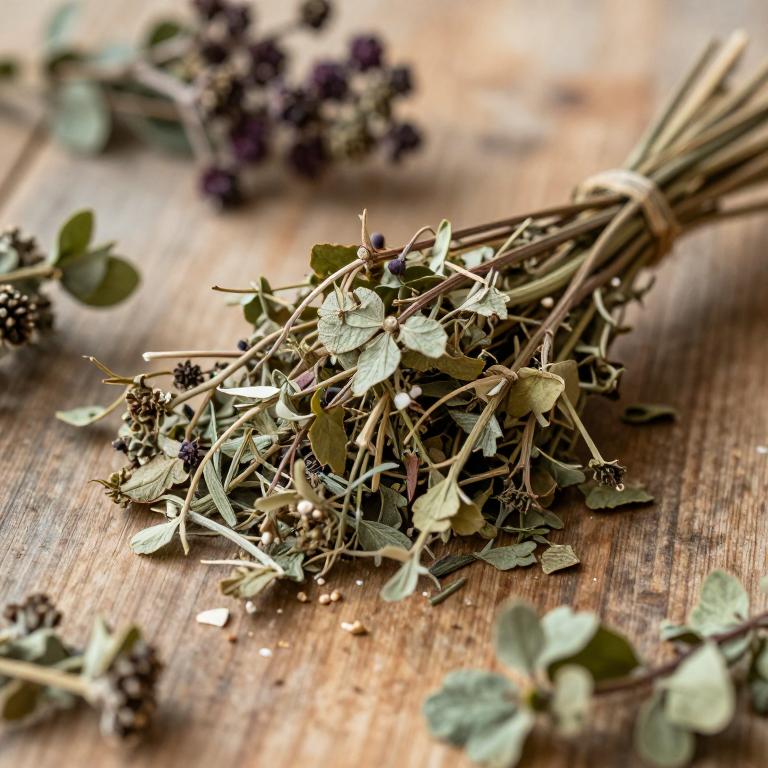
Basswood genus, scientifically known as Tilia, is a versatile medicinal plant celebrated for its soothing properties. Often used in traditional herbalism, its fragrant flowers are brewed into calming teas to relieve anxiety, tension, and digestive discomfort. This gentle botanical serves as a natural remedy for promoting relaxation and sleep.
- Family
- Malvaceae
- Native range
- Europe
- Parts used
- Not available
- Common names
- Basswood · Lime · 2 more
- Scientific synonyms
- Tilioides · Lindnera
Names and Synonyms
Common Names
- basswood
- Lime
- limes
- lindens
Scientific Names
Accepted name
TiliaSynonyms
- Tilioides
- Lindnera
Regional and Traditional Names
Spanish:
- Tilo
- Flor de tilo
- tilos
- Tilo
German:
- Linde
- Lindenbaum
- Linde
French:
- tilleul
- tilleuls
- tilleuls
- Tilleul
Sources: Wikidata, Catalogue of Life
Taxonomical Classification
This plant belongs to the kingdom Plantae and the phylum Streptophyta, falling under the class Equisetopsida and subclass Magnoliidae. Within the order Malvales and the family Malvaceae, it is classified under the genus Tilia.
| Rank | Classification |
|---|---|
| Kingdom | Plantae |
| Phylum | Streptophyta |
| Class | Equisetopsida |
| Subclass | Magnoliidae |
| Order | Malvales |
| Family | Malvaceae |
| Genus | Tilia |
Sources: The World Checklist of Vascular Plants (WCVP)
Distribution
This plant exhibits a specific presence across several regions within Northern Europe. In the coastal and inland areas of Denmark, it can be found growing in its natural habitat. The species is also distributed throughout the landscapes of Finland. Its range extends further west to include the territories of Great Britain and Ireland. Finally, the geographical reach of this medicinal plant encompasses the northern reaches of Norway.
| Region | Area |
|---|---|
| Northern Europe | Denmark |
| Northern Europe | Finland |
| Northern Europe | Great Britain |
| Northern Europe | Ireland |
| Northern Europe | Norway |
| Northern Europe | Sweden |
| Middle Europe | Austria |
| Middle Europe | Belgium |
| Middle Europe | Czechia-Slovakia |
| Middle Europe | Germany |
Sources: The World Checklist of Vascular Plants (WCVP)
Chemicals
Tilia has 6 reported phytochemicals identified across 0 scientific publications and several other databases. The most consistently reported chemicals include 210Pb, CD, PB, Tiliroside, fumonisin b1.
| Chemical | Supporting sources | Consensus |
|---|---|---|
| 210Pb | 1 supporting sources | ★☆☆☆☆ |
| CD | 1 supporting sources | ★☆☆☆☆ |
| PB | 1 supporting sources | ★☆☆☆☆ |
| Tiliroside | 1 supporting sources | ★☆☆☆☆ |
| fumonisin b1 | 1 supporting sources | ★☆☆☆☆ |
| fumonisin b2 | 1 supporting sources | ★☆☆☆☆ |
210Pb
- Journal of environmental science and health. Part A, Toxic/hazardous substances & environmental engineering
CD
- Turkish journal of pharmaceutical sciences
PB
- Turkish journal of pharmaceutical sciences
Tiliroside
- Plants (Basel, Switzerland)
fumonisin b1
- Journal of food protection
fumonisin b2
- Journal of food protection
Conditions
Tilia has 4 reported investigations on conditions identified across 0 scientific publications and several other databases. The most consistently reported conditions include common cold, coughs, hoarseness, respiratory diseases.
| Condition | Supporting sources | Consensus |
|---|---|---|
| Common cold | 1 supporting sources | ★☆☆☆☆ |
| Coughs | 1 supporting sources | ★☆☆☆☆ |
| Hoarseness | 1 supporting sources | ★☆☆☆☆ |
| Respiratory diseases | 1 supporting sources | ★☆☆☆☆ |
Common cold
- PloS one
Coughs
- Microscopy research and technique
Hoarseness
- Journal of voice : official journal of the Voice Foundation
Respiratory diseases
- Voprosy pitaniia
Preparations
Tilia has 3 reported preparations identified across 0 scientific publications and several other databases. The most consistently reported preparations include aqueous Tilia extract, flavonoid fraction, tea.
| Preparation | Supporting sources | Consensus |
|---|---|---|
| Aqueous tilia extract | 1 supporting sources | ★☆☆☆☆ |
| Flavonoid fraction | 1 supporting sources | ★☆☆☆☆ |
| Tea | 1 supporting sources | ★☆☆☆☆ |
Aqueous tilia extract
- Metabolites
Flavonoid fraction
- Metabolites
Tea
- Journal of ethnopharmacology