Thymus zygis subsp. gracilis
Thymus zygis subsp. gracilis · Accepted scientific name
Scientific literature: Very Sparse (12 studies) · ★☆☆☆☆
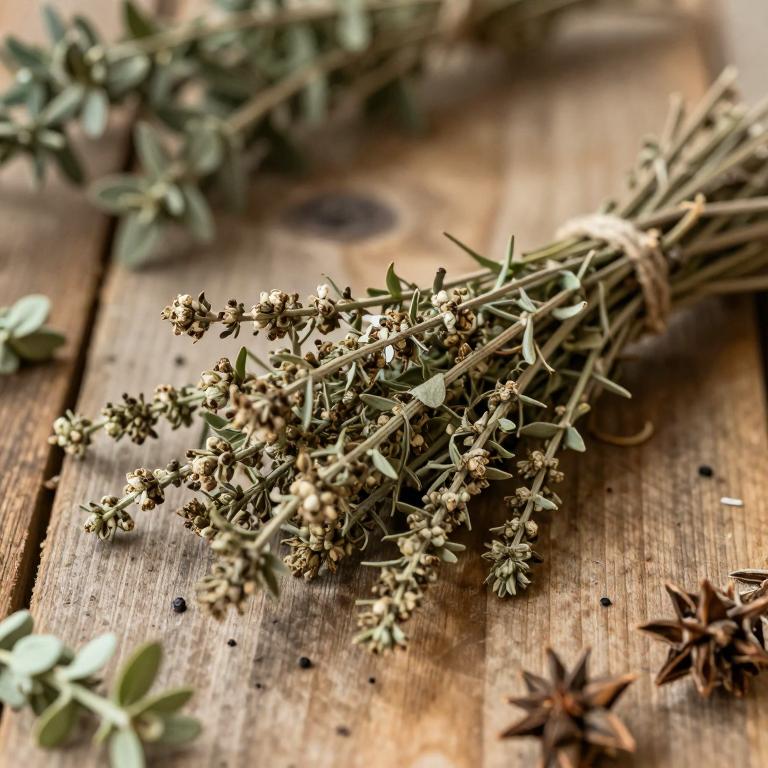
, scientifically known as Thymus zygis subsp. gracilis, is a distinctive medicinal herb native to the Mediterranean region. Renowned for its aromatic properties, this subspecies contains potent essential oils with antimicrobial and antioxidant qualities. It is traditionally utilized in herbal remedies to support digestive health and soothe respiratory ailments.
- Family
- Lamiaceae
- Native range
- Europe
- Parts used
- Not available
- Common names
- Not available
- Scientific synonyms
- Thymus Zygis Var. Saharae · Thymus Zygis Var. Gracilis · 5 more
Names and Synonyms
Scientific Names
Accepted name
Thymus zygis subsp. gracilisSynonyms
- Thymus zygis var. saharae
- Thymus zygis var. gracilis
- Thymus tenuifolius var. floribundus
- Thymus tenuifolius
- Thymus tenuifolius var. gracilis
- Thymus hirtus f. saharae
- Thymus zygis var. maroccanus
Sources: Wikidata
Taxonomical Classification
This plant belongs to the kingdom Plantae and is classified under the phylum Streptophyta within the class Equisetopsida. It falls under the subclass Magnoliidae and the order Lamiales, specifically within the family Lamiaceae. Finally, it is identified by the genus Thymus as the subspecies Thymus zygis subsp. gracilis.
| Rank | Classification |
|---|---|
| Kingdom | Plantae |
| Phylum | Streptophyta |
| Class | Equisetopsida |
| Subclass | Magnoliidae |
| Order | Lamiales |
| Family | Lamiaceae |
| Genus | Thymus |
Sources: The World Checklist of Vascular Plants (WCVP)
Distribution
This plant, Thymus zygis subsp. gracilis, exhibits a specific distribution pattern across the Mediterranean region. Its presence is notably documented within Southwestern Europe, specifically located in Spain. Additionally, the subspecies extends its range into Northern Africa. Within this African territory, it can be found growing in Algeria. It is also widely distributed across the landscape of Morocco.
| Region | Area |
|---|---|
| Southwestern Europe | Spain |
| Northern Africa | Algeria |
| Northern Africa | Morocco |
Sources: The World Checklist of Vascular Plants (WCVP)
Chemicals
Thymus zygis subsp. gracilis has 5 reported phytochemicals identified across 0 scientific publications and several other databases. The most consistently reported chemicals include Borneol, CAMPHENE, CARVACROL, P-CYMENE, THYMOL.
| Chemical | Supporting sources | Consensus |
|---|---|---|
| Borneol | 1 supporting sources | ★☆☆☆☆ |
| CAMPHENE | 1 supporting sources | ★☆☆☆☆ |
| CARVACROL | 1 supporting sources | ★☆☆☆☆ |
| P-CYMENE | 1 supporting sources | ★☆☆☆☆ |
| THYMOL | 1 supporting sources | ★☆☆☆☆ |
Borneol
- Plants (Basel, Switzerland)
CAMPHENE
- Plants (Basel, Switzerland)
CARVACROL
- Plants (Basel, Switzerland)
P-CYMENE
- Plants (Basel, Switzerland)
THYMOL
- Plants (Basel, Switzerland)
Activities
Thymus zygis subsp. gracilis has 2 reported activities identified across 0 scientific publications and several other databases. The most consistently reported activities include Antibacterial, Antioxidant.
| Activity | Supporting sources | Consensus |
|---|---|---|
| Antibacterial | 1 supporting sources | ★☆☆☆☆ |
| Antioxidant | 1 supporting sources | ★☆☆☆☆ |
Antibacterial
- Chemistry & biodiversity
Antioxidant
- Chemistry & biodiversity
Conditions
Thymus zygis subsp. gracilis has 2 reported investigations on conditions identified across 0 scientific publications and several other databases. The most consistently reported conditions include Gram-negative bacteria, Gram-positive bacteria.
| Condition | Supporting sources | Consensus |
|---|---|---|
| Gram-negative bacteria | 1 supporting sources | ★☆☆☆☆ |
| Gram-positive bacteria | 1 supporting sources | ★☆☆☆☆ |
Gram-negative bacteria
- Chemistry & biodiversity
Gram-positive bacteria
- Chemistry & biodiversity
Preparations
Thymus zygis subsp. gracilis has 1 reported preparations identified across 0 scientific publications and several other databases. The most consistently reported preparations include extracts.
| Preparation | Supporting sources | Consensus |
|---|---|---|
| Extracts | 1 supporting sources | ★☆☆☆☆ |
Extracts
- Chemistry & biodiversity