Gibraltar thyme
Thymus willdenowii · Accepted scientific name
Scientific literature: Very Sparse (12 studies) · ★☆☆☆☆
Gibraltar thyme, scientifically known as Thymus willdenowii, is a rare, endemic shrub found exclusively on the cliffs of the Rock of Gibraltar. Renowned for its aromatic foliage and delicate pink blossoms, this resilient plant offers significant ethnobotanical interest, potentially providing unique bioactive compounds for traditional and modern medicine.
- Family
- Lamiaceae
- Native range
- Europe
- Parts used
- Not available
- Common names
- Gibraltar Thyme
- Scientific synonyms
- Origanum Diffusum · Thymus Hirtus Var. Diffusus · 16 more
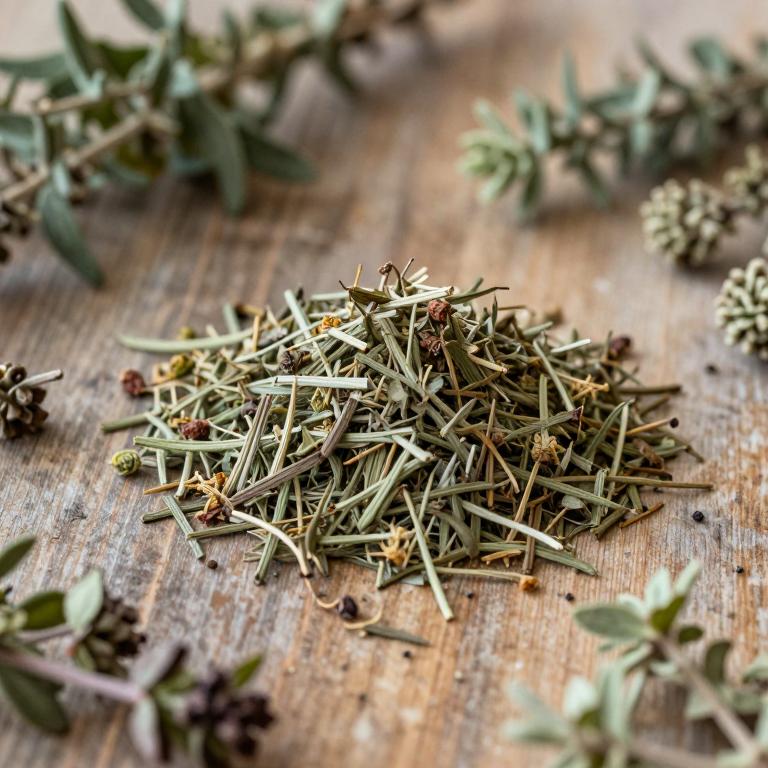
Names and Synonyms
Common Names
- Gibraltar thyme
Scientific Names
Accepted name
Thymus willdenowiiSynonyms
- Origanum diffusum
- Thymus hirtus var. diffusus
- Thymus afer
- Thymus hirtus var. antiatlanticus
- Thymus mentagensis
- Thymus mohamedii
- Thymus mohamedii var. ebracteata
- Thymus vulgaris var. hirtus
- Thymus mohamedii subsp. rosatii
- Thymus mohamedii var. rosatii
- Thymus tidighinii
- Thymus zygis var. afer
- Thymus ciliatus subsp. albiflorus
- Thymus hirtus var. albiflorus
- Thymus hirtus var. ketamarum
- Thymus hirtus var. wallii
- Thymus algeriensis var. antiatlanticus
- Thymus albiflorus
Sources: Wikidata, Catalogue of Life
Taxonomical Classification
This plant belongs to the kingdom Plantae and the phylum Streptophyta, falling under the class Equisetopsida and subclass Magnoliidae. It is classified within the order Lamiales and the family Lamiaceae. Finally, it is identified by the genus Thymus, specifically as the species Thymus willdenowii.
| Rank | Classification |
|---|---|
| Kingdom | Plantae |
| Phylum | Streptophyta |
| Class | Equisetopsida |
| Subclass | Magnoliidae |
| Order | Lamiales |
| Family | Lamiaceae |
| Genus | Thymus |
Sources: The World Checklist of Vascular Plants (WCVP)
Distribution
This plant, known as Thymus willdenowii, exhibits a specific distribution across the Mediterranean region. Its presence is primarily documented within Southwestern Europe, specifically in the country of Spain. Furthermore, the species extends its range into Northern Africa. Within this African region, it can be found growing in Algeria. Additionally, the plant is also distributed throughout Morocco.
| Region | Area |
|---|---|
| Southwestern Europe | Spain |
| Northern Africa | Algeria |
| Northern Africa | Morocco |
Sources: The World Checklist of Vascular Plants (WCVP)
Botanical Identification
Life history
The life history of Thymus willdenowii is characterized by its classification as a chamaephyte, a growth form where the majority of the plant's shoot system remains close to the soil surface, typically staying below a height of 25 centimeters. Specifically, it functions as a chamaephyte within the broader ecological framework, positioning its buds at or just above the ground level to survive seasonal environmental shifts. This life strategy allows the species to navigate its specific habitat by maintaining a low-profile architecture that offers protection against wind and temperature fluctuations while facilitating efficient resource acquisition in its native terrain.
- Life form :
- chamaephyte
Morphology
The morphology of Thymus willdenowii is characterized by its growth habit and ecological positioning, functioning as a self-supporting plant that does not rely on climbing structures for stability. It is an independent organism that does not exhibit parasitic behavior, maintaining its own nutritional processes without dependency on a host. Furthermore, rather than being an epiphyte, this species is strictly terrestrial, establishing its root systems and structural presence directly within the soil substrate.
- Climber :
- self-supporting
- Epiphyte :
- terrestrial
- Parasite :
- independent
Reproduction
The reproduction of Thymus willdenowii is characterized by the production of minute seeds that play a critical role in its dispersal and propagation. Quantitative analysis of its reproductive output reveals a highly uniform seed profile, with a recorded seed mass that remains constant across all measured samples. Specifically, the seed mass exhibits a mean, maximum, and minimum value of 0.00027 g, indicating a lack of variance in the weight of individual seeds produced. This consistent seed mass is a defining botanical trait for the species, ensuring a standardized energetic investment per propagule during its reproductive cycle.
- Seed mass mean:
- 0.00027 g
Sources: Global Inventory of Floras and Traits (GIFT)
Chemicals
Thymus willdenowii has 7 reported phytochemicals identified across 0 scientific publications and several other databases. The most consistently reported chemicals include Borneol, CAMPHENE, CARVACROL, GERANYL ACETATE, Germacrene D.
| Chemical | Supporting sources | Consensus |
|---|---|---|
| Borneol | 1 supporting sources | ★☆☆☆☆ |
| CAMPHENE | 1 supporting sources | ★☆☆☆☆ |
| CARVACROL | 1 supporting sources | ★☆☆☆☆ |
| GERANYL ACETATE | 1 supporting sources | ★☆☆☆☆ |
| Germacrene D | 1 supporting sources | ★☆☆☆☆ |
| P-CYMENE | 1 supporting sources | ★☆☆☆☆ |
| THYMOL | 1 supporting sources | ★☆☆☆☆ |
Borneol
- Plants (Basel, Switzerland)
CAMPHENE
- Plants (Basel, Switzerland)
CARVACROL
- Plants (Basel, Switzerland)
GERANYL ACETATE
- Plants (Basel, Switzerland)
Germacrene D
- Plants (Basel, Switzerland)
P-CYMENE
- Plants (Basel, Switzerland)
THYMOL
- Plants (Basel, Switzerland)
Activities
Thymus willdenowii has 3 reported activities identified across 0 scientific publications and several other databases. The most consistently reported activities include Antimicrobial, Antioxidant, Antiseptic.
| Activity | Supporting sources | Consensus |
|---|---|---|
| Antimicrobial | 1 supporting sources | ★☆☆☆☆ |
| Antioxidant | 1 supporting sources | ★☆☆☆☆ |
| Antiseptic | 1 supporting sources | ★☆☆☆☆ |
Antimicrobial
- Plants (Basel, Switzerland)
Antioxidant
- Plants (Basel, Switzerland)
Antiseptic
- Plants (Basel, Switzerland)
Conditions
Thymus willdenowii has 1 reported investigations on conditions identified across 0 scientific publications and several other databases. The most consistently reported conditions include antiseptic.
| Condition | Supporting sources | Consensus |
|---|---|---|
| Antiseptic | 1 supporting sources | ★☆☆☆☆ |
Antiseptic
- Plants (Basel, Switzerland)