Thymus transcaucasicus
Thymus transcaucasicus · Accepted scientific name
Scientific literature: Very Sparse (7 studies) · ★☆☆☆☆
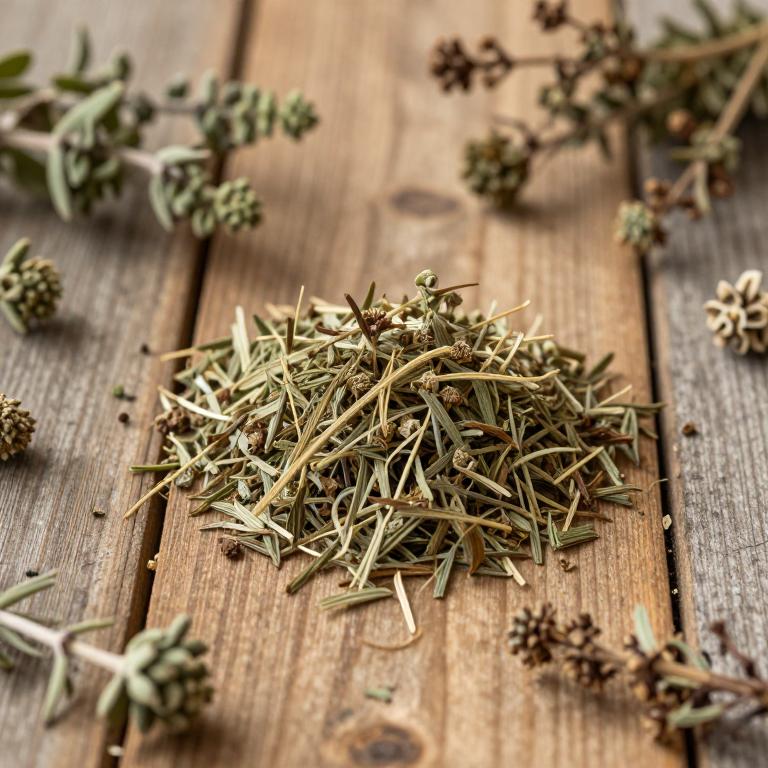
scientifically known as Thymus transcaucasicus, is a resilient perennial herb native to the Caucasus region. Renowned for its aromatic foliage, this medicinal plant contains potent essential oils. It is traditionally utilized for its antimicrobial and antioxidant properties, offering therapeutic benefits in supporting respiratory health and boosting immune function.
- Family
- Lamiaceae
- Native range
- Asia-Temperate
- Parts used
- Not available
- Common names
- Not available
- Scientific synonyms
- Thymus Bakurianicus · Thymus Ziaratinus · 2 more
Names and Synonyms
Scientific Names
Accepted name
Thymus transcaucasicusSynonyms
- Thymus bakurianicus
- Thymus ziaratinus
- Thymus superbus
- Thymus fominii
Sources: Wikidata, Catalogue of Life
Taxonomical Classification
This plant belongs to the kingdom Plantae and is classified under the phylum Streptophyta within the class Equisetopsida. It is further categorized under the subclass Magnoliidae and the order Lamiales, falling into the family Lamiaceae. Finally, it is identified by the genus Thymus.
| Rank | Classification |
|---|---|
| Kingdom | Plantae |
| Phylum | Streptophyta |
| Class | Equisetopsida |
| Subclass | Magnoliidae |
| Order | Lamiales |
| Family | Lamiaceae |
| Genus | Thymus |
Sources: The World Checklist of Vascular Plants (WCVP)
Distribution
This plant is primarily distributed across the mountainous regions of the Caucasus. Specifically, it can be found throughout the Transcaucasus area. Its geographical range also extends significantly into Western Asia. Within this region, the species is known to inhabit various parts of Iran. Additionally, it is naturally occurring within the borders of Türkiye.
| Region | Area |
|---|---|
| Caucasus | Transcaucasus |
| Western Asia | Iran |
| Western Asia | Türkiye |
Sources: The World Checklist of Vascular Plants (WCVP)
Botanical Identification
Ecology
The ecology of Thymus transcaucasicus is characterized by its specialized adaptation to rugged, montane environments, where it primarily colonizes grassy slopes. These habitats provide the well-drained, often rocky or stony substrates necessary for its root systems to establish effectively. Thriving in these open, sun-exposed terrains, the species is adapted to the specific microclimates of high-altitude or semi-arid regions, where it must withstand fluctuating temperatures and varying levels of moisture availability inherent to sloping landscapes. Its presence on such slopes suggests a preference for stable but aerated soil structures that prevent waterlogging while allowing for the intense solar radiation typical of its ecological niche.
- Habitat :
- Grassy slopes
Life history
The life history of Thymus transcaucasicus is characterized by its status as a perennial plant, allowing it to persist through multiple growing seasons within its natural habitat. Functionally, its life form is classified as a chamaephyte, a designation that reflects its growth strategy where the majority of the plant's vegetative buds are located close to or just above the soil surface, often protected by leaf litter or ground cover. This chamaephyte habit, consistent across its biological classification, enables the species to thrive in its specific ecological niche by balancing structural resilience with the ability to endure environmental fluctuations.
- Life form :
- chamaephyte
- Lifecycle :
- perennial
Morphology
The morphology of Thymus transcaucasicus is characterized by a growth form that functions as a woody subshrub. The plant exhibits a woody structure and develops with an ascending shoot orientation, allowing it to spread across its environment. As a terrestrial species, it is not an epiphyte, growing directly in the soil rather than on other plants. Furthermore, it is an independent organism, functioning without a parasitic relationship to other flora, and maintains a self-supporting habit throughout its development.
- Climber :
- self-supporting
- Epiphyte :
- terrestrial
- Growth form :
- shrub
- Growth form :
- subshrub
- Parasite :
- independent
- Shoot orientation :
- ascending
- Woodiness :
- woody
Reproduction
The reproduction of Thymus transcaucasicus is characterized by a specific seasonal flowering period that dictates its reproductive cycle. The flowering process typically begins in July and continues through August. This relatively concentrated blooming window ensures that the plant's reproductive efforts are synchronized with favorable environmental conditions, facilitating pollination during these peak months.
- Flowering time :
- Jul
- Flowering time :
- Aug
Sources: Global Inventory of Floras and Traits (GIFT)
Chemicals
Thymus transcaucasicus has 4 reported phytochemicals identified across 0 scientific publications and several other databases. The most consistently reported chemicals include CARVACROL, THYMOL, Terpenoids, polyphenols.
| Chemical | Supporting sources | Consensus |
|---|---|---|
| CARVACROL | 1 supporting sources | ★☆☆☆☆ |
| THYMOL | 1 supporting sources | ★☆☆☆☆ |
| Terpenoids | 1 supporting sources | ★☆☆☆☆ |
| polyphenols | 1 supporting sources | ★☆☆☆☆ |
CARVACROL
- Scientific reports
THYMOL
- Scientific reports
Terpenoids
- The Journal of pharmacy and pharmacology
polyphenols
- The Journal of pharmacy and pharmacology
Conditions
Thymus transcaucasicus has 2 reported investigations on conditions identified across 0 scientific publications and several other databases. The most consistently reported conditions include HepG2 cells, antioxidant.
| Condition | Supporting sources | Consensus |
|---|---|---|
| Hepg2 cells | 1 supporting sources | ★☆☆☆☆ |
| Antioxidant | 1 supporting sources | ★☆☆☆☆ |
Hepg2 cells
- The Journal of pharmacy and pharmacology
Antioxidant
- The Journal of pharmacy and pharmacology