Thymus sipyleus
Thymus sipyleus · Accepted scientific name
Scientific literature: Very Sparse (4 studies) · ★☆☆☆☆
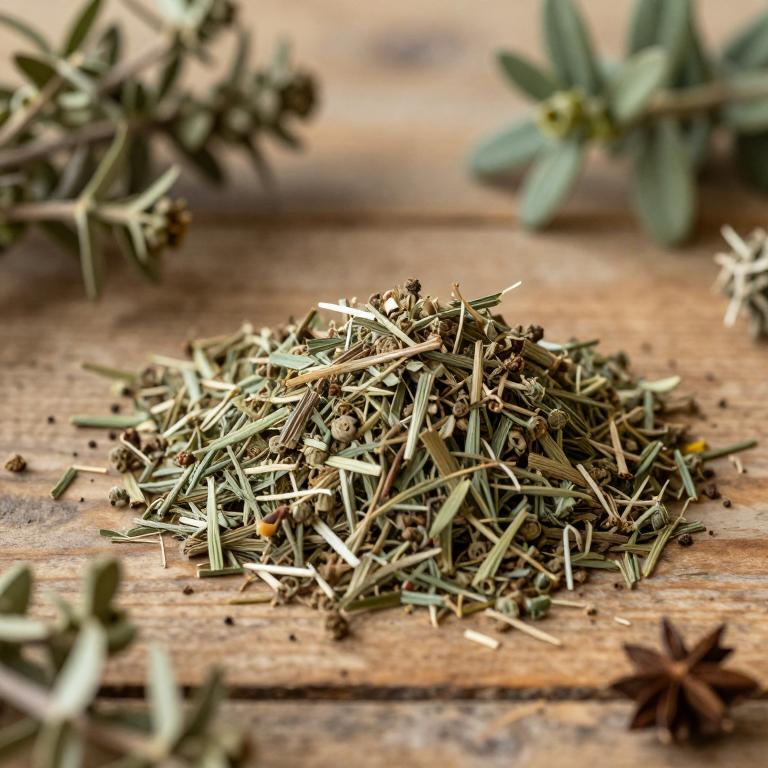
Thymus sipyleus, scientifically known as Thymus sipyleus, is a resilient perennial herb native to the Mediterranean region. Renowned for its aromatic foliage and delicate flowers, this species is valued in traditional medicine for its potent antimicrobial and antioxidant properties, offering therapeutic benefits through its essential oil-rich leaves.
- Family
- Lamiaceae
- Native range
- Europe
- Parts used
- Not available
- Common names
- Not available
- Scientific synonyms
- Thymus Jankae Subsp. Imbricatus · Thymus Sipyleus Var. Imbricatus · 12 more
Names and Synonyms
Scientific Names
Accepted name
Thymus sipyleusSynonyms
- Thymus jankae subsp. imbricatus
- Thymus sipyleus var. imbricatus
- Thymus sipyleus var. punctatus
- Thymus sipyleus subsp. rosulans
- Thymus rigidus
- Thymus sedoides
- Thymus jankae var. sedoides
- Thymus squarrosus
- Thymus rariflorus
- Thymus parvifolius
- Thymus zygioides subsp. rosulans
- Thymus punctatus var. sipyleus
- Thymus sipyleus var. davisianus
- Thymus rariflorus var. ponticus
Sources: Wikidata
Taxonomical Classification
This plant belongs to the kingdom Plantae and is classified under the phylum Streptophyta within the class Equisetopsida. Following its placement in the subclass Magnoliidae and order Lamiales, it is a member of the family Lamiaceae. Finally, it is categorized under the genus Thymus.
| Rank | Classification |
|---|---|
| Kingdom | Plantae |
| Phylum | Streptophyta |
| Class | Equisetopsida |
| Subclass | Magnoliidae |
| Order | Lamiales |
| Family | Lamiaceae |
| Genus | Thymus |
Sources: The World Checklist of Vascular Plants (WCVP)
Distribution
This plant exhibits a diverse geographical range stretching across several distinct regions. In Southeastern Europe, its presence is noted within the European portion of Türkiye. The species is also widely distributed throughout the Caucasus, including both the North Caucasus and the Transcaucasus areas. Within Western Asia, it can be found inhabiting the East Aegean Islands. Finally, its range extends extensively across the mainland of Türkiye.
| Region | Area |
|---|---|
| Southeastern Europe | Türkiye-in-Europe |
| Caucasus | North Caucasus |
| Caucasus | Transcaucasus |
| Western Asia | East Aegean Is. |
| Western Asia | Türkiye |
Sources: The World Checklist of Vascular Plants (WCVP)
Botanical Identification
Ecology
The ecology of Thymus sipyleus is characterized by its specialized adaptation to high-altitude environments, specifically occurring within mountainous regions. This species thrives in rugged, montane terrains where it occupies niches shaped by significant topographical variations and exposure to the elements. The environmental conditions of its mountain habitats typically involve well-drained, rocky, or stony substrates that allow for efficient water runoff, which is a critical requirement for its growth patterns. These mountainous ecosystems subject the plant to distinct seasonal fluctuations, including intense solar radiation and periods of varying temperature extremes, influencing its physiological resilience and distribution patterns across the landscape.
- Habitat :
- mountains
Life history
The life history of Thymus sipyleus is characterized by its perennial lifecycle, allowing the plant to persist through multiple growing seasons within its habitat. Morphologically, it is classified as a chamaephyte, a life form where the majority of the photosynthetic organs are located close to the soil surface, often protected by the ground or minimal litter. This specific growth habit as a chamaephyte ensures its resilience in its native ecological niche, enabling it to maintain its structural integrity and reproductive capacity over many years.
- Life form :
- chamaephyte
- Lifecycle :
- perennial
Morphology
The morphology of Thymus sipyleus is characterized by its distinct growth habit and ecological positioning. It is a terrestrial plant, lacking aquatic or semiaquatic adaptations, and functions as a self-supporting organism rather than a climber. It does not exhibit epiphyte behavior, maintaining a strictly terrestrial existence instead of being a holoepiphyte, hemiepiphyte, or any other form of epiphyte. Furthermore, the plant is entirely independent, showing no parasitic tendencies such as obligatory or facultative parasitism.
- Aquatic :
- terrestrial
- Climber :
- self-supporting
- Epiphyte :
- terrestrial
- Parasite :
- independent
Reproduction
The reproduction of Thymus sipyleus is characterized by a specific seasonal flowering window that facilitates its reproductive cycle. The flowering process typically begins in June and continues through the month of July, marking a concentrated period of floral activity. This seasonal timing is essential for the plant's development, as it defines the peak interval for potential pollination and subsequent seed production within its ecological niche.
- Flowering time :
- Jun
- Flowering time :
- Jul
Sources: Global Inventory of Floras and Traits (GIFT)
Chemicals
Thymus sipyleus has 1 reported phytochemicals identified across 0 scientific publications and several other databases. The most consistently reported chemicals include kaempferol.
| Chemical | Supporting sources | Consensus |
|---|---|---|
| kaempferol | 1 supporting sources | ★☆☆☆☆ |
kaempferol
- Molecules (Basel, Switzerland)
Activities
Thymus sipyleus has 3 reported activities identified across 0 scientific publications and several other databases. The most consistently reported activities include Antibacterial, Anticholinergic, Antioxidant.
| Activity | Supporting sources | Consensus |
|---|---|---|
| Antibacterial | 1 supporting sources | ★☆☆☆☆ |
| Anticholinergic | 1 supporting sources | ★☆☆☆☆ |
| Antioxidant | 1 supporting sources | ★☆☆☆☆ |
Antibacterial
- Molecules (Basel, Switzerland)
Anticholinergic
- Molecules (Basel, Switzerland)
Antioxidant
- Molecules (Basel, Switzerland)