Thymus sibthorpii
Thymus sibthorpii · Accepted scientific name
Scientific literature: Very Sparse (6 studies) · ★☆☆☆☆
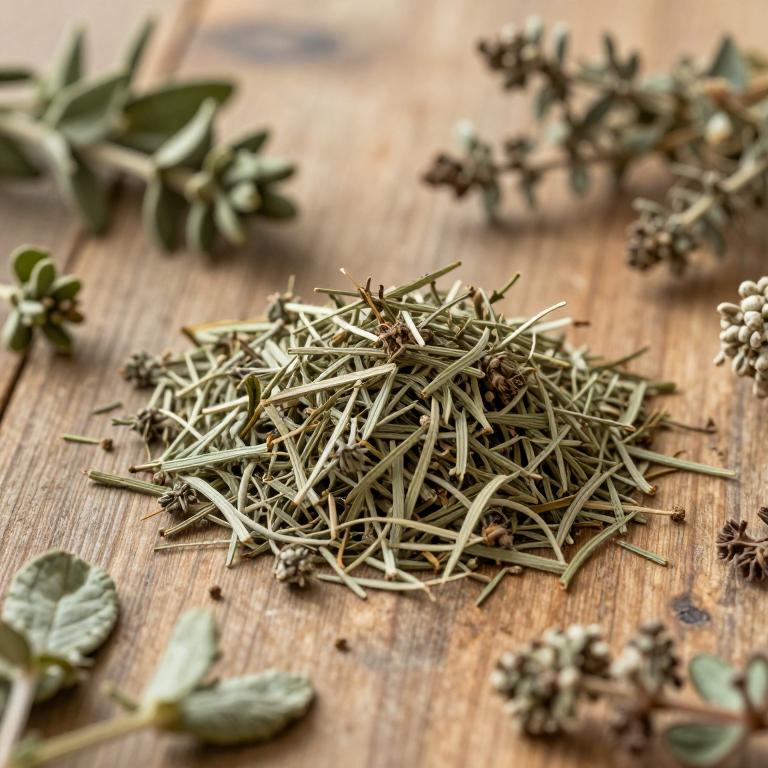
, scientifically known as Thymus sibthorpii, is a resilient, aromatic perennial herb belonging to the Lamiaceae family. Often found in rocky Mediterranean terrains, this species is prized for its essential oils. It holds significant ethnobotanical value, traditionally utilized in folk medicine for its potential antimicrobial and soothing therapeutic properties.
- Family
- Lamiaceae
- Native range
- Europe
- Parts used
- Not available
- Common names
- Not available
- Scientific synonyms
- Thymus Tosevii Subvar. Hirtiformis · Thymus Sibthorpii Var. Grisebachii · 13 more
Names and Synonyms
Scientific Names
Accepted name
Thymus sibthorpiiSynonyms
- Thymus tosevii subvar. hirtiformis
- Thymus sibthorpii var. grisebachii
- Thymus serpyllum var. heterotrichus
- Thymus sibthorpii var. korthiaticus
- Thymus tosevii var. hirtiformis
- Thymus sibthorpii var. hirtiformis
- Thymus spectabilis
- Thymus macedonicus
- Thymus heterotrichus
- Thymus kosteleckyanus var. macedonicus
- Thymus korthiaticus
- Thymus dominii
- Thymus grisebachii
- Thymus macedonicus subvar. pilifer
- Thymus macedonicus var. pilifer
Sources: Wikidata, Catalogue of Life
Taxonomical Classification
This plant belongs to the kingdom Plantae within the phylum Streptophyta and the class Equisetopsida. As a member of the subclass Magnoliidae, it is categorized under the order Lamiales and the family Lamiaceae. Finally, it is classified under the genus Thymus.
| Rank | Classification |
|---|---|
| Kingdom | Plantae |
| Phylum | Streptophyta |
| Class | Equisetopsida |
| Subclass | Magnoliidae |
| Order | Lamiales |
| Family | Lamiaceae |
| Genus | Thymus |
Sources: The World Checklist of Vascular Plants (WCVP)
Distribution
This plant is primarily distributed throughout the region of Southeastern Europe. Its natural habitat includes the mountainous landscapes of Albania and Bulgaria. It can also be found growing across various terrains in Greece. Furthermore, the species is documented within the territory of Romania. Finally, its range extends to the European portion of Türkiye.
| Region | Area |
|---|---|
| Southeastern Europe | Albania |
| Southeastern Europe | Bulgaria |
| Southeastern Europe | Greece |
| Southeastern Europe | Romania |
| Southeastern Europe | Türkiye-in-Europe |
| Southeastern Europe | NW. Balkan Pen. |
| Western Asia | Türkiye |
Sources: The World Checklist of Vascular Plants (WCVP)
Botanical Identification
Life history
The life history of Thymus sibthorpii is characterized by its classification as a chamaephyte, a life form that defines its survival strategy and structural development within its native habitat. Specifically, it exhibits characteristics consistent with both the chamemphyte and nanophanerophyte categories, meaning its perennating buds are located close to the soil surface, often just above it. This growth habit allows the plant to endure environmental stressors such as wind and temperature fluctuations by keeping its primary vegetative mass low to the ground. As a perennial herb, its life cycle involves the development of woody or semi-woody stems that hug the substrate, facilitating resilience in rocky or arid terrains where maintaining a tall stature would be disadvantageous. This specialized life form ensures that the plant can effectively manage resource allocation between seasonal growth and long-term survival through its low-lying, bud-protected architecture.
- Life form :
- chamaephyte
Morphology
The morphology of Thymus sibthorpii is characterized by a woody structure, identifying it as a subshrub that grows in a self-supporting manner. It is a terrestrial species, functioning as an independent organism rather than an epiphyte or a parasite. In terms of its physical habit, the plant is self-supporting and does not exhibit climbing behaviors such as being a liana or a vine, maintaining a stable growth form consistent with its woody, subshrubby classification.
- Aquatic :
- terrestrial
- Climber :
- self-supporting
- Epiphyte :
- terrestrial
- Growth form :
- subshrub
- Parasite :
- independent
- Woodiness :
- woody
Sources: Global Inventory of Floras and Traits (GIFT)
Chemicals
Thymus sibthorpii has 5 reported phytochemicals identified across 0 scientific publications and several other databases. The most consistently reported chemicals include GERANYL ACETATE, Linalool, THYMOL, Terpinyl acetate, nerol.
| Chemical | Supporting sources | Consensus |
|---|---|---|
| GERANYL ACETATE | 1 supporting sources | ★☆☆☆☆ |
| Linalool | 1 supporting sources | ★☆☆☆☆ |
| THYMOL | 1 supporting sources | ★☆☆☆☆ |
| Terpinyl acetate | 1 supporting sources | ★☆☆☆☆ |
| nerol | 1 supporting sources | ★☆☆☆☆ |
GERANYL ACETATE
- Bollettino chimico farmaceutico
Linalool
- Bollettino chimico farmaceutico
THYMOL
- Bollettino chimico farmaceutico
Terpinyl acetate
- Bollettino chimico farmaceutico
nerol
- Bollettino chimico farmaceutico
Conditions
Thymus sibthorpii has 1 reported investigations on conditions identified across 0 scientific publications and several other databases. The most consistently reported conditions include Mycobacterium tuberculosis.
| Condition | Supporting sources | Consensus |
|---|---|---|
| Mycobacterium tuberculosis | 1 supporting sources | ★☆☆☆☆ |
Mycobacterium tuberculosis
- BMC complementary and alternative medicine
Preparations
Thymus sibthorpii has 1 reported preparations identified across 0 scientific publications and several other databases. The most consistently reported preparations include essential oil.
| Preparation | Supporting sources | Consensus |
|---|---|---|
| Essential oil | 1 supporting sources | ★☆☆☆☆ |
Essential oil
- Bollettino chimico farmaceutico