Thymus schimperi
Thymus schimperi · Accepted scientific name
Scientific literature: Very Sparse (20 studies) · ★☆☆☆☆
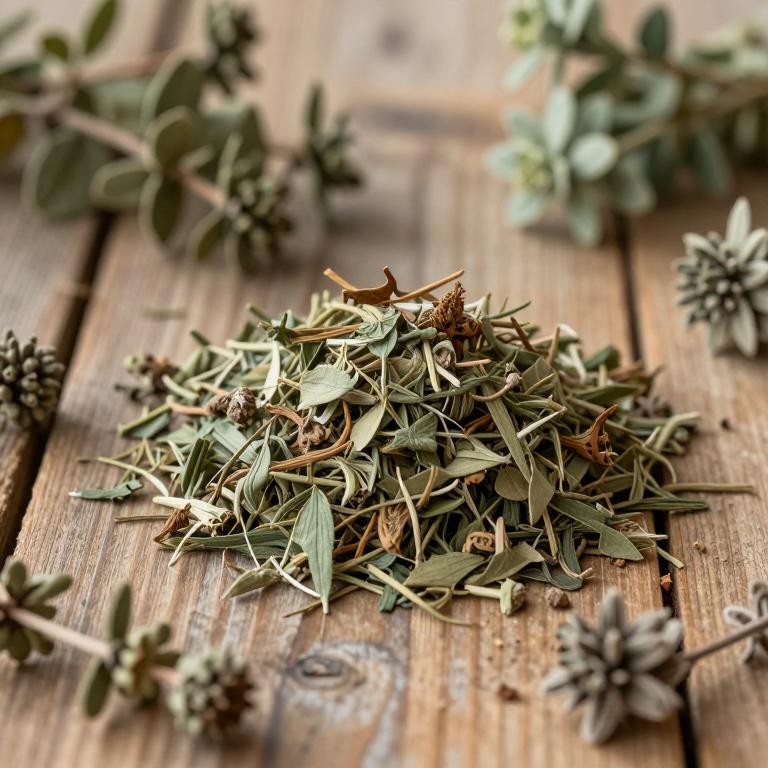
, scientifically known as Thymus schimperi, is an aromatic medicinal shrub native to the Ethiopian highlands. Renowned for its potent essential oils, this plant is traditionally used to treat respiratory ailments, digestive issues, and infections. Its unique chemical profile offers significant therapeutic potential in modern ethnopharmacological studies and herbal medicine.
- Family
- Lamiaceae
- Native range
- Africa
- Parts used
- Not available
- Common names
- Not available
- Scientific synonyms
- Not available
Names and Synonyms
Scientific Names
Accepted name
Thymus schimperiSources: Wikidata
Taxonomical Classification
This plant, Thymus schimperi, belongs to the kingdom Plantae and the phylum Streptophyta. Within the class Equisetopsida and subclass Magnoliidae, it is classified under the order Lamiales and the family Lamiaceae. Finally, it is categorized under the genus Thymus.
| Rank | Classification |
|---|---|
| Kingdom | Plantae |
| Phylum | Streptophyta |
| Class | Equisetopsida |
| Subclass | Magnoliidae |
| Order | Lamiales |
| Family | Lamiaceae |
| Genus | Thymus |
Sources: The World Checklist of Vascular Plants (WCVP)
Distribution
This plant is primarily found within the specific regions of Northeast Tropical Africa. Its natural habitat is concentrated in the country of Eritrea. Additionally, it can be identified growing within the borders of Ethiopia. These two nations represent the core areas of its known geographical distribution. Consequently, its presence is limited to these particular parts of the African continent.
| Region | Area |
|---|---|
| Northeast Tropical Africa | Eritrea |
| Northeast Tropical Africa | Ethiopia |
Sources: The World Checklist of Vascular Plants (WCVP)
Botanical Identification
Life history
The life history of Thymus schimperi is characterized by its classification as a chamaephyte, a life form that defines its survival strategy and growth habit within its ecological niche. As a chamaephyte, the plant maintains its perennating buds at or very near the soil surface, allowing it to withstand environmental stressors while maintaining a low-growing, woody structure. This specific life form strategy ensures that the plant can effectively navigate seasonal fluctuations, keeping its reproductive and vegetative tissues protected close to the substrate. By adhering to this chamaephyte growth pattern, Thymus schimperi optimizes its ability to persist in its habitat, balancing the need for solar exposure with the necessity of protecting its vital buds from extreme temperature shifts or herbivory.
- Life form :
- chamaephyte
Morphology
The morphology of Thymus schimperi is characterized by its growth form as a herb, displaying a non-woody structure throughout its development. It functions as an independent organism, neither acting as a parasite nor as an epiphyte, as it maintains a strictly terrestrial lifestyle. Regarding its structural support, the plant is categorized as a self-supporting species, requiring no external climbing structures to maintain its upright or spreading habit.
- Climber :
- self-supporting
- Epiphyte :
- terrestrial
- Growth form :
- herb
- Parasite :
- independent
- Woodiness :
- non-woody
Sources: Global Inventory of Floras and Traits (GIFT)
Chemicals
Thymus schimperi has 14 reported phytochemicals identified across 0 scientific publications and several other databases. The most consistently reported chemicals include CA, CD, CO, CU, FE.
| Chemical | Supporting sources | Consensus |
|---|---|---|
| CA | 1 supporting sources | ★☆☆☆☆ |
| CD | 1 supporting sources | ★☆☆☆☆ |
| CO | 1 supporting sources | ★☆☆☆☆ |
| CU | 1 supporting sources | ★☆☆☆☆ |
| FE | 1 supporting sources | ★☆☆☆☆ |
| Flavonoid | 1 supporting sources | ★☆☆☆☆ |
| MG | 1 supporting sources | ★☆☆☆☆ |
| MN | 1 supporting sources | ★☆☆☆☆ |
| NI | 1 supporting sources | ★☆☆☆☆ |
| Proanthocyanidin | 1 supporting sources | ★☆☆☆☆ |
CA
- Biological trace element research
CD
- Biological trace element research
CO
- Biological trace element research
CU
- Biological trace element research
FE
- Biological trace element research
Flavonoid
- International journal of molecular sciences
MG
- Biological trace element research
MN
- Biological trace element research
NI
- Biological trace element research
Proanthocyanidin
- International journal of molecular sciences
Activities
Thymus schimperi has 3 reported activities identified across 0 scientific publications and several other databases. The most consistently reported activities include Antibacterial, Antidiabetic, Antioxidant.
| Activity | Supporting sources | Consensus |
|---|---|---|
| Antibacterial | 1 supporting sources | ★☆☆☆☆ |
| Antidiabetic | 1 supporting sources | ★☆☆☆☆ |
| Antioxidant | 1 supporting sources | ★☆☆☆☆ |
Antibacterial
- International journal of molecular sciences
Antidiabetic
- Evidence-based complementary and alternative medicine : eCAM
Antioxidant
- International journal of molecular sciences
Conditions
Thymus schimperi has 3 reported investigations on conditions identified across 0 scientific publications and several other databases. The most consistently reported conditions include Escherichia coli, infections, urinary tract infections.
| Condition | Supporting sources | Consensus |
|---|---|---|
| Escherichia coli | 1 supporting sources | ★☆☆☆☆ |
| Infections | 1 supporting sources | ★☆☆☆☆ |
| Urinary tract infections | 1 supporting sources | ★☆☆☆☆ |
Escherichia coli
- International journal of molecular sciences
Infections
- Scientific reports
Urinary tract infections
- International journal of molecular sciences