creeping thyme
Thymus praecox · Accepted scientific name
Scientific literature: Very Sparse (7 studies) · ★☆☆☆☆
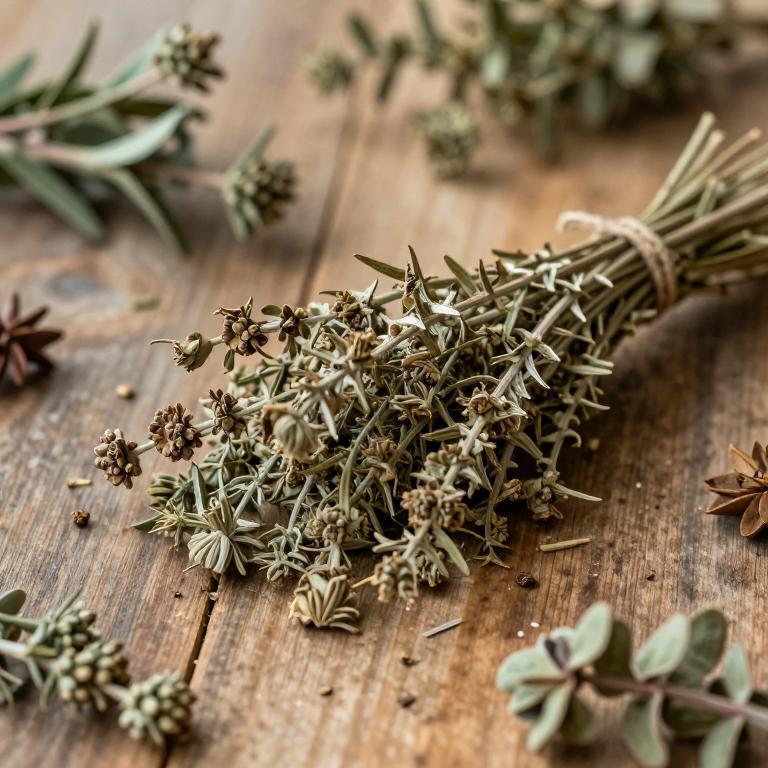
Creeping thyme, scientifically known as Thymus praecox, is a versatile, low-growing perennial prized for its aromatic foliage and delicate blossoms. Renowned for its antimicrobial and antioxidant properties, this hardy herb is traditionally used in herbal medicine to support respiratory health, soothe digestive issues, and promote overall wellness naturally.
Names and Synonyms
Common Names
- creeping thyme
- mother-of-thyme
- wild thyme
- Mother of Thyme
Scientific Names
Accepted name
Thymus praecoxSynonyms
- Thymus serpyllum var. praecox
- Thymus serpyllum f. praecox
- Thymus serpyllum subsp. praecox
Regional and Traditional Names
German:
- Frühblühender Thymian
- Kriechender Thymian
- Frühblühender Thymian
- Frühblühender Thymian i.w.S.
- Frueher Feld-Thymian
French:
- serpolet couché
- serpolet couchet
- thym couché
- thym précoce
- Thym precoce
- Serpolet couché
- Serpolet précoce
Sources: Wikidata, Catalogue of Life
Taxonomical Classification
This plant belongs to the kingdom Plantae and the phylum Streptophyta, falling under the class Equisetopsida and subclass Magnoliidae. Within the order Lamiales and the family Lamiaceae, it is classified under the genus Thymus.
| Rank | Classification |
|---|---|
| Kingdom | Plantae |
| Phylum | Streptophyta |
| Class | Equisetopsida |
| Subclass | Magnoliidae |
| Order | Lamiales |
| Family | Lamiaceae |
| Genus | Thymus |
Sources: The World Checklist of Vascular Plants (WCVP)
Distribution
This plant exhibits a specific distribution pattern concentrated across various regions of Northern Europe. It can be found growing within the rugged landscapes of the Faroe Islands. The species also inhabits diverse habitats throughout Great Britain and Ireland. Additionally, its range extends to the unique environments of Iceland. Finally, the plant is documented as part of the natural flora in Norway.
| Region | Area |
|---|---|
| Northern Europe | Føroyar |
| Northern Europe | Great Britain |
| Northern Europe | Iceland |
| Northern Europe | Ireland |
| Northern Europe | Norway |
| Northern Europe | Sweden |
| Middle Europe | Austria |
| Middle Europe | Belgium |
| Middle Europe | Czechia-Slovakia |
| Middle Europe | Germany |
Sources: The World Checklist of Vascular Plants (WCVP)
Botanical Identification
Ecology
The ecology of Thymus praecox is characterized by its preference for open, sun-exposed environments, specifically within meadows and mountainous regions. In these habitats, the plant typically colonizes well-drained, rocky, or sandy soils, often thriving in terrains where competition from taller vegetation is minimal. Its ability to inhabit high-altitude mountain landscapes suggests an adaptation to varying thermal conditions and high solar radiation, while its presence in meadows indicates a capacity to integrate into grassland ecosystems. This species plays a role in stabilizing soil in sparse vegetation zones and provides essential resources for local pollinators within these specific montane and meadowland niches.
- Habitat :
- meadows, mountains
Life history
The life history of Thymus praecox is characterized by its status as a perennial plant, allowing it to persist through multiple growing seasons. It functions as a chamaephyte, a life form where the majority of the plant's shoot system remains close to the ground, typically staying just above the soil surface. This growth habit is complemented by its evergreen nature, ensuring that the foliage remains functional and present throughout the year rather than shedding seasonally.
- Deciduousness :
- evergreen
- Life form :
- chamaephyte
- Lifecycle :
- perennial
Morphology
The morphology of Thymus praecoх is characterized by a low-growing, self-supporting growth habit, functioning as an independent organism without parasitic tendencies. It exhibits a growth form that can be classified as both a shrub and a forb, displaying a woody texture throughout its structure. This terrestrial plant is typically quite small, with a plant height that ranges from a minimum of 0.02 m to a maximum of 0.1 m, maintaining an average height of approximately 0.07 m. As a terrestrial species, it does not exhibit epiphytic or aquatic characteristics, instead maintaining a stable, non-climbing presence within its habitat.
- Aquatic :
- terrestrial
- Climber :
- self-supporting
- Epiphyte :
- terrestrial
- Growth form :
- shrub
- Growth form :
- forb
- Parasite :
- independent
- Plant height max:
- 0.1 m
- Plant height mean:
- 0.07 m
- Plant height min:
- 0.02 m
- Woodiness :
- woody
Physiology
The physiology of Thymus praecox is characterized by a C3 photosynthetic pathway, a standard mechanism for carbon fixation in most temperate medicinal herbs. The plant exhibits a non-carnivorous nutritional strategy, relying entirely on autotrophic processes and soil-based nutrient uptake rather than the capture of prey. Morphologically, its leaf structure is quite fine, with a mean leaf size of approximately 0.13033 cm², which contributes to its specific physiological profile. Furthermore, the plant possesses a mean Specific Leaf Area (SLA) of 134.04 cm²/g, a metric that reflects the relationship between its leaf area and its dry mass, providing insight into its resource allocation and leaf thickness.
- Carnivory :
- non-carnivorous
- Leaf size mean:
- 0.13033 cm²
- Photosynthetic pathway :
- C3
- Specific Leaf Area (SLA) mean:
- 134.04 cm²/g
Reproduction
The reproduction of Thymus praecox is characterized by a sexual process, as asexual reproduction is absent. The flowering period for this species typically begins in June and concludes in July. During the reproductive cycle, the plant relies on biotic pollination syndromes, specifically utilizing insects to facilitate fertilization; notably, self-fertilization is absent, necessitating cross-pollination. The resulting seeds are very lightweight, with a mean seed mass of approximately 0.00014866675 g, ranging from a minimum of 0.00011 g to a maximum of 0.00018 g. Following fertilization, the plant employs a zoochorous dispersal syndrome, meaning its seeds are distributed via animals to new locations.
- Dispersal syndrome :
- zoochorous
- Flowering time :
- Jun
- Flowering time :
- Jul
- Pollination syndrome :
- insect
- Pollination syndrome :
- biotic
- Reproduction asexual :
- absent
- Seed mass max:
- 0.00018 g
- Seed mass mean:
- 0.00014866675 g
- Seed mass min:
- 0.00011 g
- Self fertilization :
- absent
Sources: Global Inventory of Floras and Traits (GIFT)
Chemicals
Thymus praecox has 6 reported phytochemicals identified across 0 scientific publications and several other databases. The most consistently reported chemicals include THYMOL, Flavonoids, Gallocatechin, Isoquercitrin, Sesquiterpenes.
| Chemical | Supporting sources | Consensus |
|---|---|---|
| THYMOL | 2 supporting sources | ★☆☆☆☆ |
| Flavonoids | 1 supporting sources | ★☆☆☆☆ |
| Gallocatechin | 1 supporting sources | ★☆☆☆☆ |
| Isoquercitrin | 1 supporting sources | ★☆☆☆☆ |
| Sesquiterpenes | 1 supporting sources | ★☆☆☆☆ |
| rosmarinic acid | 1 supporting sources | ★☆☆☆☆ |
THYMOL
- Acta biologica Hungarica
- Chemistry & biodiversity
Flavonoids
- Chemistry & biodiversity
Gallocatechin
- Chemistry & biodiversity
Isoquercitrin
- Chemistry & biodiversity
Sesquiterpenes
- Acta biologica Hungarica
rosmarinic acid
- Chemistry & biodiversity
Preparations
Thymus praecox has 1 reported preparations identified across 0 scientific publications and several other databases. The most consistently reported preparations include Extracts.
| Preparation | Supporting sources | Consensus |
|---|---|---|
| Extracts | 1 supporting sources | ★☆☆☆☆ |
Extracts
- Chemistry & biodiversity