Thymus pallescens
Thymus pallescens · Accepted scientific name
Scientific literature: Very Sparse (4 studies) · ★☆☆☆☆
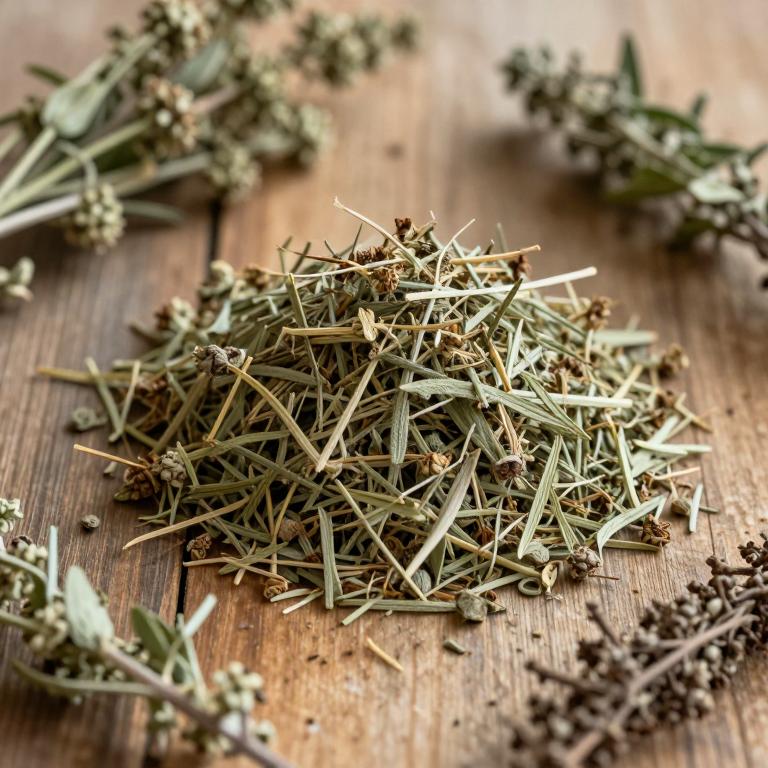
Thymus pallescens, scientifically known as Thymus pallescens, is a resilient, aromatic shrub native to specific Mediterranean-style ecosystems. Renowned for its delicate foliage and pale floral displays, this medicinal herb contains essential oils prized for their antiseptic and soothing properties, offering traditional therapeutic benefits in various herbal wellness practices.
- Family
- Lamiaceae
- Native range
- Africa
- Parts used
- Not available
- Common names
- Not available
- Scientific synonyms
- Thymus Fontanesii · Thymus Latifolius · 2 more
Names and Synonyms
Scientific Names
Accepted name
Thymus pallescensSynonyms
- Thymus fontanesii
- Thymus latifolius
- Thymus monardii
- Thymus fontanesii var. heterophyllus
Sources: Wikidata, Catalogue of Life
Taxonomical Classification
This plant belongs to the kingdom Plantae and the phylum Streptophyta, situated within the class Equisetopsida and subclass Magnoliidae. It is further classified under the order Lamiales and the family Lamiaceae. Finally, its specific taxonomic designation is placed within the genus Thymus.
| Rank | Classification |
|---|---|
| Kingdom | Plantae |
| Phylum | Streptophyta |
| Class | Equisetopsida |
| Subclass | Magnoliidae |
| Order | Lamiales |
| Family | Lamiaceae |
| Genus | Thymus |
Sources: The World Checklist of Vascular Plants (WCVP)
Distribution
This plant is characterized by a very specific and limited geographical range. Within the vast landscape of Northern Africa, its presence is notably documented in Algeria. Because it is confined to this particular region, its natural habitat is highly localized. This narrow distribution suggests that the species may be adapted to specific environmental conditions found in Algerian territories. Consequently, understanding its ecological niche in this specific country is essential for its conservation.
| Region | Area |
|---|---|
| Northern Africa | Algeria |
Sources: The World Checklist of Vascular Plants (WCVP)
Botanical Identification
Life history
The life history of Thymus pallescens is characterized by its classification as a chamaephyte, a growth form that dictates its survival strategy in its native habitats. Specifically, it functions as a chamaephyte under both detailed life form taxonomies, indicating that its perennating buds are located close to the soil surface, often just above it, protected by a layer of substrate or organic matter. This life form allows the plant to endure environmental fluctuations and seasonal changes by maintaining its vital structures near the ground. As a perennial herb, its development involves establishing a woody base that supports low-growing foliage, enabling it to thrive in open, often rocky or disturbed landscapes where staying close to the ground provides a competitive advantage against wind and temperature extremes.
- Life form :
- chamaephyte
Morphology
The morphology of Thymus pallescens is characterized by its growth habit as a self-supporting climber, meaning it possesses the structural integrity to ascend or spread without relying on external hosts for primary physical stability. It functions as an independent organism, showing no parasitic tendencies and maintaining its own metabolic processes without dependency on other plants for nutrients. Furthermore, rather than growing as an epiphyte upon other vegetation, this species is strictly terrestrial, establishing its root systems directly within the soil substrate to support its development.
- Climber :
- self-supporting
- Epiphyte :
- terrestrial
- Parasite :
- independent
Sources: Global Inventory of Floras and Traits (GIFT)
Chemicals
Thymus pallescens has 2 reported phytochemicals identified across 0 scientific publications and several other databases. The most consistently reported chemicals include CARVACROL, rosmarinic acid.
| Chemical | Supporting sources | Consensus |
|---|---|---|
| CARVACROL | 1 supporting sources | ★☆☆☆☆ |
| rosmarinic acid | 1 supporting sources | ★☆☆☆☆ |
CARVACROL
- Experimental parasitology
rosmarinic acid
- Food & function
Activities
Thymus pallescens has 1 reported activities identified across 0 scientific publications and several other databases. The most consistently reported activities include Antioxidant.
| Activity | Supporting sources | Consensus |
|---|---|---|
| Antioxidant | 1 supporting sources | ★☆☆☆☆ |
Antioxidant
- Experimental parasitology
Preparations
Thymus pallescens has 1 reported preparations identified across 0 scientific publications and several other databases. The most consistently reported preparations include essential oil.
| Preparation | Supporting sources | Consensus |
|---|---|---|
| Essential oil | 1 supporting sources | ★☆☆☆☆ |
Essential oil
- Experimental parasitology