Thymus moroderi
Thymus moroderi · Accepted scientific name
Scientific literature: Very Sparse (4 studies) · ★☆☆☆☆
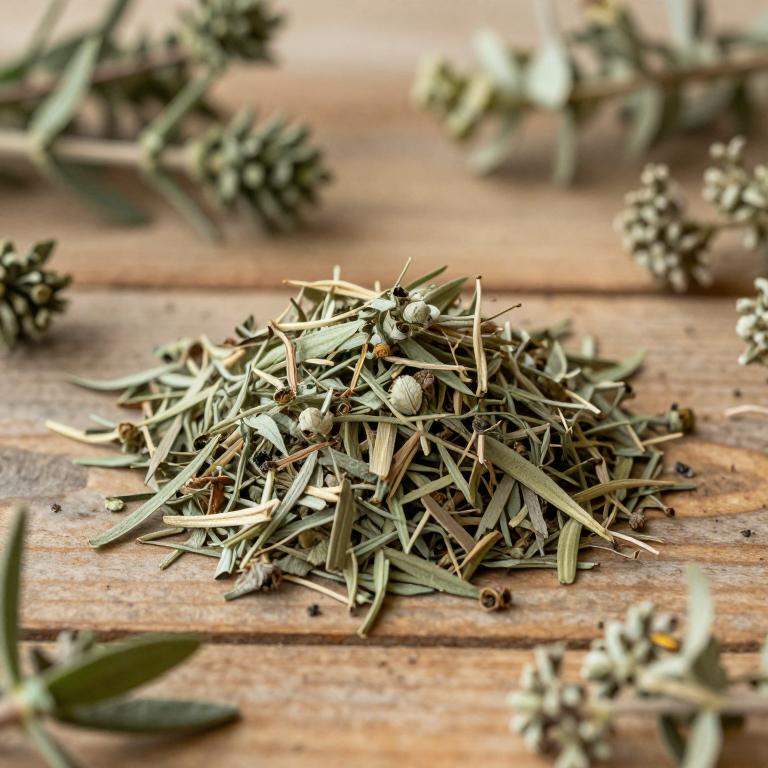
Thymus moroderi, scientifically known as Thymus moroderi, is a rare, aromatic perennial shrub native to the rugged limestone cliffs of the Mediterranean. Distinguished by its delicate leaves and pale blossoms, this medicinal herb is valued in traditional ethnobotany for its potent antioxidant properties and its potential therapeutic applications.
- Family
- Lamiaceae
- Native range
- Europe
- Parts used
- Not available
- Common names
- Not available
- Scientific synonyms
- Origanum Cephalotos · Thymbra Cephalotos · 3 more
Names and Synonyms
Scientific Names
Accepted name
Thymus moroderiSynonyms
- Origanum cephalotos
- Thymbra cephalotos
- Thymus longiflorus subsp. ciliatus
- Thymus longiflorus var. ciliatus
- Thymus cephalotos
Regional and Traditional Names
Spanish:
- Tomillo murciano
- Timó de flor llarga
- Timo de flor llarga
- Tomillo alicantino
- Cantueso alicantino
- Thymus longiflorus ssp ciliatus
- Cantahueso
- Thymus longiflorus ssp. ciliatus
- Cantueso murciano
Sources: Wikidata, Catalogue of Life
Taxonomical Classification
This plant belongs to the kingdom Plantae and the phylum Streptophyta, falling under the class Equisetopsida and subclass Magnoliidae. Within the order Lamiales and family Lamiaceae, it is classified under the genus Thymus. Specifically, Thymus moroderi represents a distinct species within this aromatic group.
| Rank | Classification |
|---|---|
| Kingdom | Plantae |
| Phylum | Streptophyta |
| Class | Equisetopsida |
| Subclass | Magnoliidae |
| Order | Lamiales |
| Family | Lamiaceae |
| Genus | Thymus |
Sources: The World Checklist of Vascular Plants (WCVP)
Distribution
This plant is characterized by a very restricted and specific geographical range. It is found exclusively within the southwestern region of Europe. Specifically, its natural habitat is located within the borders of Spain. Due to this limited occurrence, it is considered a localized species rather than a widespread one. Understanding this precise distribution is essential for the conservation of its unique ecological niche.
| Region | Area |
|---|---|
| Southwestern Europe | Spain |
Sources: The World Checklist of Vascular Plants (WCVP)
Botanical Identification
Life history
The life history of Thymus moroderi is characterized by its classification as a chamaephyte, a growth form that defines its strategy for surviving seasonal environmental shifts. Within this life history framework, it is specifically identified as a chamaephyte under both the broader categorization of life forms and the more detailed classification systems. As a chamaephyte, the plant maintains its photosynthetic buds and regenerative structures very close to the soil surface, often just above it, which allows it to withstand various climatic stresses by remaining protected within the boundary layer of the earth. This life history strategy enables the species to thrive in its specific ecological niche, utilizing its low-growing stature to manage resource acquisition and survival through its perennial cycle.
- Life form :
- chamaephyte
Morphology
The morphology of Thymus moroderi is characterized by its growth habit as a self-supporting plant, functioning as a non-climbing species rather than an obligatory or facultative climber. It exists as an independent organism, showing no parasitic tendencies, and maintains a strictly terrestrial existence rather than adopting an epiphytic lifestyle.
- Climber :
- self-supporting
- Epiphyte :
- terrestrial
- Parasite :
- independent
Sources: Global Inventory of Floras and Traits (GIFT)
Activities
Thymus moroderi has 1 reported activities identified across 0 scientific publications and several other databases. The most consistently reported activities include Antioxidant.
| Activity | Supporting sources | Consensus |
|---|---|---|
| Antioxidant | 1 supporting sources | ★☆☆☆☆ |
Antioxidant
- Journal of food protection
Conditions
Thymus moroderi has 2 reported investigations on conditions identified across 0 scientific publications and several other databases. The most consistently reported conditions include molds, yeast.
| Condition | Supporting sources | Consensus |
|---|---|---|
| Molds | 1 supporting sources | ★☆☆☆☆ |
| Yeast | 1 supporting sources | ★☆☆☆☆ |
Molds
- Journal of food protection
Yeast
- Journal of food protection
Preparations
Thymus moroderi has 1 reported preparations identified across 0 scientific publications and several other databases. The most consistently reported preparations include essential oils.
| Preparation | Supporting sources | Consensus |
|---|---|---|
| Essential oils | 1 supporting sources | ★☆☆☆☆ |
Essential oils
- Journal of food protection