Thymus maroccanus subsp. leptobotrys
Thymus maroccanus subsp. leptobotrys · Accepted scientific name
Scientific literature: Very Sparse (12 studies) · ★☆☆☆☆
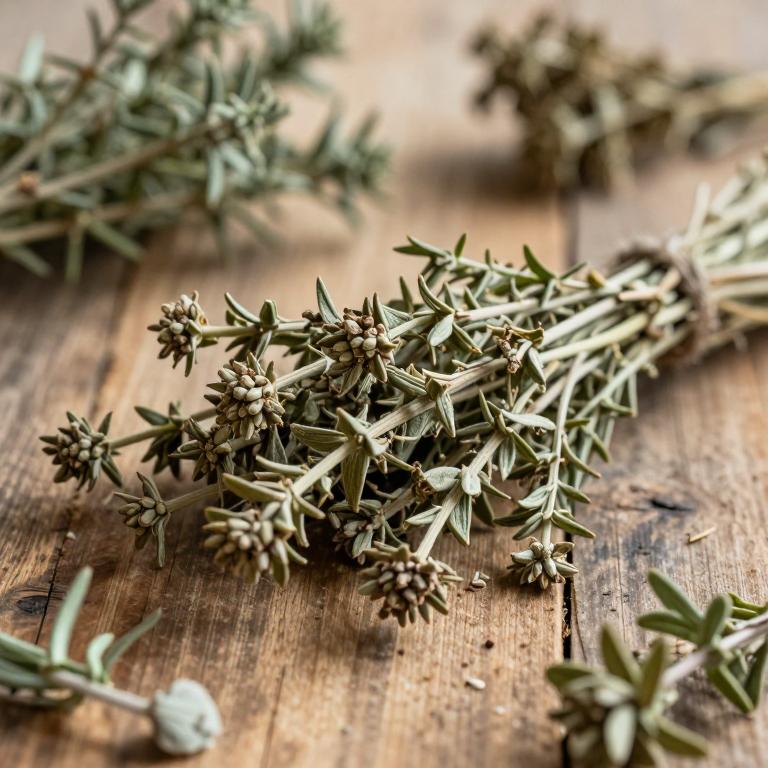
scientifically known as Thymus maroccanus subsp. leptobotrys, is a rare and aromatic medicinal shrub native to the rugged landscapes of Morocco. Renowned for its potent essential oils, this subspecies offers significant therapeutic potential, particularly for its antimicrobial and antioxidant properties, making it a valuable subject in ethnobotanical research.
- Family
- Lamiaceae
- Native range
- Africa
- Parts used
- Not available
- Common names
- Not available
- Scientific synonyms
- Thymus Leptobotrys
Names and Synonyms
Scientific Names
Accepted name
Thymus maroccanus subsp. leptobotrysSynonyms
- Thymus leptobotrys
Sources: Wikidata
Taxonomical Classification
This plant belongs to the kingdom Plantae and the phylum Streptophyta, falling under the class Equisetopsida and subclass Magnoliidae. Within the order Lamiales and family Lamiaceae, it is classified under the genus Thymus. Specifically, it is identified as the subspecies leptobotrys of the species Thymus maroccanus.
| Rank | Classification |
|---|---|
| Kingdom | Plantae |
| Phylum | Streptophyta |
| Class | Equisetopsida |
| Subclass | Magnoliidae |
| Order | Lamiales |
| Family | Lamiaceae |
| Genus | Thymus |
Sources: The World Checklist of Vascular Plants (WCVP)
Distribution
This plant is characterized by a very restricted geographical range within the African continent. Its natural habitat is located exclusively in the northern part of Africa. Specifically, the distribution of this subspecies is limited to the country of Morocco. Because it is endemic to this specific region, it cannot be found growing wild in any other part of the world. Consequently, its survival is closely tied to the unique environmental conditions found within the Moroccan landscape.
| Region | Area |
|---|---|
| Northern Africa | Morocco |
Sources: The World Checklist of Vascular Plants (WCVP)
Chemicals
Thymus maroccanus subsp. leptobotrys has 5 reported phytochemicals identified across 0 scientific publications and several other databases. The most consistently reported chemicals include CARVACROL, Flavonoids, PETROLEUM ETHER, Tannins, polyphenols.
| Chemical | Supporting sources | Consensus |
|---|---|---|
| CARVACROL | 2 supporting sources | ★☆☆☆☆ |
| Flavonoids | 1 supporting sources | ★☆☆☆☆ |
| PETROLEUM ETHER | 1 supporting sources | ★☆☆☆☆ |
| Tannins | 1 supporting sources | ★☆☆☆☆ |
| polyphenols | 1 supporting sources | ★☆☆☆☆ |
CARVACROL
- Pharmaceutics
- Chemistry & biodiversity
Flavonoids
- Biochemistry research international
PETROLEUM ETHER
- Letters in applied microbiology
Tannins
- Biochemistry research international
polyphenols
- Biochemistry research international
Activities
Thymus maroccanus subsp. leptobotrys has 3 reported activities identified across 0 scientific publications and several other databases. The most consistently reported activities include Antibacterial, Antifungal, Antioxidant.
| Activity | Supporting sources | Consensus |
|---|---|---|
| Antibacterial | 2 supporting sources | ★☆☆☆☆ |
| Antifungal | 1 supporting sources | ★☆☆☆☆ |
| Antioxidant | 1 supporting sources | ★☆☆☆☆ |
Antibacterial
- Pharmaceutics
- Chemistry & biodiversity
Antifungal
- Pharmaceutics
Antioxidant
- Chemistry & biodiversity
Preparations
Thymus maroccanus subsp. leptobotrys has 4 reported preparations identified across 0 scientific publications and several other databases. The most consistently reported preparations include EOs, ethanolic extracts, methanolic extracts, petroleum ether extracts.
| Preparation | Supporting sources | Consensus |
|---|---|---|
| Eos | 2 supporting sources | ★☆☆☆☆ |
| Ethanolic extracts | 1 supporting sources | ★☆☆☆☆ |
| Methanolic extracts | 1 supporting sources | ★☆☆☆☆ |
| Petroleum ether extracts | 1 supporting sources | ★☆☆☆☆ |
Eos
- Antibiotics (Basel, Switzerland)
- Pharmaceutics
Ethanolic extracts
- Biochemistry research international
Methanolic extracts
- Biochemistry research international
Petroleum ether extracts
- Letters in applied microbiology