Thymus lotocephalus
Thymus lotocephalus · Accepted scientific name
Scientific literature: Very Sparse (7 studies) · ★☆☆☆☆
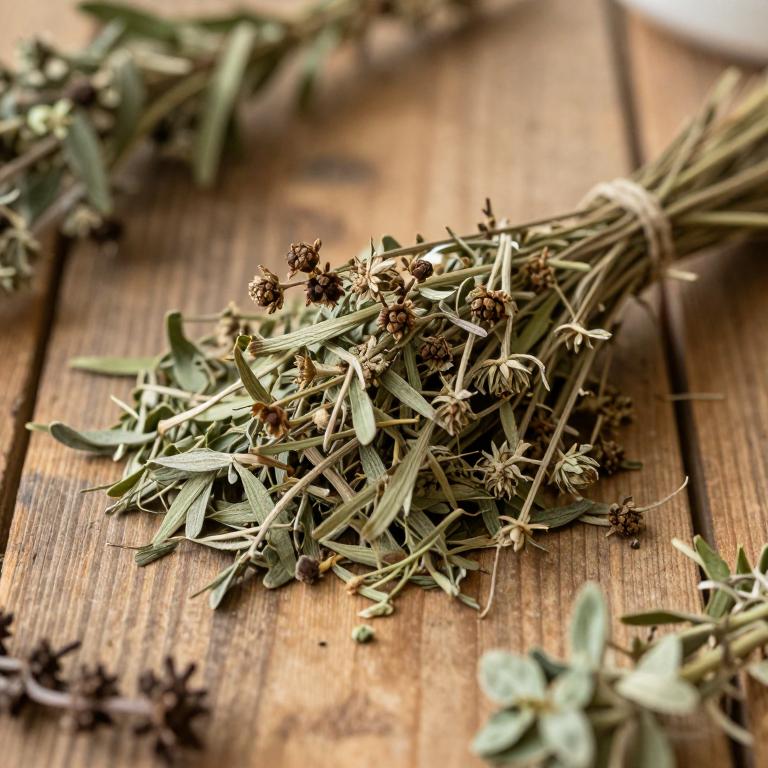
Thymus lotocephalus, scientifically known as Thymus lotocephalus, is a resilient, aromatic shrub native to the Mediterranean region. Renowned for its delicate purple flowers and fragrant foliage, this medicinal herb contains essential oils with potent antimicrobial and antioxidant properties, making it a valuable resource in traditional herbal healing practices.
- Family
- Lamiaceae
- Native range
- Europe
- Parts used
- Not available
- Common names
- Not available
- Scientific synonyms
- Not available
Names and Synonyms
Scientific Names
Accepted name
Thymus lotocephalusSources: Wikidata, Catalogue of Life
Taxonomical Classification
This plant belongs to the kingdom Plantae and is classified under the phylum Streptophyta and the class Equisetopsida. Within the subclass Magnoliidae, it follows the order Lamiales and is a member of the family Lamiaceae. It is specifically categorized under the genus Thymus.
| Rank | Classification |
|---|---|
| Kingdom | Plantae |
| Phylum | Streptophyta |
| Class | Equisetopsida |
| Subclass | Magnoliidae |
| Order | Lamiales |
| Family | Lamiaceae |
| Genus | Thymus |
Sources: The World Checklist of Vascular Plants (WCVP)
Distribution
This plant is characterized by a very specific and limited geographical range. Its presence is strictly confined to the regions of Southwestern Europe. Within this territory, it can be found growing naturally in Portugal. This localized distribution indicates that the species occupies a particular ecological niche in that area. Consequently, the plant is considered an endemic element of the Portuguese landscape.
| Region | Area |
|---|---|
| Southwestern Europe | Portugal |
Sources: The World Checklist of Vascular Plants (WCVP)
Botanical Identification
Life history
The life history of Thymus lotocephalus is characterized by its classification as a chamaephyte, a growth form that allows it to thrive in specific ecological niches by maintaining its buds close to the soil surface. Within the broader spectrum of botanical life forms, it is specifically identified as a chamaephyte (Life_form_2: chamaephyte) and falls under the primary classification of a chamaephyte (Life_form_1: chamaephyte). This strategic positioning of its reproductive and vegetative buds near the ground level provides protection against environmental stressors such as wind and temperature fluctuations, typical of its natural habitat. By utilizing this chamaephytic habit, the plant manages its energy resources to support perennial growth, ensuring survival through seasonal transitions while maintaining a low-profile structure that minimizes exposure to herbivory and desiccation.
- Life form :
- chamaephyte
Morphology
The morphology of Thymus lotocephalus is characterized by its growth habit as a self-supporting climber, utilizing its structure to navigate its environment without the need for external hosts. It functions as an independent organism, meaning it is not a parasite and maintains its own nutritional autonomy. Furthermore, it is a terrestrial plant, establishing its root system and life cycle within the soil rather than living as an epiphyte.
- Climber :
- self-supporting
- Epiphyte :
- terrestrial
- Parasite :
- independent
Sources: Global Inventory of Floras and Traits (GIFT)
Chemicals
Thymus lotocephalus has 2 reported phytochemicals identified across 0 scientific publications and several other databases. The most consistently reported chemicals include 1,8-Cineole, Linalool.
| Chemical | Supporting sources | Consensus |
|---|---|---|
| 1,8-Cineole | 1 supporting sources | ★☆☆☆☆ |
| Linalool | 1 supporting sources | ★☆☆☆☆ |
1,8-Cineole
- Letters in applied microbiology
Linalool
- Letters in applied microbiology
Conditions
Thymus lotocephalus has 5 reported investigations on conditions identified across 0 scientific publications and several other databases. The most consistently reported conditions include Candida albicans, Escherichia coli, Listeria monocytogenes, Proteus mirabilis, Staphylococcus aureus.
| Condition | Supporting sources | Consensus |
|---|---|---|
| Candida albicans | 1 supporting sources | ★☆☆☆☆ |
| Escherichia coli | 1 supporting sources | ★☆☆☆☆ |
| Listeria monocytogenes | 1 supporting sources | ★☆☆☆☆ |
| Proteus mirabilis | 1 supporting sources | ★☆☆☆☆ |
| Staphylococcus aureus | 1 supporting sources | ★☆☆☆☆ |
Candida albicans
- Letters in applied microbiology
Escherichia coli
- Letters in applied microbiology
Listeria monocytogenes
- Letters in applied microbiology
Proteus mirabilis
- Letters in applied microbiology
Staphylococcus aureus
- Letters in applied microbiology