Thymus longicaulis
Thymus longicaulis · Accepted scientific name
Scientific literature: Very Extensive (334 studies) · ★★★★★
scientifically known as Thymus longicaulis, is a resilient perennial herb native to specific mountainous regions. Characterized by its creeping habit and delicate foliage, this plant is valued in traditional medicine for its aromatic properties. It offers potential therapeutic benefits, primarily utilized for its antimicrobial and soothing medicinal qualities.
- Family
- Lamiaceae
- Native range
- Europe
- Parts used
- Not available
- Common names
- Not available
- Scientific synonyms
- Thymus Serpyllum Var. Longicaulis · Thymus Striatus Var. Longicaulis
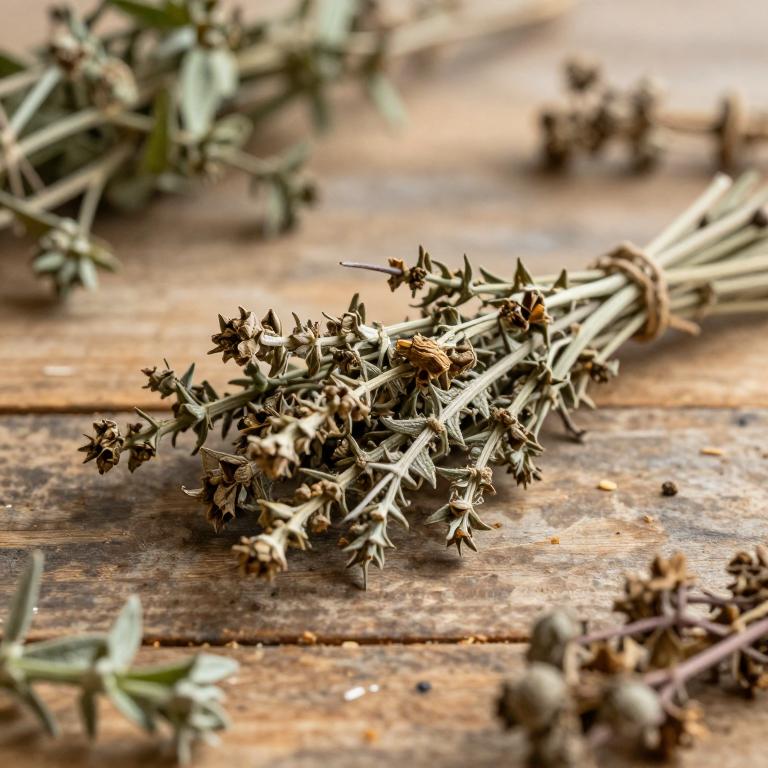
Names and Synonyms
Scientific Names
Accepted name
Thymus longicaulisSynonyms
- Thymus serpyllum var. longicaulis
- Thymus striatus var. longicaulis
Regional and Traditional Names
German:
- Langstaengeliger Thymian
French:
- Thym a longues tiges
- Thym à longues tiges
Sources: Wikidata, Catalogue of Life
Taxonomical Classification
This plant belongs to the kingdom Plantae within the phylum Streptophyta and the class Equisetopsida. Classified under the subclass Magnoliidae and the order Lamiales, it is a member of the family Lamiaceae. It is specifically identified by the genus Thymus.
| Rank | Classification |
|---|---|
| Kingdom | Plantae |
| Phylum | Streptophyta |
| Class | Equisetopsida |
| Subclass | Magnoliidae |
| Order | Lamiales |
| Family | Lamiaceae |
| Genus | Thymus |
Sources: The World Checklist of Vascular Plants (WCVP)
Distribution
This plant exhibits a wide geographical distribution across several key regions of the European continent. In Middle Europe, it can be found growing within the territories of Austria and Germany. Moving toward the Balkan Peninsula, its presence extends into Southeastern Europe. Specifically, it inhabits the landscapes of Albania and Bulgaria. Finally, its range reaches further south into the Mediterranean region of Greece.
| Region | Area |
|---|---|
| Middle Europe | Austria |
| Middle Europe | Germany |
| Southeastern Europe | Albania |
| Southeastern Europe | Bulgaria |
| Southeastern Europe | Greece |
| Southeastern Europe | Italy |
| Southeastern Europe | Romania |
| Southeastern Europe | Sicilia |
| Southeastern Europe | Türkiye-in-Europe |
| Southeastern Europe | NW. Balkan Pen. |
Sources: The World Checklist of Vascular Plants (WCVP)
Botanical Identification
Life history
The life history of Thymus longicaulis is characterized by its status as a perennial plant, allowing it to persist through multiple growing seasons and establish a stable presence within its ecosystem. In terms of its growth habit and structural organization, the species is classified as a chamaephyte, a life form where the permanent buds are located close to the soil surface, often protected by a layer of leaf litter or the ground itself. This chamaephyte classification is consistent across its morphological descriptions, indicating a low-growing, woody structure that enables the plant to withstand various environmental stressors while maintaining its regenerative capacity year after year.
- Life form :
- chamaephyte
- Lifecycle :
- perennial
Morphology
The morphology of Thymus longicaulis is characterized by its primarily terrestrial growth habit, functioning as a non-aquatic species that thrives in soil-based environments rather than aquatic or semiaquatic habitats. It is a self-supporting plant that does not exhibit climbing tendencies, maintaining a stable structure through its own physical strength without the need for external supports. As an independent organism, it lacks any parasitic relationship with host plants, existing fully on its own nutritional requirements. Furthermore, it does not function as an epiphyte, as its growth is strictly terrestrial rather than growing upon other plants. Structurally, the plant exhibits a woody nature, possessing a lignified stem base that contributes to its perennial durability and physical form.
- Aquatic :
- terrestrial
- Climber :
- self-supporting
- Epiphyte :
- terrestrial
- Parasite :
- independent
- Woodiness :
- woody
Physiology
The physiology of Thymus longicaulis is characterized by a C3 photosynthetic pathway, a metabolic strategy common among many members of the Lamiaceae family that involves the direct fixation of atmospheric carbon dioxide via the enzyme RuBisCO. This carbon fixation process occurs within the mesophyll cells, where the Calvin cycle operates to convert inorganic carbon into organic sugars. To mitigate the potential for photorespiration inherent in the C3 pathway, especially under varying light intensities, the plant employs specialized physiological adaptations such as the production of secondary metabolites, including volatile essential oils. These compounds serve not only as chemical defense mechanisms but also play a role in managing oxidative stress and regulating transpiration. Furthermore, its physiological efficiency is closely tied to its ability to manage water use and gas exchange through stomatal regulation, ensuring metabolic stability in its natural habitat.
- Photosynthetic pathway :
- C3
Reproduction
The reproduction of Thymus longicaulis is characterized by a versatile flowering period and specific seed characteristics. The plant exhibits a highly flexible flowering cycle, with the flowering time spanning nearly the entire year, including the months of January, February, March, April, May, June, July, August, September, October, November, and December, though the onset and duration can be variable. Following successful pollination, the plant produces seeds with a highly consistent mass; the seed mass is measured at a mean, maximum, and minimum of 3e-04 g, indicating a uniform seed size across its reproductive output.
- Flowering time :
- Dec
- Seed mass mean:
- 3e-04 g
Sources: Global Inventory of Floras and Traits (GIFT)
Chemicals
Thymus longicaulis has 68 reported phytochemicals identified across 0 scientific publications and several other databases. The most consistently reported chemicals include (E)-2-HEXENAL, (Z)-3-HEXENOL, (Z)-3-HEXENYL ACETATE, (Z)-BETA-OCIMENE, (Z)-beta-Farnesene.
| Chemical | Supporting sources | Consensus |
|---|---|---|
| (E)-2-HEXENAL | 1 supporting sources | ★☆☆☆☆ |
| (Z)-3-HEXENOL | 1 supporting sources | ★☆☆☆☆ |
| (Z)-3-HEXENYL ACETATE | 1 supporting sources | ★☆☆☆☆ |
| (Z)-BETA-OCIMENE | 1 supporting sources | ★☆☆☆☆ |
| (Z)-beta-Farnesene | 1 supporting sources | ★☆☆☆☆ |
| 1,8-Cineole | 1 supporting sources | ★☆☆☆☆ |
| 1-DODECANOL | 1 supporting sources | ★☆☆☆☆ |
| 1-Nonen-3-ol | 1 supporting sources | ★☆☆☆☆ |
| 1-OCTEN-3-OL | 1 supporting sources | ★☆☆☆☆ |
| 3-NONANONE | 1 supporting sources | ★☆☆☆☆ |
(E)-2-HEXENAL
- Dr. Duke
(Z)-3-HEXENOL
- Dr. Duke
(Z)-3-HEXENYL ACETATE
- Dr. Duke
(Z)-BETA-OCIMENE
- Dr. Duke
(Z)-beta-Farnesene
- Dr. Duke
1,8-Cineole
- Dr. Duke
1-DODECANOL
- Dr. Duke
1-Nonen-3-ol
- Dr. Duke
1-OCTEN-3-OL
- Dr. Duke
3-NONANONE
- Dr. Duke
Activities
Thymus longicaulis has 211 reported activities identified across 0 scientific publications and several other databases. The most consistently reported activities include (-)-Chronotropic, (-)-Inotropic, ACE-Inhibitor, AChE-Inhibitor, Abortifacient.
| Activity | Supporting sources | Consensus |
|---|---|---|
| (-)-Chronotropic | 1 supporting sources | ★☆☆☆☆ |
| (-)-Inotropic | 1 supporting sources | ★☆☆☆☆ |
| ACE-Inhibitor | 1 supporting sources | ★☆☆☆☆ |
| AChE-Inhibitor | 1 supporting sources | ★☆☆☆☆ |
| Abortifacient | 1 supporting sources | ★☆☆☆☆ |
| Acaricide | 1 supporting sources | ★☆☆☆☆ |
| Aldose-Reductase-Inhibitor | 1 supporting sources | ★☆☆☆☆ |
| Allelochemic | 1 supporting sources | ★☆☆☆☆ |
| Allelopathic | 1 supporting sources | ★☆☆☆☆ |
| Allergenic | 1 supporting sources | ★☆☆☆☆ |
(-)-Chronotropic
- Dr. Duke
(-)-Inotropic
- Dr. Duke
ACE-Inhibitor
- Dr. Duke
AChE-Inhibitor
- Dr. Duke
Abortifacient
- Dr. Duke
Acaricide
- Dr. Duke
Aldose-Reductase-Inhibitor
- Dr. Duke
Allelochemic
- Dr. Duke
Allelopathic
- Dr. Duke
Allergenic
- Dr. Duke
Preparations
Thymus longicaulis has 1 reported preparations identified across 0 scientific publications and several other databases. The most consistently reported preparations include methanol extracts.
| Preparation | Supporting sources | Consensus |
|---|---|---|
| Methanol extracts | 1 supporting sources | ★☆☆☆☆ |
Methanol extracts
- PloS one