Thymus linearis
Thymus linearis · Accepted scientific name
Scientific literature: Very Sparse (20 studies) · ★☆☆☆☆
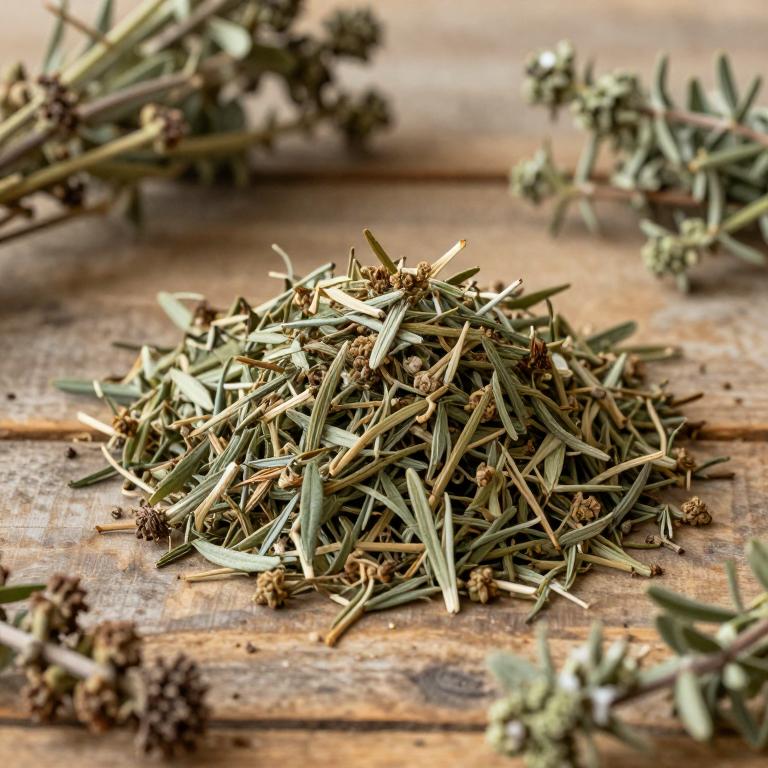
Thymus linearis, scientifically known as Thymus linearis, is a resilient, aromatic subshrub native to the Mediterranean region. Characterized by its narrow, linear leaves and delicate blossoms, this medicinal herb is prized for its essential oils. It offers significant therapeutic potential, particularly for its antimicrobial and soothing digestive properties.
- Family
- Lamiaceae
- Native range
- Asia-Temperate
- Parts used
- Flower · Leaf
- Common names
- Not available
- Scientific synonyms
- Not available
Names and Synonyms
Scientific Names
Accepted name
Thymus linearisSources: Wikidata
Taxonomical Classification
This plant belongs to the kingdom Plantae and is classified under the phylum Streptophyta and class Equisetopsida. Within the subclass Magnoliidae, it is organized under the order Lamiales and the family Lamiaceae. Finally, it is categorized under the genus Thymus, which defines its specific taxonomic placement.
| Rank | Classification |
|---|---|
| Kingdom | Plantae |
| Phylum | Streptophyta |
| Class | Equisetopsida |
| Subclass | Magnoliidae |
| Order | Lamiales |
| Family | Lamiaceae |
| Genus | Thymus |
Sources: The World Checklist of Vascular Plants (WCVP)
Distribution
This plant exhibits a diverse geographical distribution spanning several distinct regions across Asia. In Central Asia, it can be specifically located within the borders of Tajikistan. Its presence extends into Western Asia, where it is found in both Afghanistan and Iran. Moving toward the east, the species inhabits the Xinjiang region of China. Finally, its range reaches the Indian Subcontinent, specifically within the country of India.
| Region | Area |
|---|---|
| Central Asia | Tadzhikistan |
| Western Asia | Afghanistan |
| Western Asia | Iran |
| China | Xinjiang |
| Indian Subcontinent | India |
| Indian Subcontinent | Nepal |
| Indian Subcontinent | Pakistan |
| Indian Subcontinent | West Himalaya |
Sources: The World Checklist of Vascular Plants (WCVP)
Botanical Identification
Ecology
The ecology of Thymus linearis is defined by its presence in high-altitude montane environments, where it thrives within a specific vertical distribution. This species occupies a significant altitudinal gradient, ranging from a minimum elevation of 1700 m AMSL to a maximum elevation of 5100 m AMSL. Such a broad elevational range suggests an ability to adapt to varying atmospheric pressures, temperature fluctuations, and UV radiation intensities typical of high-mountain ecosystems. Its distribution across these altitudes implies that the plant is well-suited to the specialized niches found in alpine or sub-alpine zones, where it must withstand the unique climatic stressors associated with varying degrees of mountain height.
- Elevational range max:
- 5100 m AMSL
- Elevational range min:
- 1700 m AMSL
Life history
The life history of Thymus linearis is characterized by its classification as a perennial species, meaning it persists through multiple growing seasons rather than completing its cycle in a single year. In terms of its structural growth habit and survival strategy, the plant is categorized as a chamaephyte. This life form indicates that its permanent buds are located close to the soil surface, typically just above it, allowing the plant to endure various environmental stresses while maintaining its vegetative structure over time.
- Life form :
- chamaephyte
- Lifecycle :
- perennial
Morphology
The morphology of Thymus linearis is characterized by its growth form as a herb, exhibiting a non-woody structure throughout its development. In terms of its climbing habit, the plant functions as a self-supporting climber, acting as a liana or vine that does not require external support to maintain its stature. It is an independent organism, showing no parasitic tendencies, and maintains a terrestrial life habit rather than growing as an epiphyte.
- Climber :
- self-supporting
- Epiphyte :
- terrestrial
- Growth form :
- herb
- Parasite :
- independent
- Woodiness :
- non-woody
Reproduction
The reproduction of Thymus linearis is characterized by a specific seasonal flowering cycle that dictates its reproductive period. The flowering process begins as early as April, although the timing can be variable depending on environmental conditions. This reproductive phase continues through the warmer months, eventually reaching its conclusion in October. This temporal window allows the plant to utilize the peak growing season for pollination and subsequent seed development.
- Flowering time :
- Apr
- Flowering time :
- Oct
Sources: Global Inventory of Floras and Traits (GIFT)
Plant Parts
Thymus linearis has 3 reported plant parts identified across 3 scientific publications and several other databases that are studied for medicinal purposes. The most consistently reported plant part include flower, leaf, stem.
| Plant part | Supporting sources | Consensus |
|---|---|---|
| Flower | 1 supporting sources | ★☆☆☆☆ |
| Leaf | 1 supporting sources | ★☆☆☆☆ |
| Stem | 1 supporting sources | ★☆☆☆☆ |
Flower
- Biomedical chromatography : BMC
Leaf
- Biomedical chromatography : BMC
Stem
- Biomedical chromatography : BMC
Chemicals
Thymus linearis has 7 reported phytochemicals identified across 3 scientific publications and several other databases. The most consistently reported chemicals include Borneol, CARVACROL, P-CYMENE, THYMOL, Terpinen-4-ol.
| Chemical | Supporting sources | Consensus |
|---|---|---|
| Borneol | 1 supporting sources | ★☆☆☆☆ |
| CARVACROL | 1 supporting sources | ★☆☆☆☆ |
| P-CYMENE | 1 supporting sources | ★☆☆☆☆ |
| THYMOL | 1 supporting sources | ★☆☆☆☆ |
| Terpinen-4-ol | 1 supporting sources | ★☆☆☆☆ |
| Thymol methyl ether | 1 supporting sources | ★☆☆☆☆ |
| p-Cymen-8-ol | 1 supporting sources | ★☆☆☆☆ |
Borneol
- Natural product research
CARVACROL
- Natural product research
P-CYMENE
- Natural product research
THYMOL
- Natural product research
Terpinen-4-ol
- Natural product research
Thymol methyl ether
- Natural product research
p-Cymen-8-ol
- Natural product research
Activities
Thymus linearis has 5 reported activities identified across 3 scientific publications and several other databases. The most consistently reported activities include Analgesic, Antibacterial, Antifungal, Diuretic, Tonic.
| Activity | Supporting sources | Consensus |
|---|---|---|
| Analgesic | 1 supporting sources | ★☆☆☆☆ |
| Antibacterial | 1 supporting sources | ★☆☆☆☆ |
| Antifungal | 1 supporting sources | ★☆☆☆☆ |
| Diuretic | 1 supporting sources | ★☆☆☆☆ |
| Tonic | 1 supporting sources | ★☆☆☆☆ |
Analgesic
- Pakistan journal of pharmaceutical sciences
Antibacterial
- Biomedical chromatography : BMC
Antifungal
- Biomedical chromatography : BMC
Diuretic
- Biomedical chromatography : BMC
Tonic
- Biomedical chromatography : BMC
Conditions
Thymus linearis has 5 reported investigations on conditions identified across 3 scientific publications and several other databases. The most consistently reported conditions include cough, dysentery, inflammation, pain, pyrexia.
| Condition | Supporting sources | Consensus |
|---|---|---|
| Cough | 1 supporting sources | ★☆☆☆☆ |
| Dysentery | 1 supporting sources | ★☆☆☆☆ |
| Inflammation | 1 supporting sources | ★☆☆☆☆ |
| Pain | 1 supporting sources | ★☆☆☆☆ |
| Pyrexia | 1 supporting sources | ★☆☆☆☆ |
Cough
- Biomedical chromatography : BMC
Dysentery
- Biomedical chromatography : BMC
Inflammation
- Pakistan journal of pharmaceutical sciences
Pain
- Pakistan journal of pharmaceutical sciences
Pyrexia
- Pakistan journal of pharmaceutical sciences
Preparations
Thymus linearis has 5 reported preparations identified across 3 scientific publications and several other databases. The most consistently reported preparations include Methanolic extracts, aqueous methanolic extract, ethanolic extract, methanolic extract, n-hexane extract.
| Preparation | Supporting sources | Consensus |
|---|---|---|
| Methanolic extracts | 1 supporting sources | ★☆☆☆☆ |
| Aqueous methanolic extract | 1 supporting sources | ★☆☆☆☆ |
| Ethanolic extract | 1 supporting sources | ★☆☆☆☆ |
| Methanolic extract | 1 supporting sources | ★☆☆☆☆ |
| N-hexane extract | 1 supporting sources | ★☆☆☆☆ |
Methanolic extracts
- Evidence-based complementary and alternative medicine : eCAM
Aqueous methanolic extract
- Pakistan journal of pharmaceutical sciences
Ethanolic extract
- Biomedical chromatography : BMC
Methanolic extract
- Biomedical chromatography : BMC
N-hexane extract
- Pakistan journal of pharmaceutical sciences