Thymus decussatus
Thymus decussatus · Accepted scientific name
Scientific literature: Very Sparse (6 studies) · ★☆☆☆☆
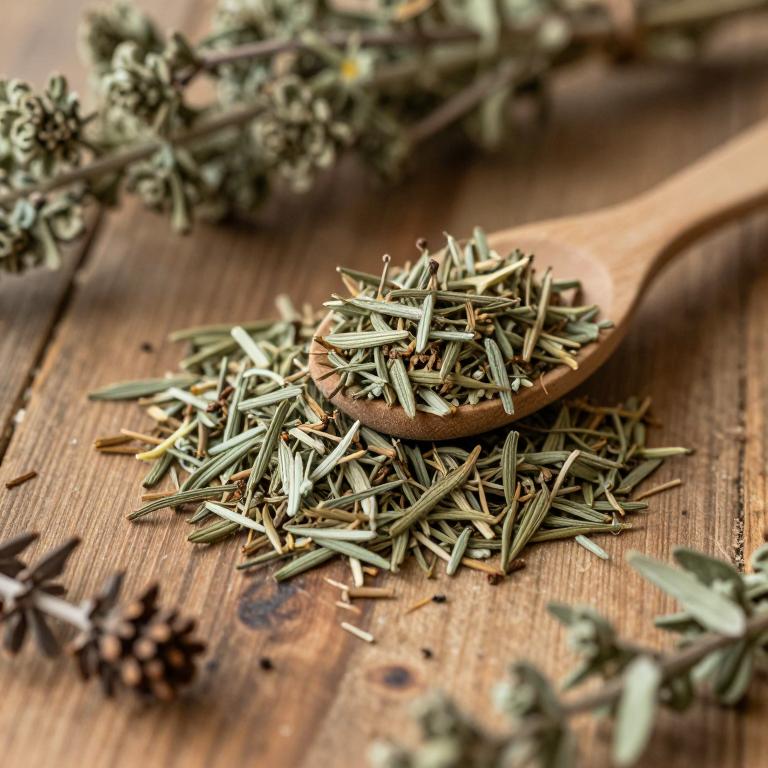
Thymus decussatus, scientifically known as Thymus decussatus, is a distinctive perennial herb belonging to the Lamiaceae family. Native to specific subtropical regions, this aromatic plant is valued for its medicinal properties. It is often utilized in traditional remedies to treat respiratory ailments and support overall digestive wellness.
- Family
- Lamiaceae
- Native range
- Asia-Temperate
- Parts used
- Not available
- Common names
- Not available
- Scientific synonyms
- Origanum Decussatum · Thymus Quadrangulus
Names and Synonyms
Scientific Names
Accepted name
Thymus decussatusSynonyms
- Origanum decussatum
- Thymus quadrangulus
Sources: Wikidata, Catalogue of Life
Taxonomical Classification
This plant belongs to the kingdom Plantae and is classified under the phylum Streptophyta and the class Equisetopsida. Within the subclass Magnoliidae, it is organized under the order Lamiales and the family Lamiaceae. Finally, it is identified by its specific genus, Thymus.
| Rank | Classification |
|---|---|
| Kingdom | Plantae |
| Phylum | Streptophyta |
| Class | Equisetopsida |
| Subclass | Magnoliidae |
| Order | Lamiales |
| Family | Lamiaceae |
| Genus | Thymus |
Sources: The World Checklist of Vascular Plants (WCVP)
Distribution
This plant exhibits a specific geographical distribution concentrated within the arid regions of the Middle East. In Western Asia, its presence can be identified within the Sinai Peninsula. Furthermore, it extends its range into the Arabian Peninsula. Specifically, it is found growing in the landscapes of Saudi Arabia. These locations highlight the plant's adaptation to these particular desert environments.
| Region | Area |
|---|---|
| Western Asia | Sinai |
| Arabian Peninsula | Saudi Arabia |
Sources: The World Checklist of Vascular Plants (WCVP)
Botanical Identification
Life history
The life history of Thymus decussatus is characterized by its classification as a chamaephyte, a growth form that dictates its survival strategy and structural development. Specifically, it functions as a chamaephyte under both morphological categorization systems, meaning its perennating buds are located close to the soil surface, often just above it, protected by a layer of leaf litter or organic debris. This life form allows the plant to endure seasonal fluctuations and environmental stressors by keeping its vital regenerative organs low to the ground. As a perennial herb, its development involves a stable vegetative phase where it forms low-growing, woody mats, followed by reproductive cycles that ensure its persistence in its specific ecological niche. This specialized life history enables the species to optimize its position within the vegetation layer, balancing the need for light access with the necessity of protection against climatic extremes.
- Life form :
- chamaephyte
Morphology
The morphology of Thymus decussatus is characterized by its growth habit and ecological positioning. It functions as a self-supporting climber, possessing the structural integrity to maintain its posture without the necessity of external scaffolding. The plant is an independent organism, exhibiting no parasitic behavior toward other species, and it maintains a terrestrial existence, growing directly in the soil rather than occupying an epiphytic niche.
- Climber :
- self-supporting
- Epiphyte :
- terrestrial
- Parasite :
- independent
Sources: Global Inventory of Floras and Traits (GIFT)
Chemicals
Thymus decussatus has 1 reported phytochemicals identified across 0 scientific publications and several other databases. The most consistently reported chemicals include CARVACROL.
| Chemical | Supporting sources | Consensus |
|---|---|---|
| CARVACROL | 1 supporting sources | ★☆☆☆☆ |
CARVACROL
- Plants (Basel, Switzerland)
Activities
Thymus decussatus has 2 reported activities identified across 0 scientific publications and several other databases. The most consistently reported activities include Antimicrobial, Phytotoxic.
| Activity | Supporting sources | Consensus |
|---|---|---|
| Antimicrobial | 1 supporting sources | ★☆☆☆☆ |
| Phytotoxic | 1 supporting sources | ★☆☆☆☆ |
Antimicrobial
- Plants (Basel, Switzerland)
Phytotoxic
- Plants (Basel, Switzerland)
Conditions
Thymus decussatus has 3 reported investigations on conditions identified across 0 scientific publications and several other databases. The most consistently reported conditions include Aspergillus niger, Escherichia coli, Staphylococcus aureus.
| Condition | Supporting sources | Consensus |
|---|---|---|
| Aspergillus niger | 1 supporting sources | ★☆☆☆☆ |
| Escherichia coli | 1 supporting sources | ★☆☆☆☆ |
| Staphylococcus aureus | 1 supporting sources | ★☆☆☆☆ |
Aspergillus niger
- Plants (Basel, Switzerland)
Escherichia coli
- Plants (Basel, Switzerland)
Staphylococcus aureus
- Plants (Basel, Switzerland)
Preparations
Thymus decussatus has 1 reported preparations identified across 0 scientific publications and several other databases. The most consistently reported preparations include Essential Oils.
| Preparation | Supporting sources | Consensus |
|---|---|---|
| Essential oils | 1 supporting sources | ★☆☆☆☆ |
Essential oils
- Plants (Basel, Switzerland)