Thymus daenensis
Thymus daenensis · Accepted scientific name
Scientific literature: Sparse (83 studies) · ★★☆☆☆
, scientifically known as Thymus daenensis, is a rare, aromatic shrub endemic to the rugged cliffs of the Aegean region. Highly valued in traditional herbalism, this resilient plant contains potent essential oils with antimicrobial and antioxidant properties, offering significant therapeutic potential for respiratory health and natural wound care.
- Family
- Lamiaceae
- Native range
- Asia-Temperate
- Parts used
- Not available
- Common names
- Not available
- Scientific synonyms
- Thymus Fallax Var. Daenensis
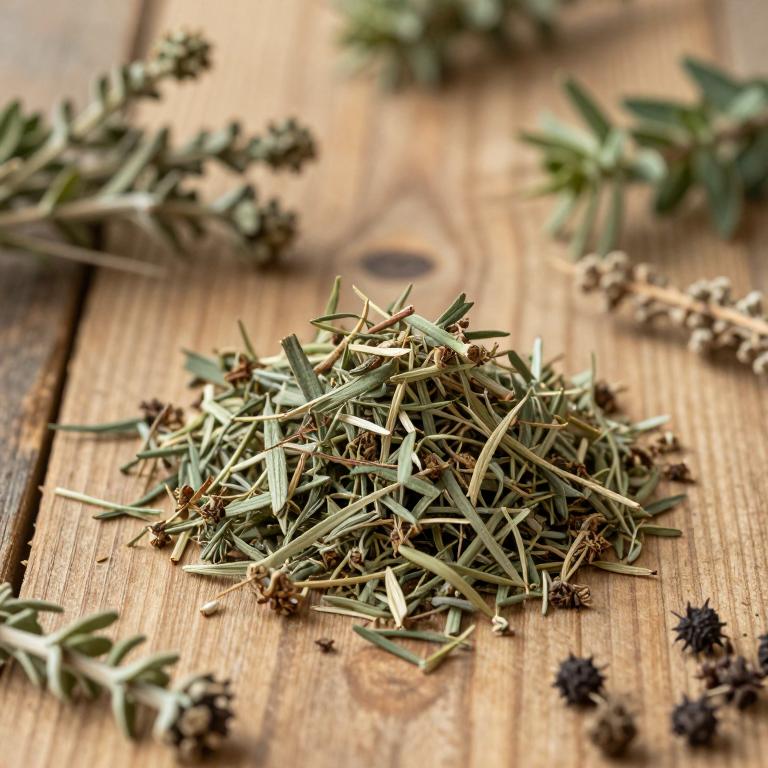
Names and Synonyms
Scientific Names
Accepted name
Thymus daenensisSynonyms
- Thymus fallax var. daenensis
Sources: Wikidata, Catalogue of Life
Taxonomical Classification
This plant belongs to the kingdom Plantae and is classified under the phylum Streptophyta and the class Equisetopsida. Within the subclass Magnoliidae, it is organized under the order Lamiales and the family Lamiaceae. Finally, it is identified by its specific genus, Thymus.
| Rank | Classification |
|---|---|
| Kingdom | Plantae |
| Phylum | Streptophyta |
| Class | Equisetopsida |
| Subclass | Magnoliidae |
| Order | Lamiales |
| Family | Lamiaceae |
| Genus | Thymus |
Sources: The World Checklist of Vascular Plants (WCVP)
Distribution
This plant is a specific species of thyme found within the Middle East. Its geographical range is primarily concentrated in the region of Western Asia. Specifically, it can be located growing in the country of Iran. Additionally, the plant's distribution extends into the neighboring territory of Iraq. These two nations represent the known natural habitats for this medicinal species.
| Region | Area |
|---|---|
| Western Asia | Iran |
| Western Asia | Iraq |
Sources: The World Checklist of Vascular Plants (WCVP)
Botanical Identification
Life history
The life history of Thymus daenenis is characterized by its classification as a chamaephyte, a growth form that dictates its survival strategy in its specific ecological niche. As a chamaephyte, the plant maintains its perennating buds very close to the soil surface, often just above it, which allows it to endure environmental stressors such as wind or temperature fluctuations while maintaining a low-growing, spreading stature. This life form is specifically categorized within the broader botanical spectrum as a chamaephyte (as opposed to phanerophytes, hemicryptophytes, cryptophytes, or therophytes), ensuring that its reproductive and vegetative structures remain protected near the ground level. This low-lying habit enables the species to effectively colonize rocky or sparse habitats, utilizing its perennial nature to persist through seasonal changes by sheltering its vital buds at the soil-atmosphere interface.
- Life form :
- chamaephyte
Morphology
The morphology of Thymus daenensis is characterized by its growth habit as a self-supporting plant, which functions as a non-climbing, upright or spreading herb rather than an obligatory or facultative climber. It maintains an independent existence, functioning as a non-parasitic species that does not rely on a host for nutrients. Furthermore, the plant is strictly terrestrial in its ecological positioning, lacking any epiphytic tendencies and instead establishing its root system directly within the soil of its natural habitat.
- Climber :
- self-supporting
- Epiphyte :
- terrestrial
- Parasite :
- independent
Sources: Global Inventory of Floras and Traits (GIFT)
Chemicals
Thymus daenensis has 16 reported phytochemicals identified across 0 scientific publications and several other databases. The most consistently reported chemicals include THYMOL, CARVACROL, Sesquiterpenes, CHLOROPHYLL, CYMENE.
| Chemical | Supporting sources | Consensus |
|---|---|---|
| THYMOL | 8 supporting sources | ★★★★☆ |
| CARVACROL | 5 supporting sources | ★★★☆☆ |
| Sesquiterpenes | 2 supporting sources | ★☆☆☆☆ |
| CHLOROPHYLL | 1 supporting sources | ★☆☆☆☆ |
| CYMENE | 1 supporting sources | ★☆☆☆☆ |
| Carotenoid | 1 supporting sources | ★☆☆☆☆ |
| Carvacrol methyl ether | 1 supporting sources | ★☆☆☆☆ |
| Caryophyllene | 1 supporting sources | ★☆☆☆☆ |
| Caryophyllene oxide | 1 supporting sources | ★☆☆☆☆ |
| Flavonoids | 1 supporting sources | ★☆☆☆☆ |
THYMOL
- BMC genomics
- International journal of molecular sciences
- BMC plant biology
- Anti-inflammatory & anti-allergy agents in medicinal chemistry
- Genes
View 3 additional sources
- Journal of integrative medicine
- Journal of applied microbiology
- The Analyst
CARVACROL
- BMC genomics
- International journal of molecular sciences
- BMC plant biology
- Genes
- The Analyst
Sesquiterpenes
- BMC genomics
- Anti-inflammatory & anti-allergy agents in medicinal chemistry
CHLOROPHYLL
- BMC plant biology
CYMENE
- BMC plant biology
Carotenoid
- BMC plant biology
Carvacrol methyl ether
- Anti-inflammatory & anti-allergy agents in medicinal chemistry
Caryophyllene
- BMC plant biology
Caryophyllene oxide
- Anti-inflammatory & anti-allergy agents in medicinal chemistry
Flavonoids
- Chemosphere
Activities
Thymus daenensis has 5 reported activities identified across 0 scientific publications and several other databases. The most consistently reported activities include Antibacterial, Antimicrobial, Antioxidant, Antifungal, Expectorant.
| Activity | Supporting sources | Consensus |
|---|---|---|
| Antibacterial | 6 supporting sources | ★★★☆☆ |
| Antimicrobial | 4 supporting sources | ★★☆☆☆ |
| Antioxidant | 4 supporting sources | ★★☆☆☆ |
| Antifungal | 2 supporting sources | ★☆☆☆☆ |
| Expectorant | 1 supporting sources | ★☆☆☆☆ |
Antibacterial
- International journal of pharmaceutics
- Fitoterapia
- Carbohydrate polymers
- Ultrasonics sonochemistry
- Letters in applied microbiology
View 1 additional sources
- Drug research
Antimicrobial
- BMC plant biology
- Journal of integrative medicine
- Ultrasonics sonochemistry
- Letters in applied microbiology
Antioxidant
- BMC plant biology
- Journal of integrative medicine
- Drug research
- Journal of toxicology
Antifungal
- Fitoterapia
- Ultrasonics sonochemistry
Expectorant
- Fitoterapia
Conditions
Thymus daenensis has 19 reported investigations on conditions identified across 0 scientific publications and several other databases. The most consistently reported conditions include Escherichia coli, Staphylococcus aureus, Streptococcus pneumoniae, Aspergillus flavus, Aspergillus oryzae.
| Condition | Supporting sources | Consensus |
|---|---|---|
| Escherichia coli | 2 supporting sources | ★☆☆☆☆ |
| Staphylococcus aureus | 2 supporting sources | ★☆☆☆☆ |
| Streptococcus pneumoniae | 2 supporting sources | ★☆☆☆☆ |
| Aspergillus flavus | 1 supporting sources | ★☆☆☆☆ |
| Aspergillus oryzae | 1 supporting sources | ★☆☆☆☆ |
| Candida albicans | 1 supporting sources | ★☆☆☆☆ |
| E. coli | 1 supporting sources | ★☆☆☆☆ |
| Haemophilus influenzae | 1 supporting sources | ★☆☆☆☆ |
| Jurkat cells | 1 supporting sources | ★☆☆☆☆ |
| Mrsa | 1 supporting sources | ★☆☆☆☆ |
Escherichia coli
- International journal of pharmaceutics
- Ultrasonics sonochemistry
Staphylococcus aureus
- Pakistan journal of pharmaceutical sciences
- Ultrasonics sonochemistry
Streptococcus pneumoniae
- Journal of applied microbiology
- Letters in applied microbiology
Aspergillus flavus
- Journal de mycologie medicale
Aspergillus oryzae
- Ultrasonics sonochemistry
Candida albicans
- Ultrasonics sonochemistry
E. coli
- Food chemistry
Haemophilus influenzae
- Journal of applied microbiology
Jurkat cells
- Iranian journal of cancer prevention
Mrsa
- Pakistan journal of pharmaceutical sciences
Preparations
Thymus daenensis has 13 reported preparations identified across 0 scientific publications and several other databases. The most consistently reported preparations include essential oil, essential oils, methanolic extract, nanoemulsions, T. daenensis EOs.
| Preparation | Supporting sources | Consensus |
|---|---|---|
| Essential oil | 5 supporting sources | ★★★☆☆ |
| Essential oils | 2 supporting sources | ★☆☆☆☆ |
| Methanolic extract | 2 supporting sources | ★☆☆☆☆ |
| Nanoemulsions | 2 supporting sources | ★☆☆☆☆ |
| T. daenensis eos | 1 supporting sources | ★☆☆☆☆ |
| Td extract | 1 supporting sources | ★☆☆☆☆ |
| Hydroalcoholic extract | 1 supporting sources | ★☆☆☆☆ |
| Methanol extracts | 1 supporting sources | ★☆☆☆☆ |
| Methanolic extracts | 1 supporting sources | ★☆☆☆☆ |
| Nanoemulsion | 1 supporting sources | ★☆☆☆☆ |
Essential oil
- International journal of pharmaceutics
- Food chemistry
- Journal of applied microbiology
- Jundishapur journal of natural pharmaceutical products
- Letters in applied microbiology
Essential oils
- Journal de mycologie medicale
- Letters in applied microbiology
Methanolic extract
- Pakistan journal of pharmaceutical sciences
- Jundishapur journal of natural pharmaceutical products
Nanoemulsions
- International journal of pharmaceutics
- Journal of applied microbiology
T. daenensis eos
- Journal of applied microbiology
Td extract
- Heliyon
Hydroalcoholic extract
- Heliyon
Methanol extracts
- Iranian journal of cancer prevention
Methanolic extracts
- The Analyst
Nanoemulsion
- Food chemistry