Thymus broussonetii
Thymus broussonetii · Accepted scientific name
Scientific literature: Very Sparse (41 studies) · ★☆☆☆☆
, scientifically known as Thymus broussonetii, is a resilient aromatic herb native to specific mountainous regions. Renowned for its potent essential oils, this medicinal plant offers significant therapeutic potential. Traditionally utilized for its antimicrobial and antioxidant properties, it serves as a valuable natural resource in holistic wellness and pharmacology.
- Family
- Lamiaceae
- Native range
- Africa
- Parts used
- Not available
- Common names
- Not available
- Scientific synonyms
- Origanum Broussonetii
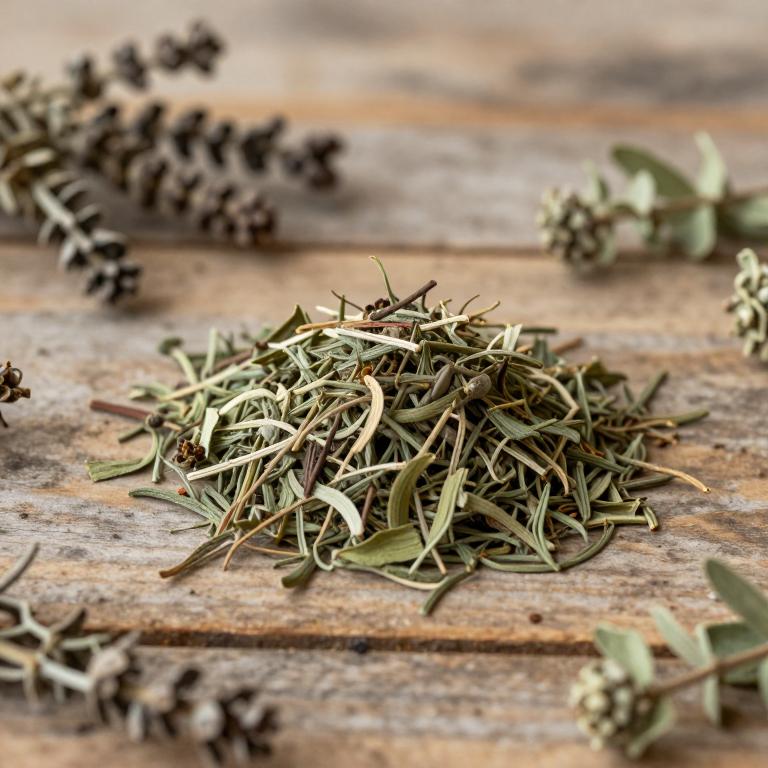
Names and Synonyms
Scientific Names
Accepted name
Thymus broussonetiiSynonyms
- Origanum broussonetii
Sources: Wikidata
Taxonomical Classification
This plant belongs to the kingdom Plantae and the phylum Streptophyta, placing it within the class Equisetopsida and subclass Magnoliidae. It is further classified under the order Lamiales and the family Lamiaceae. Finally, it is categorized under the genus Thymus.
| Rank | Classification |
|---|---|
| Kingdom | Plantae |
| Phylum | Streptophyta |
| Class | Equisetopsida |
| Subclass | Magnoliidae |
| Order | Lamiales |
| Family | Lamiaceae |
| Genus | Thymus |
Sources: The World Checklist of Vascular Plants (WCVP)
Distribution
This plant exhibits a very limited and specialized geographical range. Within its natural habitat, it is documented to grow in the northern regions of the African continent. Specifically, its occurrence is localized within the borders of Morocco. This restricted distribution suggests that the species is endemic to certain environmental conditions found in that area. Consequently, finding this particular medicinal plant outside of this specific North African territory is unlikely.
| Region | Area |
|---|---|
| Northern Africa | Morocco |
Sources: The World Checklist of Vascular Plants (WCVP)
Botanical Identification
Life history
The life history of Thymus broussonetii is characterized by its classification as a chamaephyte, a growth form in which the majority of the plant's photosynthetic organs are located close to or just above the soil surface, protected by the substrate or litter. Within the specific hierarchies of plant life forms, it is categorized as a chamaephyte under both the broader structural classification (as a chamaephyte rather than a phanerophyte, hemicryptophyte, cryptophyte, or therophyte) and the more granular physiological classification (as a chamaephyte rather than a nanophanerophyte, phanerophyte, hemicryptophyte, geophyte, hydrophyte, helophyte, therophyte, or lithophyte). This life strategy allows the species to thrive in specific ecological niches, utilizing its low-growing stature to withstand environmental stressors such as wind or temperature fluctuations by keeping its vital buds near the ground level.
- Life form :
- chamaephyte
Morphology
The morphology of Thymus broussonetii is characterized by its growth habit as a self-supporting climber, meaning it possesses the structural integrity to ascend or spread without being an obligatory or facultative climber. It functions as an independent organism, showing no parasitic tendencies as it is entirely non-parasitic and does not rely on a host for nutrients. Furthermore, the plant is strictly terrestrial in its ecological positioning, lacking any epiphytic tendencies and growing instead within soil-based substrates.
- Climber :
- self-supporting
- Epiphyte :
- terrestrial
- Parasite :
- independent
Sources: Global Inventory of Floras and Traits (GIFT)
Chemicals
Thymus broussonetii has 10 reported phytochemicals identified across 0 scientific publications and several other databases. The most consistently reported chemicals include Aromadendrene, Carotenoids, Coumarins, Flavonoids, P-CYMENE.
| Chemical | Supporting sources | Consensus |
|---|---|---|
| Aromadendrene | 1 supporting sources | ★☆☆☆☆ |
| Carotenoids | 1 supporting sources | ★☆☆☆☆ |
| Coumarins | 1 supporting sources | ★☆☆☆☆ |
| Flavonoids | 1 supporting sources | ★☆☆☆☆ |
| P-CYMENE | 1 supporting sources | ★☆☆☆☆ |
| Steroids | 1 supporting sources | ★☆☆☆☆ |
| THYMOL | 1 supporting sources | ★☆☆☆☆ |
| Tannins | 1 supporting sources | ★☆☆☆☆ |
| Terpenoids | 1 supporting sources | ★☆☆☆☆ |
| Terpinen-4-ol | 1 supporting sources | ★☆☆☆☆ |
Aromadendrene
- Frontiers in chemistry
Carotenoids
- Evidence-based complementary and alternative medicine : eCAM
Coumarins
- Evidence-based complementary and alternative medicine : eCAM
Flavonoids
- Evidence-based complementary and alternative medicine : eCAM
P-CYMENE
- Frontiers in chemistry
Steroids
- Evidence-based complementary and alternative medicine : eCAM
THYMOL
- Frontiers in chemistry
Tannins
- Evidence-based complementary and alternative medicine : eCAM
Terpenoids
- Evidence-based complementary and alternative medicine : eCAM
Terpinen-4-ol
- Frontiers in chemistry
Activities
Thymus broussonetii has 8 reported activities identified across 0 scientific publications and several other databases. The most consistently reported activities include Antioxidant, Antibacterial, Anticancer, Antifungal, Antimicrobial.
| Activity | Supporting sources | Consensus |
|---|---|---|
| Antioxidant | 2 supporting sources | ★☆☆☆☆ |
| Antibacterial | 1 supporting sources | ★☆☆☆☆ |
| Anticancer | 1 supporting sources | ★☆☆☆☆ |
| Antifungal | 1 supporting sources | ★☆☆☆☆ |
| Antimicrobial | 1 supporting sources | ★☆☆☆☆ |
| Antinociceptive | 1 supporting sources | ★☆☆☆☆ |
| Antipyretic | 1 supporting sources | ★☆☆☆☆ |
| Preservative | 1 supporting sources | ★☆☆☆☆ |
Antioxidant
- Evidence-based complementary and alternative medicine : eCAM
- Frontiers in chemistry
Antibacterial
- Evidence-based complementary and alternative medicine : eCAM
Anticancer
- Evidence-based complementary and alternative medicine : eCAM
Antifungal
- Evidence-based complementary and alternative medicine : eCAM
Antimicrobial
- Frontiers in chemistry
Antinociceptive
- Evidence-based complementary and alternative medicine : eCAM
Antipyretic
- Evidence-based complementary and alternative medicine : eCAM
Preservative
- Frontiers in chemistry
Conditions
Thymus broussonetii has 8 reported investigations on conditions identified across 0 scientific publications and several other databases. The most consistently reported conditions include antioxidant activity, candidiasis, cough, diarrhea, fever.
| Condition | Supporting sources | Consensus |
|---|---|---|
| Antioxidant activity | 1 supporting sources | ★☆☆☆☆ |
| Candidiasis | 1 supporting sources | ★☆☆☆☆ |
| Cough | 1 supporting sources | ★☆☆☆☆ |
| Diarrhea | 1 supporting sources | ★☆☆☆☆ |
| Fever | 1 supporting sources | ★☆☆☆☆ |
| Influenza | 1 supporting sources | ★☆☆☆☆ |
| Rheumatism | 1 supporting sources | ★☆☆☆☆ |
| Skin diseases | 1 supporting sources | ★☆☆☆☆ |
Antioxidant activity
- Frontiers in chemistry
Candidiasis
- Phytomedicine : international journal of phytotherapy and phytopharmacology
Cough
- Evidence-based complementary and alternative medicine : eCAM
Diarrhea
- Evidence-based complementary and alternative medicine : eCAM
Fever
- Evidence-based complementary and alternative medicine : eCAM
Influenza
- Evidence-based complementary and alternative medicine : eCAM
Rheumatism
- Evidence-based complementary and alternative medicine : eCAM
Skin diseases
- Evidence-based complementary and alternative medicine : eCAM
Preparations
Thymus broussonetii has 2 reported preparations identified across 0 scientific publications and several other databases. The most consistently reported preparations include Essential Oils, essential oils.
| Preparation | Supporting sources | Consensus |
|---|---|---|
| Essential oils | 1 supporting sources | ★☆☆☆☆ |
| Essential oils | 1 supporting sources | ★☆☆☆☆ |
Essential oils
- Plants (Basel, Switzerland)
Essential oils
- Phytomedicine : international journal of phytotherapy and phytopharmacology