Thymus bracteosus
Thymus bracteosus · Accepted scientific name
Scientific literature: Very Sparse (4 studies) · ★☆☆☆☆
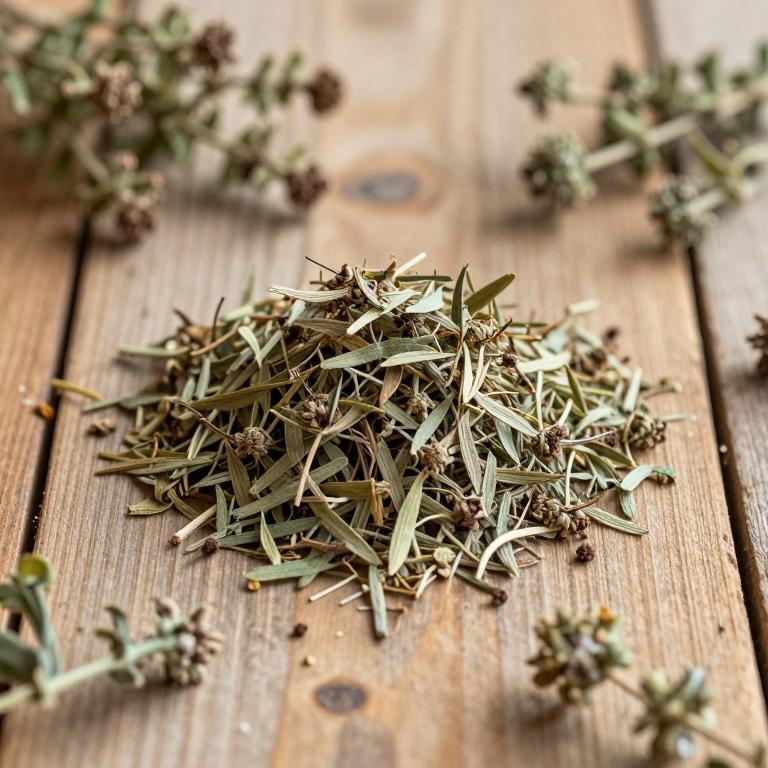
Thymus bracteosus, scientifically known as Thymus bracteosus, is a distinctive perennial herb belonging to the Lamiaceae family. Native to specific Mediterranean habitats, this aromatic plant is characterized by its unique bracts. It holds significant ethnobotanical value, offering potential medicinal properties through its rich concentration of essential bioactive compounds.
- Family
- Lamiaceae
- Native range
- Europe
- Parts used
- Not available
- Common names
- Not available
- Scientific synonyms
- Origanum Bracteosum
Names and Synonyms
Scientific Names
Accepted name
Thymus bracteosusSynonyms
- Origanum bracteosum
Sources: Wikidata
Taxonomical Classification
This plant belongs to the kingdom Plantae within the phylum Streptophyta and the class Equisetopsida. It is further classified under the subclass Magnoliidae and the order Lamiales, falling into the family Lamiaceae. Finally, it is categorized under the genus Thymus.
| Rank | Classification |
|---|---|
| Kingdom | Plantae |
| Phylum | Streptophyta |
| Class | Equisetopsida |
| Subclass | Magnoliidae |
| Order | Lamiales |
| Family | Lamiaceae |
| Genus | Thymus |
Sources: The World Checklist of Vascular Plants (WCVP)
Distribution
This plant is characterized by a very specific and limited geographical range. Its distribution is primarily confined to the region of Southeastern Europe. Within this area, it can be found specifically across the Northwest Balkan Peninsula. Because of this restricted habitat, it is considered an endemic species to this particular territory. Consequently, its presence is closely tied to the unique environmental conditions of the Balkan landscape.
| Region | Area |
|---|---|
| Southeastern Europe | NW. Balkan Pen. |
Sources: The World Checklist of Vascular Plants (WCVP)
Botanical Identification
Life history
The life history of Thymus bracteosus is characterized by its classification as a perennial herb with a distinct growth habit defined by its life form. Specifically, it functions as a chamaephyte, a strategy that allows it to thrive in exposed or harsh environments by keeping its buds close to the soil surface, protected by the substrate or low-growing vegetation. Within the broader classification of life forms, it is categorized specifically as a chamaephyte, distinguishing it from taller phanerophytes or short-lived therophytes. This growth strategy ensures its survival through seasonal changes, as its reproductive and vegetative structures remain near the ground level, facilitating stability and resource management in its native habitat.
- Life form :
- chamaephyte
Morphology
The morphology of Thymus bracteosus is characterized by its growth habit as a self-supporting plant, meaning it does not rely on external structures for vertical elevation through climbing mechanisms. It functions as an independent organism, showing no parasitic behavior toward other species, and maintains a strictly terrestrial existence rather than living as an epiphyte. Its structure typically consists of woody or semi-woody stems that grow low to the ground or in small subshrubs, supporting a dense arrangement of small, aromatic leaves and bracts that define its physical form.
- Climber :
- self-supporting
- Epiphyte :
- terrestrial
- Parasite :
- independent
Sources: Global Inventory of Floras and Traits (GIFT)
Chemicals
Thymus bracteosus has 2 reported phytochemicals identified across 0 scientific publications and several other databases. The most consistently reported chemicals include CHLOROGENIC ACID, rosmarinic acid.
| Chemical | Supporting sources | Consensus |
|---|---|---|
| CHLOROGENIC ACID | 1 supporting sources | ★☆☆☆☆ |
| rosmarinic acid | 1 supporting sources | ★☆☆☆☆ |
CHLOROGENIC ACID
- Natural product research
rosmarinic acid
- Natural product research
Activities
Thymus bracteosus has 2 reported activities identified across 0 scientific publications and several other databases. The most consistently reported activities include Cytotoxic, Genotoxic.
| Activity | Supporting sources | Consensus |
|---|---|---|
| Cytotoxic | 1 supporting sources | ★☆☆☆☆ |
| Genotoxic | 1 supporting sources | ★☆☆☆☆ |
Cytotoxic
- Natural product research
Genotoxic
- Natural product research
Preparations
Thymus bracteosus has 2 reported preparations identified across 0 scientific publications and several other databases. The most consistently reported preparations include aqueous extracts, dimethyl sulphoxide (DMSO) extracts.
| Preparation | Supporting sources | Consensus |
|---|---|---|
| Aqueous extracts | 1 supporting sources | ★☆☆☆☆ |
| Dimethyl sulphoxide (dmso) extracts | 1 supporting sources | ★☆☆☆☆ |
Aqueous extracts
- Natural product research
Dimethyl sulphoxide (dmso) extracts
- Natural product research