Thymus bovei
Thymus bovei · Accepted scientific name
Scientific literature: Very Sparse (7 studies) · ★☆☆☆☆
Thymus bovei, scientifically known as Thymus bovei, is a resilient perennial herb native to specific arid regions. Belonging to the Lamiaceae family, this medicinal plant is prized for its aromatic properties. It contains bioactive compounds often utilized in traditional healing to support respiratory health and provide antimicrobial benefits.
- Family
- Lamiaceae
- Native range
- Africa
- Parts used
- Not available
- Common names
- Not available
- Scientific synonyms
- Origanum Bovei
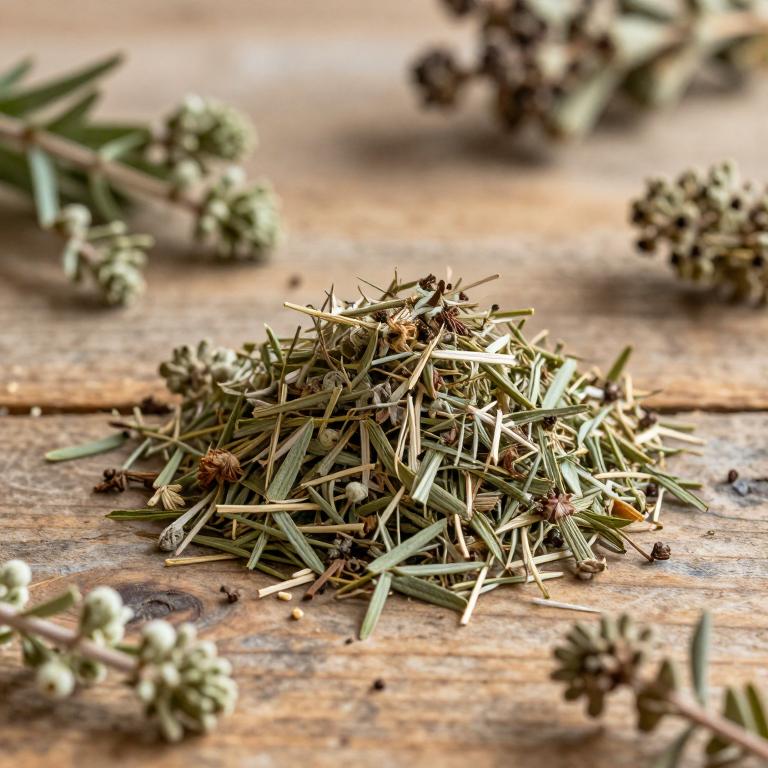
Names and Synonyms
Scientific Names
Accepted name
Thymus boveiSynonyms
- Origanum bovei
Sources: Wikidata, Catalogue of Life
Taxonomical Classification
This plant belongs to the kingdom Plantae and the phylum Streptophyta, situated within the class Equisetopsida and subclass Magnoliidae. It is further classified under the order Lamiales and the family Lamiaceae. Finally, it is identified by its specific genus, Thymus.
| Rank | Classification |
|---|---|
| Kingdom | Plantae |
| Phylum | Streptophyta |
| Class | Equisetopsida |
| Subclass | Magnoliidae |
| Order | Lamiales |
| Family | Lamiaceae |
| Genus | Thymus |
Sources: The World Checklist of Vascular Plants (WCVP)
Distribution
This plant, known scientifically as Thymus bovei, exhibits a specific and limited geographical distribution across certain regions. Within Northern Africa, its presence has been documented in Egypt. Moving toward Western Asia, the species can also be found in Palestine. Additionally, it inhabits the Sinai Peninsula, which serves as a key location in Western Asia. Together, these areas define the primary natural range where this medicinal species thrives.
| Region | Area |
|---|---|
| Northern Africa | Egypt |
| Western Asia | Palestine |
| Western Asia | Sinai |
Sources: The World Checklist of Vascular Plants (WCVP)
Botanical Identification
Life history
The life history of Thymus bovei is characterized by its classification as a chamaphyte, a life form that defines its growth strategy and survival mechanisms within its specific ecological niche. Specifically, it exhibits the traits of a chamaphyte, meaning its perennating buds are located close to the soil surface, often just above it, which allows the plant to withstand environmental stressors such as grazing or seasonal temperature fluctuations. This growth habit enables the plant to maintain a low-growing, cushion-like or spreading stature, typical of many species within the Lamiaceae family. By positioning its vital regenerative structures near the ground level, Thymus bovei ensures its persistence through various climatic cycles, facilitating its long-term survival in rocky or arid habitats where such a compact life form provides both protection and efficient resource management.
- Life form :
- chamaephyte
Morphology
The morphology of Thymus bovei is characterized by its growth form as a woody subshrub, exhibiting a self-supporting structure that does not rely on climbing mechanisms. As a terrestrial species, it occupies land-based habitats rather than aquatic or epiphytic niches, functioning as an independent organism without parasitic tendencies. Its physical development is defined by its woody nature, which contributes to its overall stature as a compact, low-growing woody subshrub.
- Aquatic :
- terrestrial
- Climber :
- self-supporting
- Epiphyte :
- terrestrial
- Growth form :
- shrub
- Growth form :
- subshrub
- Parasite :
- independent
- Woodiness :
- woody
Sources: Global Inventory of Floras and Traits (GIFT)
Chemicals
Thymus bovei has 1 reported phytochemicals identified across 0 scientific publications and several other databases. The most consistently reported chemicals include GERANIOL.
| Chemical | Supporting sources | Consensus |
|---|---|---|
| GERANIOL | 1 supporting sources | ★☆☆☆☆ |
GERANIOL
- Journal of clinical medicine
Activities
Thymus bovei has 2 reported activities identified across 0 scientific publications and several other databases. The most consistently reported activities include Antihypertensive, Cytotoxic.
| Activity | Supporting sources | Consensus |
|---|---|---|
| Antihypertensive | 1 supporting sources | ★☆☆☆☆ |
| Cytotoxic | 1 supporting sources | ★☆☆☆☆ |
Antihypertensive
- Journal of clinical medicine
Cytotoxic
- Journal of clinical medicine
Conditions
Thymus bovei has 4 reported investigations on conditions identified across 0 scientific publications and several other databases. The most consistently reported conditions include HSV-2, antihypertensive, colon cancer, lung adenocarcinoma.
| Condition | Supporting sources | Consensus |
|---|---|---|
| Hsv-2 | 1 supporting sources | ★☆☆☆☆ |
| Antihypertensive | 1 supporting sources | ★☆☆☆☆ |
| Colon cancer | 1 supporting sources | ★☆☆☆☆ |
| Lung adenocarcinoma | 1 supporting sources | ★☆☆☆☆ |
Hsv-2
- Journal of clinical medicine
Antihypertensive
- Journal of clinical medicine
Colon cancer
- Journal of clinical medicine
Lung adenocarcinoma
- Journal of clinical medicine