Thymus baicalensis
Thymus baicalensis · Accepted scientific name
Scientific literature: Very Sparse (7 studies) · ★☆☆☆☆
Thymus baicalensis, scientifically known as Thymus baicalensis, is a potent medicinal herb valued in traditional practices. Renowned for its aromatic properties, it contains bioactive compounds that offer antioxidant, anti-inflammatory, and antimicrobial benefits. This resilient plant serves as a natural remedy for supporting respiratory health and enhancing overall wellness.
- Family
- Lamiaceae
- Native range
- Asia-Temperate
- Parts used
- Not available
- Common names
- Not available
- Scientific synonyms
- Not available
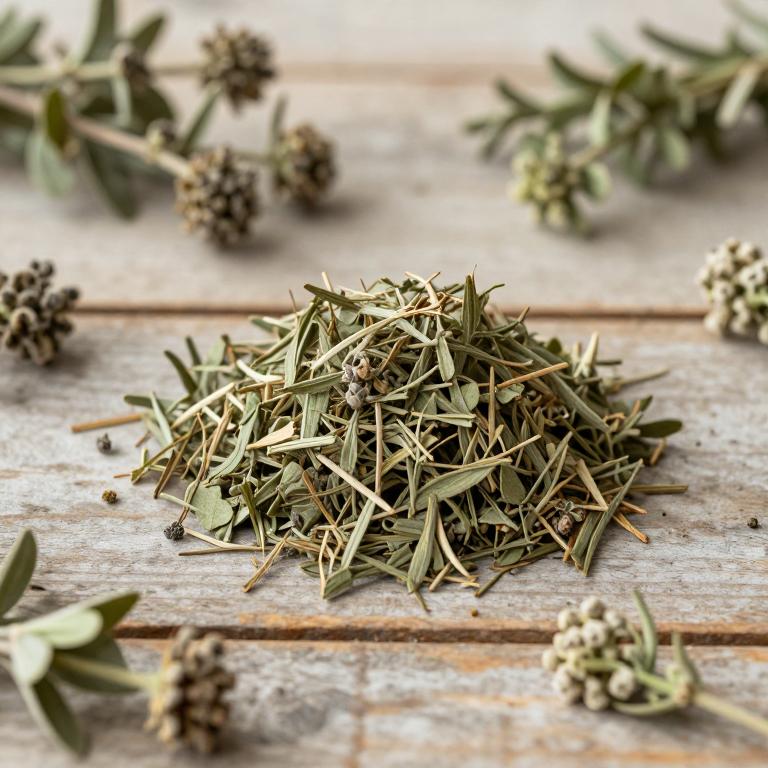
Names and Synonyms
Scientific Names
Accepted name
Thymus baicalensisSources: Wikidata, Catalogue of Life
Taxonomical Classification
This plant belongs to the kingdom Plantae and the phylum Streptophyta, falling under the class Equisetopsida and subclass Magnoliidae. Within the order Lamiales and family Lamiaceae, it is classified under the genus Thymus.
| Rank | Classification |
|---|---|
| Kingdom | Plantae |
| Phylum | Streptophyta |
| Class | Equisetopsida |
| Subclass | Magnoliidae |
| Order | Lamiales |
| Family | Lamiaceae |
| Genus | Thymus |
Sources: The World Checklist of Vascular Plants (WCVP)
Distribution
This plant exhibits a specific geographical distribution primarily centered within the regions of Siberia and Mongolia. In the Siberian territory, it can be found growing in the areas of Buryatiya and Chitа. Furthermore, its presence extends to the Irkutsk and Tuva regions of Siberia. Moving beyond Russia, the species is also native to the country of Mongolia. Consequently, its natural habitat is concentrated across these specific parts of Central and Northern Asia.
| Region | Area |
|---|---|
| Siberia | Buryatiya |
| Siberia | Chita |
| Siberia | Irkutsk |
| Siberia | Tuva |
| Mongolia | Mongolia |
Sources: The World Checklist of Vascular Plants (WCVP)
Botanical Identification
Life history
The life history of Thymus baicalensis is characterized by its classification as a perennial herb with a specific growth strategy defined by its life form. It functions primarily as a chamaephyte, a designation that indicates its buds are located close to the soil surface, often protected by leaf litter or minimal substrate. Within the broader spectrum of botanical life forms, it is specifically categorized as a chamaephyte (Life_form_1) and further identified by its niche-specific development as a chamaephyte (Life_form_2), distinguishing it from phanerophytes, hemicryptophytes, or therophytes. This growth habit allows the plant to endure environmental fluctuations by maintaining its regenerative structures at the ground level, facilitating its persistence in its natural habitat through successive growing seasons.
- Life form :
- chamaephyte
Morphology
The morphology of Thymus baiicalensis is characterized by its growth form as a non-woody herb, typically manifesting as a low-growing, self-supporting herb. It is a terrestrial species, occupying land environments rather than aquatic or semiaquatic habitats, and functions as an independent organism without parasitic tendencies. Furthermore, it is not an epiphyte, maintaining a strictly terrestrial existence.
- Aquatic :
- terrestrial
- Climber :
- self-supporting
- Epiphyte :
- terrestrial
- Growth form :
- herb
- Parasite :
- independent
- Woodiness :
- non-woody
Reproduction
Reproduction in Thymus baiicalensis occurs primarily through sexual processes, characterized by a versatile floral structure that allows for efficient genetic exchange. The plant exhibits sexual traits that include being dioecious, monoecious, or bisexual, with the bisexual condition being a key feature of its reproductive strategy. This capacity for bisexuality ensures that individual flowers contain both functional male and female reproductive organs, facilitating self-pollination while also supporting cross-pollination by insects. These sexual mechanisms, combined with its varied reproductive modes, contribute to the plant's ability to maintain genetic diversity and colonize suitable habitats effectively.
- Reproduction sexual :
- bisexual
Sources: Global Inventory of Floras and Traits (GIFT)
Chemicals
Thymus baicalensis has 7 reported phytochemicals identified across 0 scientific publications and several other databases. The most consistently reported chemicals include CARVACROL, Gallic acid, Luteolin 7-O-glucuronide, MYRCENE, Quercitin.
| Chemical | Supporting sources | Consensus |
|---|---|---|
| CARVACROL | 1 supporting sources | ★☆☆☆☆ |
| Gallic acid | 1 supporting sources | ★☆☆☆☆ |
| Luteolin 7-O-glucuronide | 1 supporting sources | ★☆☆☆☆ |
| MYRCENE | 1 supporting sources | ★☆☆☆☆ |
| Quercitin | 1 supporting sources | ★☆☆☆☆ |
| THYMOL | 1 supporting sources | ★☆☆☆☆ |
| palmitic acid | 1 supporting sources | ★☆☆☆☆ |
CARVACROL
- Antioxidants (Basel, Switzerland)
Gallic acid
- Antioxidants (Basel, Switzerland)
Luteolin 7-O-glucuronide
- Antioxidants (Basel, Switzerland)
MYRCENE
- Antioxidants (Basel, Switzerland)
Quercitin
- Antioxidants (Basel, Switzerland)
THYMOL
- Antioxidants (Basel, Switzerland)
palmitic acid
- Antioxidants (Basel, Switzerland)