Thymus albicans
Thymus albicans · Accepted scientific name
Scientific literature: Very Sparse (5 studies) · ★☆☆☆☆
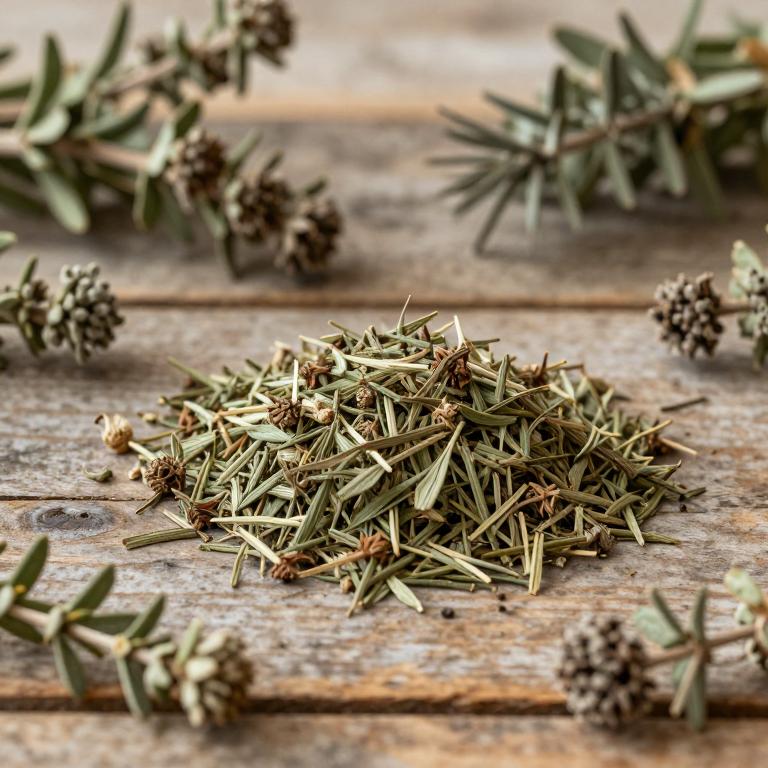
Thymus albicans, scientifically known as Thymus albicans, is a resilient perennial shrub native to the Mediterranean region. Renowned for its silvery-grey foliage and aromatic properties, this medicinal herb offers potent antioxidant and antimicrobial benefits. It is traditionally utilized in herbal remedies to support respiratory health and digestive wellness.
- Family
- Lamiaceae
- Native range
- Europe
- Parts used
- Not available
- Common names
- Not available
- Scientific synonyms
- Origanum Albicans · Thymus Virescens · 2 more
Names and Synonyms
Scientific Names
Accepted name
Thymus albicansSynonyms
- Origanum albicans
- Thymus virescens
- Thymus mastichina var. micranthus
- Thymus tomentosus var. virescens
Regional and Traditional Names
Spanish:
- Almoradux
Sources: Wikidata, Catalogue of Life
Taxonomical Classification
This plant belongs to the kingdom Plantae within the phylum Streptophyta and the class Equisetopsida. It is further classified under the subclass Magnoliidae, the order Lamiales, and the family Lamiaceae. Finally, it is categorized under the genus Thymus.
| Rank | Classification |
|---|---|
| Kingdom | Plantae |
| Phylum | Streptophyta |
| Class | Equisetopsida |
| Subclass | Magnoliidae |
| Order | Lamiales |
| Family | Lamiaceae |
| Genus | Thymus |
Sources: The World Checklist of Vascular Plants (WCVP)
Distribution
This plant is found within the specific regions of Southwestern Europe. Its natural range is primarily concentrated in the Iberian Peninsula. Specifically, it occurs in the country of Portugal. Additionally, this species is widely distributed throughout Spain. These two nations represent the core geographical locations for its growth.
| Region | Area |
|---|---|
| Southwestern Europe | Portugal |
| Southwestern Europe | Spain |
Sources: The World Checklist of Vascular Plants (WCVP)
Botanical Identification
Ecology
The ecology of Thymus albicans is characterized by its adaptation to specific altitudinal gradients and environmental conditions. This species typically inhabits low-lying terrains, with a recorded elevational range mean of 34 m AMSL. Its distribution is closely tied to the specific microclimates found at these low altitudes, where it integrates into the local ecosystem by interacting with particular soil compositions and moisture levels. The plant's presence at such a specific mean elevation suggests a niche specialization that relies on the thermal and hydrological stability provided by these lower coastal or lowland regions.
- Elevational range mean:
- 34 m AMSL
Life history
The life history of Thymus albicans is characterized by a perennial lifecycle, allowing the plant to persist across multiple growing seasons. Morphologically, it is classified as a chamaephyte, a life form in which the majority of the plant's shoot system remains close to the soil surface, with buds located just above the ground level. This chamaephyte growth habit, consistent across its primary life form classifications, enables the species to thrive in its specific ecological niche by maintaining a low-growing, resilient structure.
- Life form :
- chamaephyte
- Lifecycle :
- perennial
Morphology
The morphology of Thymus albus is characterized by its growth habit as a terrestrial plant, existing as an independent organism rather than an epiphyte or parasite. It is not a climber; it does not possess the structural mechanisms to be an obligatory, facultative, or self-supporting climber, instead maintaining its own posture through its structural composition. The plant exhibits distinct woodiness, categorized as a woody species, which provides the necessary structural integrity for its perennial growth form.
- Climber :
- self-supporting
- Epiphyte :
- terrestrial
- Parasite :
- independent
- Woodiness :
- woody
Reproduction
The reproduction of Thymus albicans is characterized by specific dispersal mechanisms that facilitate its spread within its natural habitat. The plant utilizes an anemochorous dispersal syndrome, meaning its seeds or reproductive units are primarily transported by wind currents to new locations. Furthermore, this dispersal strategy is reinforced by an anemochorous process, ensuring that the seeds can effectively navigate environmental airflows to colonize suitable substrates.
- Dispersal syndrome :
- anemochorous
Sources: Global Inventory of Floras and Traits (GIFT)
Activities
Thymus albicans has 1 reported activities identified across 0 scientific publications and several other databases. The most consistently reported activities include Antifungal.
| Activity | Supporting sources | Consensus |
|---|---|---|
| Antifungal | 1 supporting sources | ★☆☆☆☆ |
Antifungal
- Scientific reports
Conditions
Thymus albicans has 3 reported investigations on conditions identified across 0 scientific publications and several other databases. The most consistently reported conditions include Candida albicans, filamentous fungi, yeasts.
| Condition | Supporting sources | Consensus |
|---|---|---|
| Candida albicans | 1 supporting sources | ★☆☆☆☆ |
| Filamentous fungi | 1 supporting sources | ★☆☆☆☆ |
| Yeasts | 1 supporting sources | ★☆☆☆☆ |
Candida albicans
- Scientific reports
Filamentous fungi
- Scientific reports
Yeasts
- Scientific reports
Preparations
Thymus albicans has 1 reported preparations identified across 0 scientific publications and several other databases. The most consistently reported preparations include essential oil.
| Preparation | Supporting sources | Consensus |
|---|---|---|
| Essential oil | 1 supporting sources | ★☆☆☆☆ |
Essential oil
- Scientific reports