Mitnan
Thymelaea hirsuta · Accepted scientific name
Scientific literature: Sparse (65 studies) · ★★☆☆☆
Mitnan, scientifically known as Thymelaea hirsuta, is a versatile medicinal shrub valued in traditional healing practices. Renowned for its diverse therapeutic properties, this plant is frequently utilized to treat various ailments, ranging from skin conditions to inflammatory issues, offering a rich natural resource for holistic wellness and pharmacology.
- Family
- Thymelaeaceae
- Native range
- Europe
- Parts used
- Leaf
- Common names
- Mitnan · Shaggy Sparrow-Wort
- Scientific synonyms
- Passerina Polygalifolia · Passerina Hirsuta · 18 more
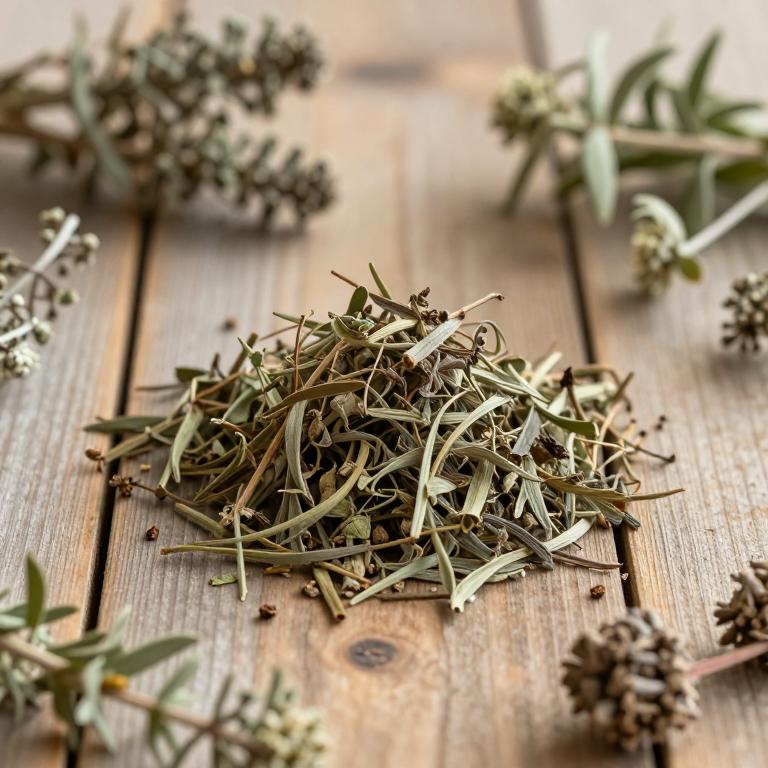
Names and Synonyms
Common Names
- Mitnan
- Shaggy Sparrow-wort
Scientific Names
Accepted name
Thymelaea hirsutaSynonyms
- Passerina polygalifolia
- Passerina hirsuta
- Piptochlamys hirsuta
- Passerina telonensis
- Thymelaea hirsuta var. angustifolia
- Thymelaea hirsuta var. polygalifolia
- Thymelaea hirsuta var. rotundifolia
- Thymelaea hirsuta var. vulgaris
- Passerina hirsuta var. linearis
- Thymelaea hirsuta var. microphylla
- Passerina hirsuta proles polygalifolia
- Giardia hirsuta
- Stellera hirsuta
- Lachnaea hirsuta
- Chlamydanthus hirsutus
- Thymelaea hirsuta f. glauca
- Passerina hirsuta var. vestita
- Sanamunda tomentosa
- Tartonia ovatifolia
- Passerina metnan
Regional and Traditional Names
Spanish:
- Abolaga
- Boalaga
- Bofalaga
- Bohalaga
- Pruebayernos
- Bufalaga marina
- Bulaga
- Bojalaga
- Boja marina
- Bolago
- Bolaya
- Bora marina
- Borja marina
- Lechaina
- Prueba yernos
- Sanamunda acipresada
- Pala marina
- Palmerina
- Chlamydanthus hirsutus
- Passerina hirsuta raza polygaliifolia
- Passerina hirsuta var. linearis
- Passerina hirsuta var. vestita
- Passerina hirsuta
- Passerina metnan
- Passerina polygaliifolia
- Piptochlamys hirsuta
- Stellera hirsuta
- Tartonia ovatifolia
- Thymelaea hirsuta ß polygaliifolia
- Thymelaea hirsuta var. angustifolia
- Thymelaea hirsuta var. microphylla
- Thymelaea hirsuta var. rotundifolia
- Thymelaea hirsuta var. vulgaris
- Passerina hirsuta var linearis
- Passerina hirsuta var vestita
- Thymelaea hirsuta var angustifolia
- Thymelaea hirsuta var microphylla
- Thymelaea hirsuta var rotundifolia
- Thymelaea hirsuta var vulgaris
- Thymelaea hirsuta B polygaliifolia
- Boja marina
German:
- Behaarte Spatzenzunge
- Behaarte Spatzenzunge
French:
- Passerine hérissée
- Passerine hirsute
- Passerine hérissée
Sources: Wikidata, Catalogue of Life
Taxonomical Classification
This plant belongs to the kingdom Plantae and the phylum Streptophyta, falling under the class Equisetopsida and subclass Magnoliidae. Within the order Malvales, it is classified under the family Thymelaeaceae and the genus Thymelaea. Therefore, its scientific name is Thymelaea hirsuta.
| Rank | Classification |
|---|---|
| Kingdom | Plantae |
| Phylum | Streptophyta |
| Class | Equisetopsida |
| Subclass | Magnoliidae |
| Order | Malvales |
| Family | Thymelaeaceae |
| Genus | Thymelaea |
Sources: The World Checklist of Vascular Plants (WCVP)
Distribution
This plant is primarily distributed throughout specific regions of Southwestern Europe. It can be found growing in the Balearic Islands, which are part of the Baleares archipelago. Its presence is also noted in Corsica and the island of Sardegna. Furthermore, the species is documented across various locations in France. Finally, its range extends to the coastal and inland areas of Portugal.
| Region | Area |
|---|---|
| Southwestern Europe | Baleares |
| Southwestern Europe | Corse |
| Southwestern Europe | France |
| Southwestern Europe | Portugal |
| Southwestern Europe | Sardegna |
| Southwestern Europe | Spain |
| Southeastern Europe | Albania |
| Southeastern Europe | Greece |
| Southeastern Europe | Italy |
| Southeastern Europe | Kriti |
Sources: The World Checklist of Vascular Plants (WCVP)
Botanical Identification
Life history
The life history of Thymelaea hirsuta is characterized by its status as a perennial species, allowing it to persist through multiple growing seasons. In terms of its structural growth habits and ecological positioning, the plant exhibits characteristics consistent with both phanerophyte and nanophanerophyte life forms, depending on the environmental conditions and the specific development of its woody structures.
- Life form :
- nanophanerophyte
- Life form :
- phanerophyte
- Lifecycle :
- perennial
Morphology
The morphology of Thymelaea hirsuta is characterized by a woody growth form, specifically presenting as a self-supporting shrub. This plant functions as an independent organism, neither acting as a parasite nor an epiphyte, as it maintains a primarily terrestrial existence. Unlike climbing species such as lianas or vines, it does not require external support, instead utilizing its sturdy, woody structure to maintain its upright habit within its habitat.
- Aquatic :
- terrestrial
- Climber :
- self-supporting
- Epiphyte :
- terrestrial
- Growth form :
- shrub
- Parasite :
- independent
- Woodiness :
- woody
Physiology
The physiology of Thymelaea hirsuta is characterized by a metabolic framework governed by the C3 photosynthetic pathway, which dictates its carbon fixation processes and water-use efficiency. Under this C3 mechanism, the plant utilizes the enzyme Ribulose-1,5-bisphosphate carboxylase/oxygenase (RuBisCO) to facilitate the initial fixation of atmospheric carbon dioxide into three-carbon organic compounds within the mesophyll cells. This metabolic route implies that the plant's physiological performance is highly sensitive to ambient temperature and light intensity, as the inherent tendency of RuBisCO to engage in photorespiration can impact overall photosynthetic efficiency under high-heat or water-stressed conditions. Consequently, its physiological adaptations are centered around managing gas exchange and transpiration rates to balance the requirements of carbon assimilation with the necessity of maintaining cellular hydration within its specific ecological niche.
- Photosynthetic pathway :
- C3
Sources: Global Inventory of Floras and Traits (GIFT)
Plant Parts
Thymelaea hirsuta has 1 reported plant parts identified across 1 scientific publications and several other databases that are studied for medicinal purposes. The most consistently reported plant part include leaf.
| Plant part | Supporting sources | Consensus |
|---|---|---|
| Leaf | 1 supporting sources | ★☆☆☆☆ |
Leaf
- Viruses
Chemicals
Thymelaea hirsuta has 19 reported phytochemicals identified across 1 scientific publications and several other databases. The most consistently reported chemicals include API, Betulin, CHLOROGENIC ACID, Daphnoretin methyl ether, Esculetin.
| Chemical | Supporting sources | Consensus |
|---|---|---|
| API | 1 supporting sources | ★☆☆☆☆ |
| Betulin | 1 supporting sources | ★☆☆☆☆ |
| CHLOROGENIC ACID | 1 supporting sources | ★☆☆☆☆ |
| Daphnoretin methyl ether | 1 supporting sources | ★☆☆☆☆ |
| Esculetin | 1 supporting sources | ★☆☆☆☆ |
| Feruloylquinic acid | 1 supporting sources | ★☆☆☆☆ |
| Genkwanin | 1 supporting sources | ★☆☆☆☆ |
| Isochamaejasmine | 1 supporting sources | ★☆☆☆☆ |
| Rutarensin | 1 supporting sources | ★☆☆☆☆ |
| Tannin | 1 supporting sources | ★☆☆☆☆ |
API
- Annales pharmaceutiques francaises
Betulin
- Dr. Duke
CHLOROGENIC ACID
- Annales pharmaceutiques francaises
Daphnoretin methyl ether
- Molecules (Basel, Switzerland)
Esculetin
- Annales pharmaceutiques francaises
Feruloylquinic acid
- Annales pharmaceutiques francaises
Genkwanin
- Molecules (Basel, Switzerland)
Isochamaejasmine
- Annales pharmaceutiques francaises
Rutarensin
- Annales pharmaceutiques francaises
Tannin
- Phytomedicine : international journal of phytotherapy and phytopharmacology
Activities
Thymelaea hirsuta has 16 reported activities identified across 1 scientific publications and several other databases. The most consistently reported activities include Anticancer, Cytotoxic, AntiHIV, Antiarthritic, Anticarcinomic.
| Activity | Supporting sources | Consensus |
|---|---|---|
| Anticancer | 2 supporting sources | ★☆☆☆☆ |
| Cytotoxic | 2 supporting sources | ★☆☆☆☆ |
| AntiHIV | 1 supporting sources | ★☆☆☆☆ |
| Antiarthritic | 1 supporting sources | ★☆☆☆☆ |
| Anticarcinomic | 1 supporting sources | ★☆☆☆☆ |
| Antidiabetic | 1 supporting sources | ★☆☆☆☆ |
| Antifeedant | 1 supporting sources | ★☆☆☆☆ |
| Antiflu | 1 supporting sources | ★☆☆☆☆ |
| Antifungal | 1 supporting sources | ★☆☆☆☆ |
| Antiinflammatory | 1 supporting sources | ★☆☆☆☆ |
Anticancer
- Phytomedicine : international journal of phytotherapy and phytopharmacology
- BioMed research international
Cytotoxic
- Dr. Duke
- Phytomedicine : international journal of phytotherapy and phytopharmacology
AntiHIV
- Dr. Duke
Antiarthritic
- Pharmacognosy research
Anticarcinomic
- Dr. Duke
Antidiabetic
- Human & experimental toxicology
Antifeedant
- Dr. Duke
Antiflu
- Dr. Duke
Antifungal
- BioMed research international
Antiinflammatory
- Dr. Duke
Conditions
Thymelaea hirsuta has 4 reported investigations on conditions identified across 1 scientific publications and several other databases. The most consistently reported conditions include cancers, diabetic nephropathy, non-insulin-dependent diabetes mellitus, postprandial hyperglycemia.
| Condition | Supporting sources | Consensus |
|---|---|---|
| Cancers | 1 supporting sources | ★☆☆☆☆ |
| Diabetic nephropathy | 1 supporting sources | ★☆☆☆☆ |
| Non-insulin-dependent diabetes mellitus | 1 supporting sources | ★☆☆☆☆ |
| Postprandial hyperglycemia | 1 supporting sources | ★☆☆☆☆ |
Cancers
- Pakistan journal of pharmaceutical sciences
Diabetic nephropathy
- TheScientificWorldJournal
Non-insulin-dependent diabetes mellitus
- Human & experimental toxicology
Postprandial hyperglycemia
- Journal of diabetes
Preparations
Thymelaea hirsuta has 10 reported preparations identified across 1 scientific publications and several other databases. The most consistently reported preparations include water extract (WE), Ethyl acetate extracts from branches, Ethyl acetate extracts from leaves, aqueous extracts, decoction.
| Preparation | Supporting sources | Consensus |
|---|---|---|
| Water extract (we) | 2 supporting sources | ★☆☆☆☆ |
| Ethyl acetate extracts from branches | 1 supporting sources | ★☆☆☆☆ |
| Ethyl acetate extracts from leaves | 1 supporting sources | ★☆☆☆☆ |
| Aqueous extracts | 1 supporting sources | ★☆☆☆☆ |
| Decoction | 1 supporting sources | ★☆☆☆☆ |
| Dry powdered | 1 supporting sources | ★☆☆☆☆ |
| Essential oil | 1 supporting sources | ★☆☆☆☆ |
| Ethanolic extracts | 1 supporting sources | ★☆☆☆☆ |
| Ethyl acetate (etoac) fraction | 1 supporting sources | ★☆☆☆☆ |
| Methanolic (meoh) extract | 1 supporting sources | ★☆☆☆☆ |
Water extract (we)
- Die Pharmazie
- Human & experimental toxicology
Ethyl acetate extracts from branches
- Viruses
Ethyl acetate extracts from leaves
- Viruses
Aqueous extracts
- Pharmacognosy research
Decoction
- Pharmacognosy research
Dry powdered
- Journal of the Egyptian Society of Parasitology
Essential oil
- Pakistan journal of pharmaceutical sciences
Ethanolic extracts
- Planta medica
Ethyl acetate (etoac) fraction
- Molecules (Basel, Switzerland)
Methanolic (meoh) extract
- Molecules (Basel, Switzerland)