Russian wheatgrass
Thinopyrum junceum · Accepted scientific name
Scientific literature: Very Sparse (3 studies) · ★☆☆☆☆
Russian wheatgrass, scientifically known as Thinopyrum junceuum, is a versatile perennial grass valued for its resilience and nutritional potential. While primarily utilized in forage and grain production, its unique phytochemical profile offers intriguing medicinal possibilities, particularly regarding antioxidant properties and its ability to support metabolic health in various applications.
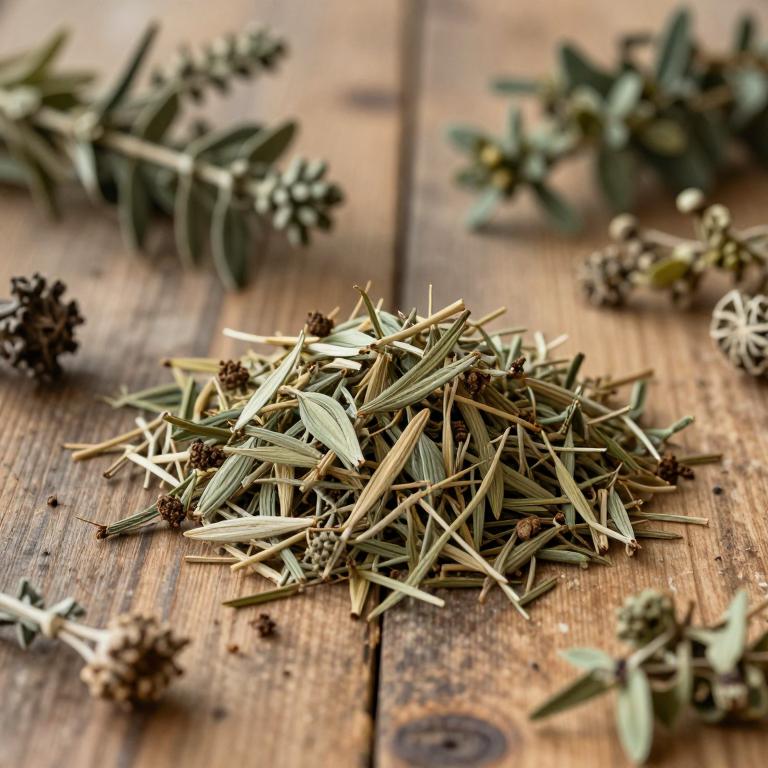
Names and Synonyms
Common Names
- Russian wheatgrass
- sand couch
- sea wheatgrass
- Rush-like Wheatgrass
Scientific Names
Accepted name
Thinopyrum junceumSynonyms
- Agropyron sartorii
- Braconotia juncea
- Elymus farctus var. sartorii
- Elymus farctus
- Elymus multinodus
- Elytrigia farcta
- Elytrigia mediterranea
- Elytrigia sartorii
- Festuca juncea
- Frumentum junceum
- Triticum junceum subsp. sartorii
- Elytrigia juncea subsp. mediterranea
- Agropyron repens subsp. junceum
- Elytrigia striatula
- Elymus farctus var. striatulus
- Agropyron junceum var. affine
- Agropyron junceum f. humile
- Agropyron junceum var. velutinum
- Elymus striatulus
- Thinopyrum runemarkii
- Agropyron junceum subsp. mediterraneum
- Agropyron junceum var. sartorii
- Agropyron lepturoides
- Triticum farctum
- Triticum junceum
- Bromus truncatus
- Agropyron junceum var. glabrum
- Agropyron junceum var. reflexum
- Agropyron junceum var. parvispicum
- Triticum junceum pungens
- Agropyron junceum var. crassum
- Agropyron junceum var. foliosum
- Elytrigia juncea
- Agropyron junceum f. majus
- Elytrigia juncea var. sartorii
- Agropyron junceum
- Agropyron junceum var. confertum
- Agropyron farctum
- Agropyron junceum var. mediterraneum
- Thinopyrum junceum subsp. mediterraneum
- Thinopyrum sartorii
Regional and Traditional Names
Spanish:
- grama de las playas
- tigrillo del norte
German:
- Bisenquecke
- Strandquecke
- Strandweizen
French:
- chiendent des sables
Sources: Wikidata, Catalogue of Life
Taxonomical Classification
This plant belongs to the kingdom Plantae and the phylum Streptophyta, falling under the class Equisetopsida and subclass Magnoliidae. Within the order Poales, it is classified under the family Poaceae. It is further identified by its specific genus, Thinopyrum.
| Rank | Classification |
|---|---|
| Kingdom | Plantae |
| Phylum | Streptophyta |
| Class | Equisetopsida |
| Subclass | Magnoliidae |
| Order | Poales |
| Family | Poaceae |
| Genus | Thinopyrum |
Sources: The World Checklist of Vascular Plants (WCVP)
Distribution
This plant, Thinopyrum junceum, exhibits a specific geographical distribution across various regions of Southwestern Europe. It can be found inhabiting the coastal or island environments of the Baleares. Additionally, the species is present in the territories of Corse and Sardegna. Its range also extends to the mainland, specifically within the borders of France. Finally, the plant is recorded as growing within the country of Portugal.
| Region | Area |
|---|---|
| Southwestern Europe | Baleares |
| Southwestern Europe | Corse |
| Southwestern Europe | France |
| Southwestern Europe | Portugal |
| Southwestern Europe | Sardegna |
| Southwestern Europe | Spain |
| Southeastern Europe | Albania |
| Southeastern Europe | Bulgaria |
| Southeastern Europe | Greece |
| Southeastern Europe | Italy |
Sources: The World Checklist of Vascular Plants (WCVP)
Botanical Identification
Ecology
The ecology of Thinopyrum junceuum is characterized by its specialized adaptation to unstable and nutrient-poor environments, specifically thriving within coastal dunes and sandy substrates. As a pioneer species in these habitats, it plays a critical role in stabilizing shifting sands through its extensive root systems, which help mitigate wind erosion. The plant is highly adapted to the physiological stresses of sand-dominated ecosystems, including high solar radiation, rapid fluctuations in soil moisture, and low organic matter content. By colonizing these dunes, it facilitates primary succession, creating microhabitats that allow for the eventual establishment of more complex plant communities.
- Habitat :
- dunes, sand
Life history
The life history of Thinopyrum junceum is characterized by a versatile biological strategy, primarily functioning as a perennial species with a lifecycle that can exhibit variable tendencies, including annual or biennial stages depending on environmental conditions. In terms of its structural adaptation to its habitat, the plant manifests as a cryptophyte, utilizing protected buds to survive unfavorable periods. Specifically, its growth habit is classified as a hemicryptophyte, a life form where the perennating buds are located at or just below the soil surface, allowing it to persist through seasonal shifts.
- Life form :
- hemicryptophyte
- Life form :
- cryptophyte
- Lifecycle :
- perennial
Morphology
The morphology of Thinopyrum junceum is characterized by a graminoid growth form, functioning as a non-woody herb that maintains a self-supporting structure. As a terrestrial plant, it does not exhibit aquatic, semiaquatic, or epiphytic tendencies, nor does it act as a parasite, functioning instead as an independent organism. The plant grows in an erect shoot orientation and reaches a height ranging from a minimum of 0.3 m to a maximum of 0.6 m. Because it is self-supporting, it does not possess any climbing or liana-like qualities.
- Aquatic :
- terrestrial
- Climber :
- self-supporting
- Epiphyte :
- terrestrial
- Growth form :
- herb
- Parasite :
- independent
- Plant height max:
- 0.6 m
- Plant height min:
- 0.3 m
- Shoot orientation :
- erect
- Woodiness :
- non-woody
Physiology
The physiology of Thinopyrum junceuum is characterized by a C3 photosynthetic pathway, which dictates its carbon fixation processes and metabolic efficiency. The plant exhibits specific morphological adaptations related to its foliage, maintaining an average leaf size of 2.255 cm². Furthermore, its leaf architecture and biomass distribution are reflected in a mean Specific Leaf Area (SLA) of 88.65 cm²/g, providing insights into its resource acquisition strategies and leaf thickness.
- Leaf size mean:
- 2.255 cm²
- Photosynthetic pathway :
- C3
- Specific Leaf Area (SLA) mean:
- 88.65 cm²/g
Reproduction
The reproduction of Thinopyrum junceum is characterized by a specific seasonal flowering window that typically begins in June and concludes in July. The plant utilizes an abiotic pollination syndrome, specifically relying on wind for the transfer of pollen, and is noted for the absence of self-fertilization. Following successful pollination, the plant produces dry fruits containing seeds with a highly consistent volume, measuring exactly 18 mm³ on average (with both minimum and maximum values at 18 mm³). The seed mass is relatively light, ranging from a minimum of 0.0062 g to a maximum of 0.0062 g, resulting in a mean seed mass of approximately 0.009476 g. For the propagation of the species, Thinopyrum junceum employs a zoochorous dispersal syndrome, meaning it relies on animals to facilitate the movement and distribution of its seeds.
- Dispersal syndrome :
- zoochorous
- Flowering time :
- Jun
- Flowering time :
- Jul
- Fruit dryness :
- dry
- Pollination syndrome :
- wind
- Pollination syndrome :
- abiotic
- Seed mass max:
- 0.0062 g
- Seed mass mean:
- 0.009476 g
- Seed volume max:
- 18 mm³
- Self fertilization :
- absent
Sources: Global Inventory of Floras and Traits (GIFT)
Chemicals
Thinopyrum junceum has 3 reported phytochemicals identified across 0 scientific publications and several other databases. The most consistently reported chemicals include FAT, glucose, sucrose.
| Chemical | Supporting sources | Consensus |
|---|---|---|
| FAT | 1 supporting sources | ★☆☆☆☆ |
| glucose | 1 supporting sources | ★☆☆☆☆ |
| sucrose | 1 supporting sources | ★☆☆☆☆ |
FAT
- Plants (Basel, Switzerland)
glucose
- Plants (Basel, Switzerland)
sucrose
- Plants (Basel, Switzerland)