Thespesia garckeana
Thespesia garckeana · Accepted scientific name
Scientific literature: Very Sparse (11 studies) · ★☆☆☆☆
Thespesia garckeana, scientifically known as Thespesia garckeana, is a versatile medicinal plant revered in traditional healing. Characterized by its distinct foliage and flowers, it offers diverse therapeutic properties. Used primarily for treating skin ailments and inflammatory conditions, this botanical species serves as a vital resource in ethnopharmacology.
- Family
- Malvaceae
- Native range
- Africa
- Parts used
- Leaf · Root
- Common names
- Not available
- Scientific synonyms
- Azanza Garckeana · Shantzia Garckeana · 1 more
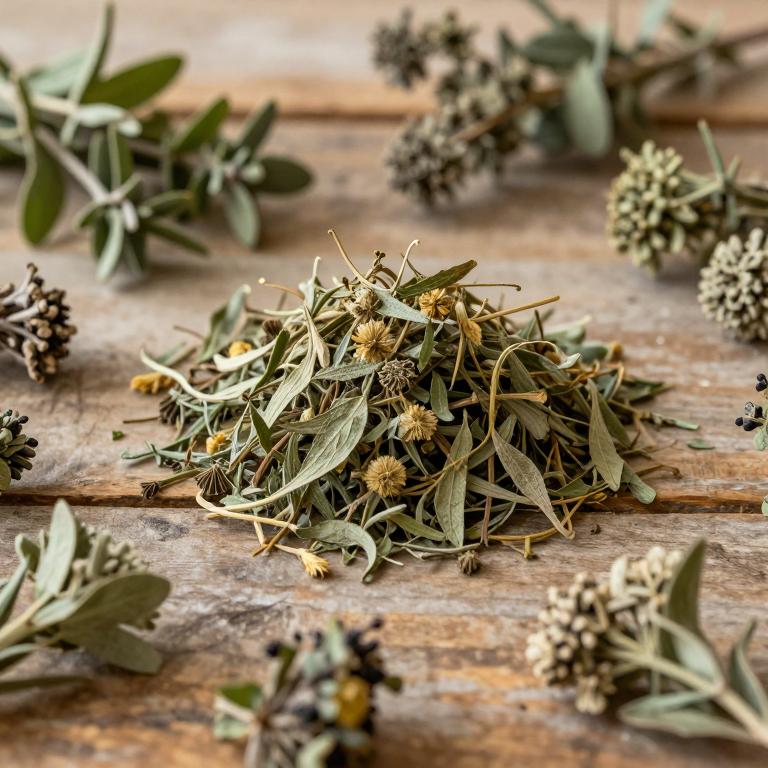
Names and Synonyms
Scientific Names
Accepted name
Thespesia garckeanaSynonyms
- Azanza garckeana
- Shantzia garckeana
- Bupariti garckeana
Regional and Traditional Names
Spanish:
- Azanza garckeana
- Shantzia garckeana
- Thespesia debeerstii
- Thespesia hockii
- Thespesia rogersii
Sources: Wikidata
Taxonomical Classification
This plant, Thespesia garckeana, belongs to the kingdom Plantae and the phylum Streptophyta. It is classified under the class Equisetopsida and the subclass Magnoliidae, falling within the order Malvales. Finally, it is a member of the family Malvaceae and the genus Thespesia.
| Rank | Classification |
|---|---|
| Kingdom | Plantae |
| Phylum | Streptophyta |
| Class | Equisetopsida |
| Subclass | Magnoliidae |
| Order | Malvales |
| Family | Malvaceae |
| Genus | Thespesia |
Sources: The World Checklist of Vascular Plants (WCVP)
Distribution
This plant exhibits a wide geographical distribution across several regions of the African continent. In West Tropical Africa, it can be found specifically within Nigeria. Its presence extends into West-Central Tropical Africa, where it inhabits Burundi and the DR Congo. The species is also located in Northeast Tropical Africa, covering the territory of Chad. Finally, its range reaches into the Northeast Tropical Africa region of Sudan and South Sudan.
| Region | Area |
|---|---|
| West Tropical Africa | Nigeria |
| West-Central Tropical Africa | Burundi |
| West-Central Tropical Africa | DR Congo |
| Northeast Tropical Africa | Chad |
| Northeast Tropical Africa | Sudan-South Sudan |
| East Tropical Africa | Kenya |
| East Tropical Africa | Tanzania |
| South Tropical Africa | Angola |
| South Tropical Africa | Malawi |
| South Tropical Africa | Mozambique |
Sources: The World Checklist of Vascular Plants (WCVP)
Botanical Identification
Ecology
The ecology of Thesmesia garckeana is characterized by its ability to thrive across diverse topographical gradients, specifically adapting to varied altitudinal zones. It occupies a broad vertical distribution within its habitat, ranging from lowland areas up to a significant elevational range max of 2000 m AMSL. This capacity to inhabit higher altitudes suggests an ecological resilience to varying temperature regimes and atmospheric pressures associated with montane environments. The species typically integrates into specific forest or scrubland ecosystems where soil moisture and light availability meet its physiological requirements, utilizing its wide elevational niche to optimize its survival and distribution across different ecological strata.
- Elevational range max:
- 2000 m AMSL
Life history
The life history of Thespesia garckeana is characterized by its status as a perennial plant, allowing it to persist through multiple growing seasons. As a phanerophyte, its regenerative buds are located high above the ground on woody stems, a life form that is consistently categorized under both the phanerophyte and nanophanerophyte classifications. Furthermore, the plant maintains an evergreen deciduousness, ensuring that it retains its foliage throughout its life cycle rather than shedding all leaves seasonally.
- Deciduousness :
- evergreen
- Life form :
- phanerophyte
- Lifecycle :
- perennial
Morphology
The morphology of Thespesia garckeana is characterized by a woody growth form that typically manifests as a tree or shrub. This species is a self-supporting, independent plant that does not function as a parasite or an epiphyte, maintaining a terrestrial existence. In terms of stature, the plant exhibits significant vertical development, with a height ranging from a minimum of 4 meters to a maximum of 10 meters, maintaining an average height of approximately 10 meters.
- Aquatic :
- terrestrial
- Climber :
- self-supporting
- Epiphyte :
- terrestrial
- Growth form :
- tree
- Growth form :
- shrub
- Parasite :
- independent
- Plant height mean:
- 10 m
- Plant height min:
- 4 m
- Woodiness :
- woody
Physiology
The physiology of Thespesia garckeana is characterized by a C3 photosynthetic pathway, a common metabolic strategy among many woody tropical species that involves the direct fixation of carbon dioxide via the Calvin cycle. In terms of nutrient acquisition and nitrogen metabolism, the plant does not function as a nitrogen fixer, meaning it lacks the symbiotic relationship with diazotrophic bacteria necessary to convert atmospheric nitrogen into bioavailable forms and must instead rely on the uptake of nitrates or ammonium from the soil.
- Nitrogen fixer :
- no
- Photosynthetic pathway :
- C3
Reproduction
The reproduction of Thespesia garckeana is driven by a biotic pollination syndrome, relying on biological agents rather than abiotic factors to facilitate fertilization. Specifically, the plant utilizes insect pollination to ensure successful reproductive cycles. Once fertilization occurs, the plant produces seeds characterized by a specific weight profile; the seed mass ranges from a minimum of 0.25 g to a maximum of 0.31134 g, with an average seed mass mean of 0.270465 g.
- Pollination syndrome :
- insect
- Pollination syndrome :
- biotic
- Seed mass max:
- 0.31134 g
- Seed mass mean:
- 0.270465 g
- Seed mass min:
- 0.25 g
Sources: Global Inventory of Floras and Traits (GIFT)
Plant Parts
Thespesia garckeana has 2 reported plant parts identified across 2 scientific publications and several other databases that are studied for medicinal purposes. The most consistently reported plant part include leaf, root.
| Plant part | Supporting sources | Consensus |
|---|---|---|
| Leaf | 1 supporting sources | ★☆☆☆☆ |
| Root | 1 supporting sources | ★☆☆☆☆ |
Leaf
- Annals of tropical medicine and parasitology
Root
- Annals of tropical medicine and parasitology
Chemicals
Thespesia garckeana has 4 reported phytochemicals identified across 2 scientific publications and several other databases. The most consistently reported chemicals include 6-(Benzyloxy)-4,4-dimethyl-2-chromanone, Terpinen-4-ol, nonyl flavanone, testolactone.
| Chemical | Supporting sources | Consensus |
|---|---|---|
| 6-(Benzyloxy)-4,4-dimethyl-2-chromanone | 1 supporting sources | ★☆☆☆☆ |
| Terpinen-4-ol | 1 supporting sources | ★☆☆☆☆ |
| nonyl flavanone | 1 supporting sources | ★☆☆☆☆ |
| testolactone | 1 supporting sources | ★☆☆☆☆ |
6-(Benzyloxy)-4,4-dimethyl-2-chromanone
- Biomedicine & pharmacotherapy = Biomedecine & pharmacotherapie
Terpinen-4-ol
- American journal of translational research
nonyl flavanone
- Biomedicine & pharmacotherapy = Biomedecine & pharmacotherapie
testolactone
- Biomedicine & pharmacotherapy = Biomedecine & pharmacotherapie
Activities
Thespesia garckeana has 4 reported activities identified across 2 scientific publications and several other databases. The most consistently reported activities include Antidiabetic, Antihyperglycemic, Antioxidant, Hypoglycemic.
| Activity | Supporting sources | Consensus |
|---|---|---|
| Antidiabetic | 1 supporting sources | ★☆☆☆☆ |
| Antihyperglycemic | 1 supporting sources | ★☆☆☆☆ |
| Antioxidant | 1 supporting sources | ★☆☆☆☆ |
| Hypoglycemic | 1 supporting sources | ★☆☆☆☆ |
Antidiabetic
- Biomedicine & pharmacotherapy = Biomedecine & pharmacotherapie
Antihyperglycemic
- Phytotherapy research : PTR
Antioxidant
- Biomedicine & pharmacotherapy = Biomedecine & pharmacotherapie
Hypoglycemic
- Biomedicine & pharmacotherapy = Biomedecine & pharmacotherapie
Preparations
Thespesia garckeana has 6 reported preparations identified across 2 scientific publications and several other databases. The most consistently reported preparations include Aqueous and organic fractions, Aqueous extracts, aqueous fraction, crude methanolic extract, ethyl acetate fraction.
| Preparation | Supporting sources | Consensus |
|---|---|---|
| Aqueous and organic fractions | 1 supporting sources | ★☆☆☆☆ |
| Aqueous extracts | 1 supporting sources | ★☆☆☆☆ |
| Aqueous fraction | 1 supporting sources | ★☆☆☆☆ |
| Crude methanolic extract | 1 supporting sources | ★☆☆☆☆ |
| Ethyl acetate fraction | 1 supporting sources | ★☆☆☆☆ |
| N-hexane fraction | 1 supporting sources | ★☆☆☆☆ |
Aqueous and organic fractions
- Annals of tropical medicine and parasitology
Aqueous extracts
- Phytotherapy research : PTR
Aqueous fraction
- American journal of translational research
Crude methanolic extract
- American journal of translational research
Ethyl acetate fraction
- American journal of translational research
N-hexane fraction
- American journal of translational research