Thamnosma montana
Thamnosma montana · Accepted scientific name
Scientific literature: Very Sparse (6 studies) · ★☆☆☆☆
Thamnosma montana, scientifically known as Thamnosma montana, is a versatile medicinal shrub native to various arid regions. Renowned for its diverse therapeutic properties, this plant is traditionally utilized in folk medicine to treat skin ailments, inflammatory conditions, and digestive issues, offering significant potential for modern pharmacological research and development.
- Family
- Rutaceae
- Native range
- Northern America
- Parts used
- Not available
- Common names
- Not available
- Scientific synonyms
- Not available
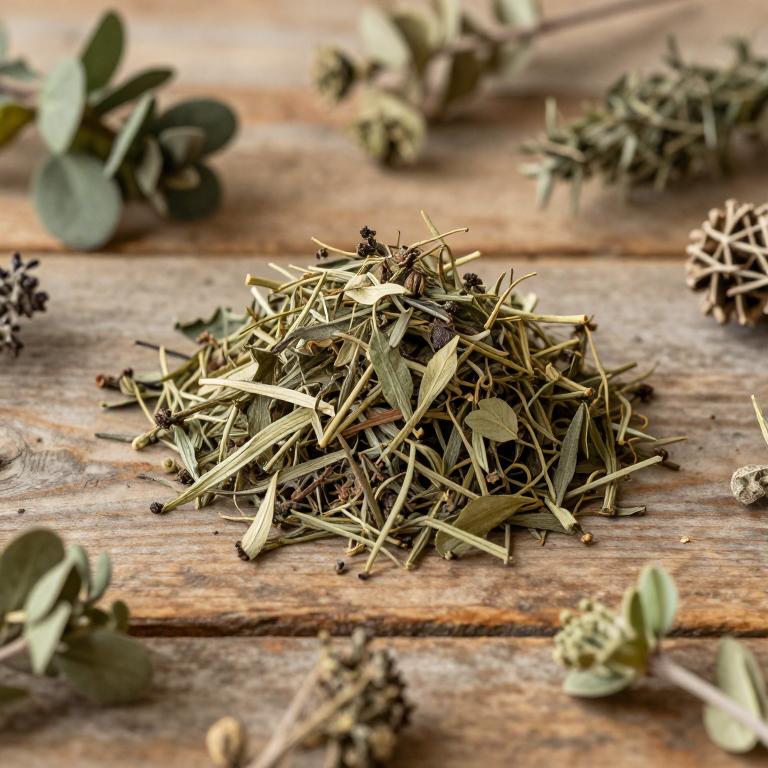
Names and Synonyms
Scientific Names
Accepted name
Thamnosma montanaSources: Wikidata, Catalogue of Life
Taxonomical Classification
This plant belongs to the kingdom Plantae and the phylum Streptophyta, falling under the class Equisetopsida and subclass Magnoliidae. Within the order Sapindales, it is classified under the family Rutaceae. Finally, it is identified by its genus, Thamnosma, and its specific species name, Thamnosma montana.
| Rank | Classification |
|---|---|
| Kingdom | Plantae |
| Phylum | Streptophyta |
| Class | Equisetopsida |
| Subclass | Magnoliidae |
| Order | Sapindales |
| Family | Rutaceae |
| Genus | Thamnosma |
Sources: The World Checklist of Vascular Plants (WCVP)
Distribution
This plant is primarily found across specific regions of the Southwestern United States. Its distribution includes the desert landscapes of Arizona and California. Additionally, it can be located throughout parts of Nevada and Utah. Moving further south, the species is also present in Northwest Mexico. Consequently, its range spans across these diverse arid territories in North America.
| Region | Area |
|---|---|
| Southwestern U.S.A. | Arizona |
| Southwestern U.S.A. | California |
| Southwestern U.S.A. | Nevada |
| Southwestern U.S.A. | Utah |
| Mexico | Mexico Northwest |
Sources: The World Checklist of Vascular Plants (WCVP)
Botanical Identification
Life history
The life history of Thamnosma montana is characterized by its status as a perennial plant, meaning it lives for more than two years and undergoes multiple reproductive cycles throughout its existence. As a perennial species, it maintains a persistent vegetative presence, often utilizing underground structures or robust root systems to survive through varying seasonal conditions, which allows it to re-emerge and continue its growth cycle annually. This longevity distinguishes it from annuals or biennials, providing the plant with the ability to establish a stable presence within its ecological niche and engage in repeated flowering and seed production over many years.
- Lifecycle :
- perennial
Morphology
The morphology of Thamnosma montana is characterized by a woody, subshrub growth form that typically reaches an average plant height of 0.61 m. As a terrestrial species, it does not exhibit aquatic or epiphytic tendencies, nor does it function as a parasite, maintaining an independent existence in its habitat. While it possesses a woody structure, it is classified as a self-supporting plant rather than a climbing liana or vine, allowing it to maintain its stature without external support.
- Aquatic :
- terrestrial
- Climber :
- self-supporting
- Epiphyte :
- terrestrial
- Growth form :
- shrub
- Growth form :
- subshrub
- Parasite :
- independent
- Plant height mean:
- 0.61 m
- Woodiness :
- woody
Physiology
The physiology of Thamnosma montana is fundamentally characterized by its carbon fixation mechanism, specifically utilizing the C3 photosynthetic pathway. In this metabolic process, the initial fixation of atmospheric carbon dioxide occurs through the enzyme RuBisCO, which attaches $CO_2$ to a five-carbon sugar, ribulose-1,5-bisphosphate, resulting in the formation of two molecules of 3-phosphoglycerate. This C3 pathway dictates the plant's water-use efficiency and gas exchange strategies, as it lacks the specialized anatomical adaptations found in C4 plants or the nocturnal acid accumulation seen in CAM plants. Consequently, its physiological performance is highly dependent on environmental variables such as light intensity, temperature, and moisture availability, which influence the rate of carboxylation and the potential for photorespiration.
- Photosynthetic pathway :
- C3
Reproduction
Reproduction in Thamnosma montana is characterized by the production of seeds that exhibit specific morphological weight characteristics essential to its dispersal and establishment. The seed mass within this species shows a relatively narrow range of variation, indicating a consistent reproductive investment per propagule. The average seed mass is recorded at 0.0127175 g, with individual seeds ranging from a minimum mass of 0.011275 g to a maximum mass of 0.01312 g. This precise distribution of seed weight plays a critical role in the plant's ability to colonize its natural habitat through successful germination and seedling development.
- Seed mass max:
- 0.01312 g
- Seed mass mean:
- 0.0127175 g
- Seed mass min:
- 0.011275 g
Sources: Global Inventory of Floras and Traits (GIFT)
Chemicals
Thamnosma montana has 6 reported phytochemicals identified across 0 scientific publications and several other databases. The most consistently reported chemicals include N-Methyl-acridone, Robustine, Skimmianine, Thamnosmonin, Thamontanin.
| Chemical | Supporting sources | Consensus |
|---|---|---|
| N-Methyl-acridone | 1 supporting sources | ★☆☆☆☆ |
| Robustine | 1 supporting sources | ★☆☆☆☆ |
| Skimmianine | 1 supporting sources | ★☆☆☆☆ |
| Thamnosmonin | 1 supporting sources | ★☆☆☆☆ |
| Thamontanin | 1 supporting sources | ★☆☆☆☆ |
| acridone | 1 supporting sources | ★☆☆☆☆ |
N-Methyl-acridone
- Lloydia
Robustine
- Lloydia
Skimmianine
- Lloydia
Thamnosmonin
- Lloydia
Thamontanin
- Lloydia
acridone
- Lloydia