meadow-rue
Thalictrum · Accepted scientific name
Scientific literature: Very Sparse (35 studies) · ★☆☆☆☆
Meadow-rue, scientifically known as Thalictrum, is a diverse genus of herbaceous perennials belonging to the Ranunculaceae family. Found primarily in moist, shaded habitats, these plants are valued for their delicate, fern-like foliage and elegant blooms. Historically, certain species have been utilized in traditional medicine for their unique biochemical properties.
- Family
- Ranunculaceae
- Native range
- Europe
- Parts used
- Not available
- Common names
- Meadow-Rue · Meadow-Rues
- Scientific synonyms
- Syndesmon · Piuttia · 6 more
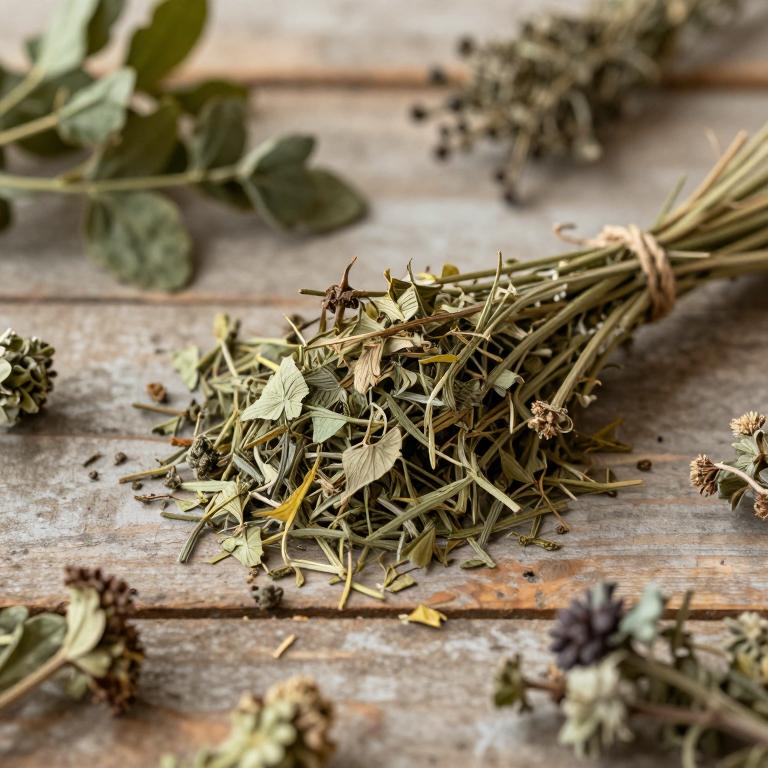
Names and Synonyms
Common Names
- meadow-rue
- meadow-rues
Scientific Names
Accepted name
ThalictrumSynonyms
- Syndesmon
- Piuttia
- Anemonella
- Tripterium
- Schlagintweitiella
- Physocarpum
- Praticola
- Leucocoma
Regional and Traditional Names
German:
- Wiesenrauten
- Wiesenraute
- Thalictrinae
- Wiesenrauten
French:
- pigamons
Sources: Wikidata, Catalogue of Life
Taxonomical Classification
This plant belongs to the kingdom Plantae and the phylum Streptophyta, situated within the class Equisetopsida and subclass Magnoliidae. It is further classified under the order Ranunculales and the family Ranunculaceae. Ultimately, its specific taxonomic designation is identified by the genus Thalictrum.
| Rank | Classification |
|---|---|
| Kingdom | Plantae |
| Phylum | Streptophyta |
| Class | Equisetopsida |
| Subclass | Magnoliidae |
| Order | Ranunculales |
| Family | Ranunculaceae |
| Genus | Thalictrum |
Sources: The World Checklist of Vascular Plants (WCVP)
Distribution
This plant exhibits a specific geographical distribution concentrated within the northern reaches of Europe. It can be found growing across the diverse landscapes of Denmark and Finland. The species also extends its range to the unique environments of the Faroe Islands. Additionally, its presence is documented throughout Great Britain. Finally, the plant reaches the northernmost territories in Iceland.
| Region | Area |
|---|---|
| Northern Europe | Denmark |
| Northern Europe | Finland |
| Northern Europe | Føroyar |
| Northern Europe | Great Britain |
| Northern Europe | Iceland |
| Northern Europe | Ireland |
| Northern Europe | Norway |
| Northern Europe | Sweden |
| Middle Europe | Austria |
| Middle Europe | Belgium |
Sources: The World Checklist of Vascular Plants (WCVP)
Chemicals
Thalictrum has 3 reported phytochemicals identified across 0 scientific publications and several other databases. The most consistently reported chemicals include Glycosides, Phenols, Terpenoids.
| Chemical | Supporting sources | Consensus |
|---|---|---|
| Glycosides | 1 supporting sources | ★☆☆☆☆ |
| Phenols | 1 supporting sources | ★☆☆☆☆ |
| Terpenoids | 1 supporting sources | ★☆☆☆☆ |
Glycosides
- Journal of ethnopharmacology
Phenols
- Journal of ethnopharmacology
Terpenoids
- Journal of ethnopharmacology
Activities
Thalictrum has 16 reported activities identified across 0 scientific publications and several other databases. The most consistently reported activities include Antiamebic, Antibacterial, Anticancer, Antimalarial, Antimicrobial.
| Activity | Supporting sources | Consensus |
|---|---|---|
| Antiamebic | 1 supporting sources | ★☆☆☆☆ |
| Antibacterial | 1 supporting sources | ★☆☆☆☆ |
| Anticancer | 1 supporting sources | ★☆☆☆☆ |
| Antimalarial | 1 supporting sources | ★☆☆☆☆ |
| Antimicrobial | 1 supporting sources | ★☆☆☆☆ |
| Antioxidant | 1 supporting sources | ★☆☆☆☆ |
| Antipyretic | 1 supporting sources | ★☆☆☆☆ |
| Antitumor | 1 supporting sources | ★☆☆☆☆ |
| Antitussive | 1 supporting sources | ★☆☆☆☆ |
| Antiviral | 1 supporting sources | ★☆☆☆☆ |
Antiamebic
- Journal of ethnopharmacology
Antibacterial
- Zhongguo Zhong yao za zhi = Zhongguo zhongyao zazhi = China journal of Chinese materia medica
Anticancer
- Journal of ethnopharmacology
Antimalarial
- Journal of ethnopharmacology
Antimicrobial
- Journal of ethnopharmacology
Antioxidant
- Journal of ethnopharmacology
Antipyretic
- Journal of ethnopharmacology
Antitumor
- Journal of ethnopharmacology
Antitussive
- Journal of ethnopharmacology
Antiviral
- Nature communications
Conditions
Thalictrum has 16 reported investigations on conditions identified across 0 scientific publications and several other databases. The most consistently reported conditions include antimalarial, antioxidant, antipyretic, contraceptive, convalescence.
| Condition | Supporting sources | Consensus |
|---|---|---|
| Antimalarial | 1 supporting sources | ★☆☆☆☆ |
| Antioxidant | 1 supporting sources | ★☆☆☆☆ |
| Antipyretic | 1 supporting sources | ★☆☆☆☆ |
| Contraceptive | 1 supporting sources | ★☆☆☆☆ |
| Convalescence | 1 supporting sources | ★☆☆☆☆ |
| Diarrhea | 1 supporting sources | ★☆☆☆☆ |
| Dyspepsia | 1 supporting sources | ★☆☆☆☆ |
| Fever | 1 supporting sources | ★☆☆☆☆ |
| Headache | 1 supporting sources | ★☆☆☆☆ |
| Jaundice | 1 supporting sources | ★☆☆☆☆ |
Antimalarial
- Journal of ethnopharmacology
Antioxidant
- Journal of ethnopharmacology
Antipyretic
- Journal of ethnopharmacology
Contraceptive
- Journal of ethnopharmacology
Convalescence
- Journal of ethnopharmacology
Diarrhea
- Journal of ethnopharmacology
Dyspepsia
- Journal of ethnopharmacology
Fever
- Journal of ethnopharmacology
Headache
- Journal of ethnopharmacology
Jaundice
- Journal of ethnopharmacology